Acts 7:55-60; Psalm 31:1-5, 15-16; 1 Peter 2:2-10; John 14:1-14
I’ve been a seminary graduate for less than 24 hours, but as I’ve prepared and planned and packed up my belongings, I’ve had plenty of time to think about my journey over the last few years. I’ve thought a lot about Old First, the excitement and trepidation I carried as I visited and began my involvement. I began full of vocational goals and had a plan for how to accomplish them. I was right to be afraid. Being in community, especially this community, I began to perceive that God was leading me to imagine a future that was different than what I thought I wanted.
The greatest blessing at Old First was finding that there was so much space for me. As a worshipper I experienced that there was room for my questions and space for the mysteries that transcend our understanding. I experienced a commitment that whatever we do in God’s name should not only be true, but should also be good and beautiful. As a seminarian I found a place to explore my call in freedom and in safety, receiving in turn words of encouragement and words of challenge. When I put on this robe, I still feel like a kid playing dress-up. This playful quality of my work here has been a wonderful gift, allowing me to take tentative, sometimes faltering steps toward that office called “Minister of Word and Sacrament.” As happens so often in life, I found myself on a path long before I knew why, or where it would lead me. For this and so many other gifts, I give wholehearted thanks.
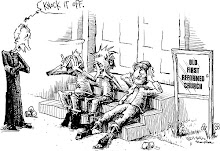
But this really isn’t a story about me, nor is it really a story about you. It’s a story about an entire people and especially about the God to whom they belong. This is a God who acts in unexpected ways, and with unexpected people. A God who is sometimes distant from the obvious places but present among those who are easily overlooked. Maybe not in magnificent buildings, but among the poor and downcast. This is a God who goes before our plans and intentions and makes of us something that we did not believe possible. While we are hard at work, we realize that God is creating something else entirely. What God builds may be different than what humans want to build. What God is up to might be different than what our religious institutions are doing.
This was part of the witness of Stephen. We don’t really see this because the reading from Acts dips in only at the end of Stephen’s story. We miss the whole sequence of events leading up to his death. We glimpse this final scene: an angry mob set against Stephen, who remains spiritual and serene. Stephen is an exemplar for all who will face martyrdom or persecution because he faces his end with grace and faithfulness. Cutting the reading short leaves unanswered questions. For one: Why did Stephen die? What was his crime? He did not transgress a legal code. But he did – and quite deliberately I think – provoke some very powerful people. To hear his story, we’ll need to back up and listen also to the words that got Stephen killed.
So here’s a bit of back-story: Stephen was one of the early Christians who went around Jerusalem preaching and performing signs. He was arrested on false charges and called to defend himself. Stephen the defendant immediately sets to preaching - a sweeping, somewhat revisionist account of ancient Israelite history. Then he gives the whole thing a theological spin that attacks cherished institutions, shocking and offending his audience. Among several other contentious points, Stephen sets up a polemic against the temple built by Solomon. He argues, “the Most High does not dwell in houses made with human hands” (7.48). What would be a fitting place for God to dwell, who has already shaped every stone, formed all metals and planted every tree? Surely the God who inhabits all of heaven and earth will not be contained by human works, however extravagant or skillfully constructed. Stephen’s point is the utter contrast between the works of God and of humans. Human projects cannot limit God’s presence, control God’s activity, or manage the exercise of God’s power.
But Stephen doesn’t intend this to be a teaching moment. Instead he wraps things up by recasting himself as judge. He calls his accusers faithless and disobedient; he names them as betrayers and murderers. The angry reaction isn’t really a surprise. The message had a bitter taste for Stephen’s audience. They’re not the usual hooligans you would expect to find in a bit of a skirmish outside the city limits. Stephen did not address criminals or soldiers, but a council composed of religious leaders. They are elders and priests; upstanding members of their communities. As protectors of the temple and of religious life, they do not react warmly to Stephen’s remarks.
The story spins in unexpected directions. The council was the best of human intellect and religiosity. Stephen accuses them of being frauds. By the time we drop in to glimpse Stephen’s death, the pretense of moral superiority is revealed as a sham. The judicial proceedings inexplicably gave way to mob violence and the death of Stephen. It’s a bizarre twist: maybe like a supreme court judge being caught exercising a bit of vigilante justice. These respected individuals are just ordinary people who respond to a threat with violence and anger.
The council and the temple are two symbols of human accomplishment. If God were to dwell anywhere on earth, it would certainly be within a costly, beautiful, and well-protected temple. If the wisdom of God were to be found anywhere, it would be among the members of the council: well-educated, religious, good. But the most ornate building is not able to contain the Most High God. Even the most just and most wise ruler can take the place of God who reigns from heaven.
This is a stumbling block. We’re used to the idea that God has a problem with the worst of what humans have done. God came to save the criminals, the fanatics, the broken and damaged. What are the “worst” human achievements? Maybe war, waste, racism. It’s because of all these bad things that we need God, and from all of this bad stuff that God comes to save us. God has a problem with my sin and my shadows and failures, but all the good stuff - like charitable deeds and religious devotion - those things can remain more or less intact.
The story of Stephen reveals a different truth. God rejects the best of what humans have to offer. It’s not just because of the fiascos of human history, but because our best is not enough for a perfectly righteous God. Even the great achievements in architecture: the pyramids of Egypt, China’s great wall, Machu Picchu, even these were hewn of rocks that God made. Even political and social advancements like democracy and human rights fall short. Even cherished institutions- churches, well-run schools, and centers of learning- even these are not adequate to mediate God’s presence on earth.
What humans build may not be what God is building; human plans may not be God’s plans. Here the reading from 1 Peter stands as a counterpoint to the story of Stephen. If not the temple, what will be the site of God’s presence on earth? The letter commends the churches, “Let yourselves be built into a spiritual house, to be a holy priesthood, to offer spiritual sacrifices acceptable to God through Jesus Christ.” The new temple is built of living stones, living, breathing people who have come to Christ and have tasted that God is good. But their role is passive. Stones themselves cannot build; they must be built. Stones are nothing until they taken in hand by an architect or an artisan. They are chosen and then cut, ground, trimmed until they are the right size and shape and can be useful for building.
1 Peter lets us in on another secret: God does not build like you might expect. What would make a stone a good candidate for a building project? Human builders will aim for strength and uniformity. A builder will covet materials that retain their strength and appearance and resist decay over time. Aesthetic qualities are important, like color, texture, and pattern, so that the many pieces will cohere into a unified whole.
God’s new project starts with unlikely materials. Christ, rejected by humans, becomes the cornerstone. This surprising pick becomes the rule for all that follows. When God builds, many of the pieces will be unremarkable. Some are not particularly strong or resilient. Many will not be beautiful. What they are, is chosen and precious in God’s sight. It is not by their properties, but by God’s choice that they are worthy of inclusion. God’s aesthetic vision is transformative, working a masterpiece out of stones that others passed over. The new temple is the entirety of those whom God gathers together. We are those stones; being joined to Christ, we are joined also to one another. Once you were not a people, but now you are God’s own people.
What this means is that no one finds their way here on accident. However disjointed or ill-matched we may feel we are for one another, each has been gathered for a purpose. Even if the paint peels, cracks widen, and in spite of dissension within and opposition without, still God gathers and builds. Even if we are embarrassed by or enraged at the actions of other’s who call themselves God’s followers- none of us get to make judgments about who is in and who is out. And if the walls of the God’s house should ever crumble, it may be because we are prone to constructing walls in all the wrong places. In the Easter season, we’ve heard that Easter is not church property, that the signs are not church property. As it turns out, not even the church is church property.
What is the difference between building and being built by God? They might look indistinguishable from the outside. Being built means that our plans are always provisional, our ways of doing things always open to revision. To be built by God is continually to ask ourselves the question: How do I best align with what God is about in this world?
Maybe you first came to church thinking how God might fit in your plans. I want God to help me carry out my goals and ideals. What we encounter is something far better - that God draws all of us into a project that spans across generations and across continents…swept up in something greater than what we could accomplish or imagine.
This “chosenness” is not simply a status. It is a vocation. Whenever Peter tells the churches who they are in Christ, he also tells them what to do about it. They’re not builders, because their action is always derivative of God’s action. Rather they are commissioned as a holy priesthood, offering spiritual sacrifices acceptable to God through Christ. They proclaim the mighty acts of God who has drawn us from darkness into light.
Many offer seemingly insignificant sacrifices: sleepy prayers, homework assignments, food for families, getting out of bed in the morning, a good effort at a job you hate, swallowing hateful words. Yet God is able to build anything out of these small offerings. None of us can see what God will make of our gifts. No work of human hands can house the God of heaven and earth. But when God builds, every act performed with love is a spiritual sacrifice and a taste of God’s goodness. When God builds, even the most ordinary and humble materials become a window to God’s light.
Showing posts with label Guest postings. Show all posts
Tuesday, May 24, 2011
Thursday, August 26, 2010
Two Poems from 1984
Both are by my wife, Melody Takken Meeter, and originally published in the Reformed Journal.
Easter Sermon
The Pastor’s hands rise lightly as petals
above the lilies massed around the pulpit.
My eyes challenge him:
this week I read some theology, a book by Pannenberg,
and held my breath to watch him coolly discarding miracles
like the first drafts of the early church.
Virgin birth, angel chorus, healed lepers, Cana wine, demon swine,
none passed through his literary ordeals.
But at the Resurrection Pannenberg paused,
like an amazed reporter watching the unknown runner
win the big race.
He saw the body,
running secretly through the long years,
Body that rising burned its shroud
and burned its way through history home to us.
Today I challenge you, Pastor,
to spare us the pastel prose
delivered with eyes averted
as from His own naked body:
if Christ died for good, two thousand years ago,
then I confess nothing but that
a rose is not a rose
and those lovely lilies smell like death.
Baptism
i.
A nurse brings our new daughter
plus the new Time magazine
from its cover stares a child
whose tiny cranium curved toward death
forms a bony question mark
whose ribs like razors
pierce the sweet skin from the inside out
to underline the question:
Where is God?
while my daughter, placid as a frog,
sucks abundant life from me
center of her universe.
ii.
I dream about a demon
a charred face bloody face
calls me from a doorway calls
my name
His robe of pleated light
fans in and out like gills
in each fold I read my fear
in fear I follow
down stairs that fall forever into black
I fall but reaching wildly out
the only solid thing I touch is terror
I cry and shake myself awake
certain that my daughter died in sleep.
iii.
Drops of water on my daughter make her frown
buried in water down she goes
down to the hell that Jesus knows
down to the blackness in my dream
down in the darkness to get clean.
Father, Son, and Holy Ghost, here’s our daughter,
be pleased to make the most of her.
Open her instinctive fists,
like ours, ready to protest
any lowered standard of living
or one pinch more than a tenth of giving.
We give her, with misgivings, to the One
who sometimes like a demon comes
and takes us down to sight-see hell
where starving children wait in cells.
Daughter, receive your dripping crown
with its dubious title to travel down
shouldering your pain and everyone else’s;
gloria in excelsis.
Easter Sermon
The Pastor’s hands rise lightly as petals
above the lilies massed around the pulpit.
My eyes challenge him:
this week I read some theology, a book by Pannenberg,
and held my breath to watch him coolly discarding miracles
like the first drafts of the early church.
Virgin birth, angel chorus, healed lepers, Cana wine, demon swine,
none passed through his literary ordeals.
But at the Resurrection Pannenberg paused,
like an amazed reporter watching the unknown runner
win the big race.
He saw the body,
running secretly through the long years,
Body that rising burned its shroud
and burned its way through history home to us.
Today I challenge you, Pastor,
to spare us the pastel prose
delivered with eyes averted
as from His own naked body:
if Christ died for good, two thousand years ago,
then I confess nothing but that
a rose is not a rose
and those lovely lilies smell like death.
Baptism
i.
A nurse brings our new daughter
plus the new Time magazine
from its cover stares a child
whose tiny cranium curved toward death
forms a bony question mark
whose ribs like razors
pierce the sweet skin from the inside out
to underline the question:
Where is God?
while my daughter, placid as a frog,
sucks abundant life from me
center of her universe.
ii.
I dream about a demon
a charred face bloody face
calls me from a doorway calls
my name
His robe of pleated light
fans in and out like gills
in each fold I read my fear
in fear I follow
down stairs that fall forever into black
I fall but reaching wildly out
the only solid thing I touch is terror
I cry and shake myself awake
certain that my daughter died in sleep.
iii.
Drops of water on my daughter make her frown
buried in water down she goes
down to the hell that Jesus knows
down to the blackness in my dream
down in the darkness to get clean.
Father, Son, and Holy Ghost, here’s our daughter,
be pleased to make the most of her.
Open her instinctive fists,
like ours, ready to protest
any lowered standard of living
or one pinch more than a tenth of giving.
We give her, with misgivings, to the One
who sometimes like a demon comes
and takes us down to sight-see hell
where starving children wait in cells.
Daughter, receive your dripping crown
with its dubious title to travel down
shouldering your pain and everyone else’s;
gloria in excelsis.
Monday, April 26, 2010
April 25: Guest Sermon for Easter 4, Good Shepherd Sunday

Note: This sermon was preached by our seminarian, Ms. Rachel Daley. I am very proud to post it here.
Sheep abound in today’s lectionary readings. I don’t know why sheep should make such a special appearance on Easter 4, but there you have it - sheep at every corner.
Sheep appear first in the much-beloved Psalm 23. These sheep are living the good life -they go in paths where the footing is secure so they will not fall. These sheep eat from ideal pastures; they drink from the best waterholes - quiet and dammed up - where water is abundant and the sheep may satisfy their thirst without haste.
Then sheep in the Gospel reading. Jesus finds himself in yet another dispute with the religious leaders of the day. He won’t answer the questions they plant as traps, because the works Jesus has been doing speak for themselves. Jesus teaches about the sheep who have been given to him by the Father. Jesus’ sheep hear his voice - they recognize him even as he knows each of them by name. They follow Jesus in obedience, and nothing can snatch them out of Jesus’ hand.
The vision recorded in Revelation offers a glimpse of the heavenly worship of the Lamb who is also shepherd. The Lamb is surrounded by a multitude who have been washed in the blood of the Lamb so that their robes are now white. They wave palm branches and - with the elders and the four living creatures - they sing praise to the Lamb day and night. They no longer hunger or thirst or suffer under the heat of the sun - for the Lamb they worship is also their shepherd.
The Bible comes to us from a world where sheep and shepherding were commonplace. Sheep were an important economic commodity, and their care was entrusted to shepherds who found food and water and guarded them from prey. That much seems pretty obvious, but I still don’t really know what sheep are like. I don’t know sheep the way you would if your family’s livelihood depended on protecting them from predators and disease.
I do have a small connection - not to sheep, but to goats. For much of my childhood and early adolescence, my family lived in a farming community in rural Iowa. And before they sold it, my best friend lived on a small family farm. Can you imagine the love a pair of nine-year-old girls can have for such a place? The farm meant adventure, room to run, places to hide, contests of strength and endurance, scraped knees, calloused feet, and always enough dirt and foul smells to shock my parents when I returned home.
The farm was my personal petting zoo, with a rotating cast of pets, flocks, and 4-H projects. When a pair of goats arrived, the kids quickly took to naming and befriending them. My friend’s parents, I think, quickly repented of this decision. The goats were always eating, exploring and climbing. The goats were very difficult to keep contained and had a knack for testing and escaping from most enclosures. A favorite goat pastime, we quickly learned, is climbing on top of cars. To this day, any mention of goats will remind me of this pair standing so proudly atop the family station wagon. Not unlike we kids who roamed the farm, the goats were curious and independent.
Sheep, however, are not like goats. Sheep behavior more closely resembles the kind of scene I remember from the middle-school cafeteria. Sheep have a strong flocking instinct, they grow anxious if separated from the group, and they require the presence of at least four or five other sheep to maintain a visual link while grazing. In the case of sheep, flocking is an important survival strategy, because a group of sheep are more likely to detect danger early enough to have time to escape.
I have to be honest though, I don’t really like this sheep thing. I don’t like drawing a comparison between myself and an animal that instinctively follows the animal in front of it. Sheep are notorious for following - they will follow over the edge of a cliff and will follow to the slaughter. Sheep are vulnerable and in need of protection. We might use the word “sheep” to describe someone who is timid or meek, someone who thoughtlessly follows the crowd.
Isn’t sheep-like behavior part of the problem with the world? Too many are unquestioning followers of violent ideologies. Too many stand by silently while the weak and defenseless are trampled. Critics of organized religion say that the sheep metaphor is precisely the problem with Christianity. Christianity’s talk of meekness and mildness enforces social hierarchies, trains a mute and unquestioning following, and has silenced generations of women. We see this in the church abuses and cover-ups that are so often before us in today’s news. Too many have been trained to submit to leaders who were not worthy of their trust. When church policy conspires with male domination and rigid hierarchies to conceal rather than address situations of abuse, we start to wonder if such texts lead us very far astray.
In light of all this we must be clear that when Jesus talks about his sheep, he is not teaching mindless following, not instructing us to unquestioning submission. Jesus is teaching about radical trust and obedience to God. Despite the impression you might get from Sunday School pictures of a soft, fair-skinned Jesus cradling lambs, Jesus was hardly a pushover. I find it hard to imagine that anyone would have accused him of being sheepish. Jesus speaks about sheep as a metaphor, his real concern is the obedience of those who belong to him. The point is not the meekness of the sheep, but that they are trained to hear and respond to the voice of their shepherd. Jesus uses two verbs to describe his sheep: hear and follow. “My sheep hear my voice. I know them and they follow me” Jesus says.
The sheep hear Jesus’ voice and they recognize who he is. The abuses of power remind us how important it is to follow a shepherd who is good and trustworthy. When the sheep hear Jesus’ voice, they know that he is the one who will lead them safely and will allow no harm to come to them. Obedience is automatic; with this shepherd you are secure and well-tended. For the people who have already been delivered by the power of this shepherd, there is nothing left but obedience.
The sheep hear and follow. Some tell Jesus, “If you are the Messiah, tell us plainly.” Jesus doesn’t really answer, because words will not evoke faith in those who have hardened their hearts. There is something mysterious and irreducible about faith; something that goes before explanation or understanding or decision. In Jesus’ words there is a sense that you are placed in Christ’s hand and on the path of obedience before you are quite sure what has happened. Belonging to this flock isn’t about your choice, but God’s ownership of you.
I like the idea of having the shepherd, but I wish I didn’t have to be the sheep. When it comes down to it, obedience to God runs counter to my instincts. I don’t believe that Jesus is telling us to be docile and passive, but I still don’t like being told where to go - even if by the Good Shepherd. I don’t think I’m the only one in this predicament. The shepherd image speaks to some of the things we most desire - like belonging and love and protection - like safety and being at peace with ourselves and with God. But then the sheep image speaks to some of the things we are most reluctant to surrender - like independence and pride and self-sufficiency. I would like to reserve the right to opt for the path that goes around the darkest valley, for example. That guiding staff is also a bit of a sore subject. Of course I need that gentle nudging to get back on the path. I could be wondering away from the rest of the flock or stubbornly headed toward danger. Maybe if I were a parent I would better understand how discipline and correction are really about love; maybe in time we can learn how much we need the love that we don’t always like.
Like many of us, I’m pretty attached to the myth that I can basically take care of myself and supply all of my own needs. This is strange, isn’t it? It’s strange that I would turn down God’s security, the protection and love of the Good Shepherd, for a glimmer of security - which is really just the illusion of security - when I am free to govern my affairs as I please. Though Jesus teaches that his sheep respond with automatic obedience; it seems that the surrender can be long, and that our wills are like beasts that will not be tamed, or like children who will not heed the voice that speaks out for their well-being.
Maybe that is why Psalm 23 is a song of trust that emerges, not in a moment of effusive piety, but in the wake of deliverance from a very real danger. Those words, “The LORD is my shepherd, I shall not want” remind us of the trust and innocence of children, but I think this Psalm comes from a heart much older and wiser. It is not the blissful unconcern of youth, but a spirit that has been chastened by bitter experiences and continues to find communion with God. This singer is peaceful and childlike even in the face of danger. There is a wisdom that has learned that the staff is a comfort; knows that God’s guidance leads in right paths - through the paths that lead to salvation. Obedience is a gift. It comes not all at once, but slowly and often painfully. It comes as we know the power of God’s deliverance, the saving help that comes in the valley of shadow and darkness.
The Psalm begins on a hillside, and it ends in the house of the LORD. This is where God acts as a host, setting the table. In this sanctuary the people enjoy the goodness and the presence of God; their heads are anointed with oil. God’s saving help leads to the temple and to the table, because these are the places where God has revealed God’s saving power. Worship teaches us the trust of the Psalmist, the very fact of your presence trains you in obedience. This worship prepares us for the heavenly worship of the great multitude who, robed in white and holding branches, stands before the throne and the Lamb. This is a peculiar scene. But if we really desire the peace of sheep with their shepherd - not just the peace of being free from danger - but the peace of obedient communion with God - this vision is a hope and a promise. Those among the multitude are pure and bright, they celebrate the shepherd who has brought them safety and victory, and in obedience they direct their cries only to Christ.
To him who loves us and freed us from our sins by his blood, to him be glory and dominion forever and ever. Amen.
Monday, March 15, 2010
Doubt-Full Faith: By Anonymous
This is a true testimony from someone at Old First. I asked if I could post it, because I think it documents that real transformation can happen in our lives, and it suggests what real transformation is like.
“That which does not kill you makes you strong.” I hate hearing that when I’m going through difficult times, and yet I think it’s true that overcoming adversity leaves us stronger than before. Similarly, exercise creates tiny tears in our muscles that, when healed, leave the muscles stronger.
So why have I been thinking that my faith is supposed to start out and always remain strong, without those pesky doubts sneaking in? I’m finally beginning to see that questioning my faith, and working my way through the doubts, leaves me with a stronger foundation, a surer faith.
For three years, ever since I found God again, I’ve been convinced that I’m not a good enough Christian because I so frequently have doubts. I also have a lot of trouble with the concept of prayer – I don’t know how to do it properly, I don’t remember to do it often enough, I don’t do it long enough. I get distracted and find myself thinking about all sorts of things, so that my prayers, rather than really ending, just sort of fade out. And I’ve been convinced that I’ll never learn how to do it. So what kind of Christian does that make me?
I never quite give up, though, and it’s finally paying off. During my recent experiences with recurring depression, I have wondered how a kind and loving God could allow me to suffer like this, and have at times been convinced that I’m not going to make it through to the other side.
I’m finally seeing some improvement that I think is going to continue – I see that as a reminder that I haven’t been alone in this, that God has been through it with me. He may not always work as fast as I think he should, but somehow things always work out in the end.
I can’t remember how many times in my life I’ve been convinced that some situation was hopeless, or dreaded facing something because I was sure it was just too awful to contemplate. I’ve been wrong every time. The next time I feel that way, I remind myself that nothing has ever been quite as bad as I feared it would be. Rather than taking comfort from that thought, though, I always answer myself by saying “Yeah, yeah – but this is the time it will finally be true.”
But this week I realized that I’m looking at my current unemployment differently. It’s been upsetting, and I really don’t know how things are going to turn out in the end. But, for perhaps the first time ever with such a serious situation, I have no doubt that things will indeed work out.
I have no idea how, but I know they will. Somewhere along the line, while I was busy doubting, the foundation of faith has gotten much stronger than I realized.
And somewhere along the line, I also seem to have opened myself to prayer. Last night I started out with my usual spiritual mumbling, got distracted, dragged my mind back to praying . . . .
And then I seemed to settle into the prayer, and was able to express myself more eloquently than I’ve been able to while praying. After some time I started to recite the Apostles’ Creed, as I often do. But this time was different – as I spoke the familiar words, I was nearly overwhelmed by the feeling of my heart swelling, a physical sensation that made it hard to even breathe for a brief moment. I have never felt so at peace, so sure that my prayers were being heard.
I’d like to think that I’ll never doubt again, and never feel awkward about praying. I know better than that, though. But perhaps I’ll move on to new and different doubts, giving me a chance to move on to a new and different faith. And if I lose the sense of ease I felt about praying last night? Well, at least I can pray to recapture it!
“That which does not kill you makes you strong.” I hate hearing that when I’m going through difficult times, and yet I think it’s true that overcoming adversity leaves us stronger than before. Similarly, exercise creates tiny tears in our muscles that, when healed, leave the muscles stronger.
So why have I been thinking that my faith is supposed to start out and always remain strong, without those pesky doubts sneaking in? I’m finally beginning to see that questioning my faith, and working my way through the doubts, leaves me with a stronger foundation, a surer faith.
For three years, ever since I found God again, I’ve been convinced that I’m not a good enough Christian because I so frequently have doubts. I also have a lot of trouble with the concept of prayer – I don’t know how to do it properly, I don’t remember to do it often enough, I don’t do it long enough. I get distracted and find myself thinking about all sorts of things, so that my prayers, rather than really ending, just sort of fade out. And I’ve been convinced that I’ll never learn how to do it. So what kind of Christian does that make me?
I never quite give up, though, and it’s finally paying off. During my recent experiences with recurring depression, I have wondered how a kind and loving God could allow me to suffer like this, and have at times been convinced that I’m not going to make it through to the other side.
I’m finally seeing some improvement that I think is going to continue – I see that as a reminder that I haven’t been alone in this, that God has been through it with me. He may not always work as fast as I think he should, but somehow things always work out in the end.
I can’t remember how many times in my life I’ve been convinced that some situation was hopeless, or dreaded facing something because I was sure it was just too awful to contemplate. I’ve been wrong every time. The next time I feel that way, I remind myself that nothing has ever been quite as bad as I feared it would be. Rather than taking comfort from that thought, though, I always answer myself by saying “Yeah, yeah – but this is the time it will finally be true.”
But this week I realized that I’m looking at my current unemployment differently. It’s been upsetting, and I really don’t know how things are going to turn out in the end. But, for perhaps the first time ever with such a serious situation, I have no doubt that things will indeed work out.
I have no idea how, but I know they will. Somewhere along the line, while I was busy doubting, the foundation of faith has gotten much stronger than I realized.
And somewhere along the line, I also seem to have opened myself to prayer. Last night I started out with my usual spiritual mumbling, got distracted, dragged my mind back to praying . . . .
And then I seemed to settle into the prayer, and was able to express myself more eloquently than I’ve been able to while praying. After some time I started to recite the Apostles’ Creed, as I often do. But this time was different – as I spoke the familiar words, I was nearly overwhelmed by the feeling of my heart swelling, a physical sensation that made it hard to even breathe for a brief moment. I have never felt so at peace, so sure that my prayers were being heard.
I’d like to think that I’ll never doubt again, and never feel awkward about praying. I know better than that, though. But perhaps I’ll move on to new and different doubts, giving me a chance to move on to a new and different faith. And if I lose the sense of ease I felt about praying last night? Well, at least I can pray to recapture it!
Monday, March 08, 2010
March 7, Lent 2, guest sermon
On Luke 13:1-9, preached by seminary intern Rachel Daley
Did you hear about the Galileans? The ones who came to offer sacrifices, and whom Pilate had put to death? He spilled their blood so that it mingled with their sacrifices. What did they do to get into trouble? What was Pilate’s agenda? We don’t know the particulars of this incident, but we know the type. Such violence can be politically expedient. Coercive power is needed to enforce laws, to thwart criminals, and to maintain order and justice. We are familiar with the abuses of such power which is too often used to silence dissidents, sow uncertainty and fear, or tighten the grip of a corrupt ruler.
Someone mentions the incident to Jesus, asking for a bit of political commentary, maybe a theological account of this sobering piece of news. What is Jesus to do? Philosophize about the right use of violence? Incite the crowd to righteous anger against the Roman prefect who has committed yet another injustice? Call down God’s judgment on irresponsible rulers? Offer comfort to a people badly shaken by Pilate’s violent whims? Assure them that the dead have passed on to a better world? These would be valid responses to the problems of violence. They are the impulses that give rise to ethics, political activism, prophetic critique, lament, and hope in a more just world. Each of these is part of the Christian calling and witness.
Jesus doesn’t say or do these things. He teaches about something else- an attitude that is costlier than righteous anger.
While called to respond to an act of political violence, Jesus lifts up an example of destruction that is outside of human control. Eighteen Jerusalemites were killed when a tower collapsed on them. Violence is deliberate and gruesome, but it is also accidental and indiscriminate. There is an element of violence in the world that is outside of human control. We try to control and limit destruction. Today this incident would be followed by an investigation into the practices of building inspectors, a suit against irresponsible contractors, and push for reform in building codes. The inevitable fact is that we make our lives within buildings that age and wear; we make our lives on plates that shift, war, and crash.
Are the victims worse sinners than everyone else? No! - Jesus says. We would probably say the same. The Galileans were victims of an unjust use of power. The Jerusalemites at Siloam were in the wrong place at the wrong time. It is not true that suffering happens to the worst sinners while the righteous remain unscathed. The world is not mechanized. Violence and death are not distributed as punishment for sin. Jesus rejects the unvoiced suspicion that good things happen to good people and bad things to bad.
It is hard to live in a chaotic and unordered world. There is always bad news of the outbreak of war, the escalation of conflict, another report about the disastrous effects of climate change. It is hard to understand undeserved suffering. There is a lingering temptation to order and to mechanize. Do we ever interpret our safety as a sign of the superiority of our own way of life? Do we assume that wellbeing is evidence of God’s tacit approval? I feel secure because I live in well-constructed buildings. I live among decent people. My leaders are not perfect, but our government does not allow violence against innocent citizens. I don’t get mixed up with the wrong sort of people. I protect myself and my family. Self-satisfied security protects us from the demands of violence; it’s something that happens to other people, in another neighborhood, on another continent.
We know the woes of our troubled planet, but there is a tendency to locate such problems outside of ourselves. We philosophize and theologize, protest and complain, ignore and grow apathetic. In such action and inaction, we fail to address a fundamental truth. The truth is that the sin of the world is in us too. Sin is not something other people do. You can’t dismiss sin as a problem of those without education or good values. Sin is not limited to tyrants, corrupt politicians, and greedy executives. We can’t respond from a position of comfortable privilege or moral superiority.
Jesus won’t allow his followers to make this question of violence and death abstract - it is always personal. Suffering, corruptibility, and death are in us. The ache of the poor, the sick, and the fearful is our ache. The seeds of greed and selfishness that prompt war and violence are in me, in you. We share in the violence of the oppressor and the suffering of the oppressed. We are bound to those who have perished. We are bound in our common humanity; by the flesh and the weakness we share, by the inevitability that we will meet the same end. We are all equal in the face of death, equal in our need to repent of our part in evil.
The parable of the fig tree is a challenge to the comfortable. The tree has stood for several years and yet it bears no fruit. The axe is at the foot of the tree, but the gardener speaks up - Wait. Wait one more year. I will tend and nurture the tree, I will make one final experiment before cutting it down. It is warning. The barren tree still stands, but it has not escaped judgment.
It is tempting to grow comfortable while we are allowed to stand. That we do not see the end, does not mean that it is not coming. That we don’t yet feel the impacts of our lifestyle on the environment, does not mean we will be safe forever. That war begins in a distant land does not mean that it will always so far away. Prosperity and security give us no advantage before God. Rather we will be called to give an account of how we have acquired and dispatched such gifts.
Jesus has one word for the self-satisfied, the despairing, the indignant: Repent. Unless you repent, you will perish just as they did. Jesus takes these events as a call to redirect the heart and life toward the purposes of God. We don’t need to abandon our rage and sorrow, but we do surrender them to a God whose anger and lament over violence is more fervent and more faithful than our own. Repentance means to make confession of our part of violence and our complicity in violent structures. We confess the things we have done and left undone. We confess that we have been unjust and indifferent while pursuing our own security in a violent world. Repentance is the category through which we interpret and respond to painful events. Repentance itself is painful as we realize that sin and death cut to the core of our being.
Jesus expects that the fig tree will bear fruit. John the Baptist preached about the fruits of repentance. The crowds asked him what he meant and he said- Anyone who has two coasts must share with anyone who has none, and whoever has food must do likewise. Then he told the tax collectors not to collect more than the amount prescribed, and told soldiers not to extort money through threats or accusations. The fruits of repentance are to be just and fair, and to give to the one in need.
John the Baptist does not tell the people to take up an ideology, does not launch a campaign under a grandiose slogan like World Peace or End Poverty. Those are worthy efforts, but they are not repentance. They keep the issues abstract and allow us to circumvent the problem of our own sinfulness. Repentance is a turn from selfishness to ethical concern for neighbors. The fruit of repentance is in ethical patterns of assistance, honesty, equity, in the prudent and moderate use of material possessions. The logic of these small acts is that repentance must be personal and physical, because sin and suffering are personal and physical.
I think it’s really hard to get this right. Jesus warns us against getting too comfortable. Do we then live in fear, expecting violence and judgment at every turn? Jesus reminds us of our sin. Are we then plagued with sorrow about our part in suffering? Jesus us tells us to repent. Do we then shoulder responsibility for every pain and sorrow? Must we earn God’s favor through the sincerity of our confessions or through many good deeds? No, this mandate would twist Christ’s message into its opposite. Christ’s work is a free movement of God’s love toward humans.
Have we forgotten where Jesus is? Have we forgotten where he is going? He is on the road. Some time ago he set his face to go to Jerusalem. He has embarked on a path that leads to violent death. In taking this journey, he has already put on the suffering of the Galileans and the Jerusalemites. He has taken up the sin of the crowds, the abuses of unjust power, the ache of a turbulent, crashing world. He himself will die at Pilate’s hands, even while bearing the sin of those who put him to death. He carries your sin, your suffering and the hurts of a world that are too great for you to bear. A word of fear and guilt has nothing to do with this good news. Christ’s teaching is sobering, but it is given by him who takes sin and suffering upon himself, and so it is not without hope. His message exhorts us to watchfulness, but never to despair.
Did you hear about the Galileans? The ones who came to offer sacrifices, and whom Pilate had put to death? He spilled their blood so that it mingled with their sacrifices. What did they do to get into trouble? What was Pilate’s agenda? We don’t know the particulars of this incident, but we know the type. Such violence can be politically expedient. Coercive power is needed to enforce laws, to thwart criminals, and to maintain order and justice. We are familiar with the abuses of such power which is too often used to silence dissidents, sow uncertainty and fear, or tighten the grip of a corrupt ruler.
Someone mentions the incident to Jesus, asking for a bit of political commentary, maybe a theological account of this sobering piece of news. What is Jesus to do? Philosophize about the right use of violence? Incite the crowd to righteous anger against the Roman prefect who has committed yet another injustice? Call down God’s judgment on irresponsible rulers? Offer comfort to a people badly shaken by Pilate’s violent whims? Assure them that the dead have passed on to a better world? These would be valid responses to the problems of violence. They are the impulses that give rise to ethics, political activism, prophetic critique, lament, and hope in a more just world. Each of these is part of the Christian calling and witness.
Jesus doesn’t say or do these things. He teaches about something else- an attitude that is costlier than righteous anger.
While called to respond to an act of political violence, Jesus lifts up an example of destruction that is outside of human control. Eighteen Jerusalemites were killed when a tower collapsed on them. Violence is deliberate and gruesome, but it is also accidental and indiscriminate. There is an element of violence in the world that is outside of human control. We try to control and limit destruction. Today this incident would be followed by an investigation into the practices of building inspectors, a suit against irresponsible contractors, and push for reform in building codes. The inevitable fact is that we make our lives within buildings that age and wear; we make our lives on plates that shift, war, and crash.
Are the victims worse sinners than everyone else? No! - Jesus says. We would probably say the same. The Galileans were victims of an unjust use of power. The Jerusalemites at Siloam were in the wrong place at the wrong time. It is not true that suffering happens to the worst sinners while the righteous remain unscathed. The world is not mechanized. Violence and death are not distributed as punishment for sin. Jesus rejects the unvoiced suspicion that good things happen to good people and bad things to bad.
It is hard to live in a chaotic and unordered world. There is always bad news of the outbreak of war, the escalation of conflict, another report about the disastrous effects of climate change. It is hard to understand undeserved suffering. There is a lingering temptation to order and to mechanize. Do we ever interpret our safety as a sign of the superiority of our own way of life? Do we assume that wellbeing is evidence of God’s tacit approval? I feel secure because I live in well-constructed buildings. I live among decent people. My leaders are not perfect, but our government does not allow violence against innocent citizens. I don’t get mixed up with the wrong sort of people. I protect myself and my family. Self-satisfied security protects us from the demands of violence; it’s something that happens to other people, in another neighborhood, on another continent.
We know the woes of our troubled planet, but there is a tendency to locate such problems outside of ourselves. We philosophize and theologize, protest and complain, ignore and grow apathetic. In such action and inaction, we fail to address a fundamental truth. The truth is that the sin of the world is in us too. Sin is not something other people do. You can’t dismiss sin as a problem of those without education or good values. Sin is not limited to tyrants, corrupt politicians, and greedy executives. We can’t respond from a position of comfortable privilege or moral superiority.
Jesus won’t allow his followers to make this question of violence and death abstract - it is always personal. Suffering, corruptibility, and death are in us. The ache of the poor, the sick, and the fearful is our ache. The seeds of greed and selfishness that prompt war and violence are in me, in you. We share in the violence of the oppressor and the suffering of the oppressed. We are bound to those who have perished. We are bound in our common humanity; by the flesh and the weakness we share, by the inevitability that we will meet the same end. We are all equal in the face of death, equal in our need to repent of our part in evil.
The parable of the fig tree is a challenge to the comfortable. The tree has stood for several years and yet it bears no fruit. The axe is at the foot of the tree, but the gardener speaks up - Wait. Wait one more year. I will tend and nurture the tree, I will make one final experiment before cutting it down. It is warning. The barren tree still stands, but it has not escaped judgment.
It is tempting to grow comfortable while we are allowed to stand. That we do not see the end, does not mean that it is not coming. That we don’t yet feel the impacts of our lifestyle on the environment, does not mean we will be safe forever. That war begins in a distant land does not mean that it will always so far away. Prosperity and security give us no advantage before God. Rather we will be called to give an account of how we have acquired and dispatched such gifts.
Jesus has one word for the self-satisfied, the despairing, the indignant: Repent. Unless you repent, you will perish just as they did. Jesus takes these events as a call to redirect the heart and life toward the purposes of God. We don’t need to abandon our rage and sorrow, but we do surrender them to a God whose anger and lament over violence is more fervent and more faithful than our own. Repentance means to make confession of our part of violence and our complicity in violent structures. We confess the things we have done and left undone. We confess that we have been unjust and indifferent while pursuing our own security in a violent world. Repentance is the category through which we interpret and respond to painful events. Repentance itself is painful as we realize that sin and death cut to the core of our being.
Jesus expects that the fig tree will bear fruit. John the Baptist preached about the fruits of repentance. The crowds asked him what he meant and he said- Anyone who has two coasts must share with anyone who has none, and whoever has food must do likewise. Then he told the tax collectors not to collect more than the amount prescribed, and told soldiers not to extort money through threats or accusations. The fruits of repentance are to be just and fair, and to give to the one in need.
John the Baptist does not tell the people to take up an ideology, does not launch a campaign under a grandiose slogan like World Peace or End Poverty. Those are worthy efforts, but they are not repentance. They keep the issues abstract and allow us to circumvent the problem of our own sinfulness. Repentance is a turn from selfishness to ethical concern for neighbors. The fruit of repentance is in ethical patterns of assistance, honesty, equity, in the prudent and moderate use of material possessions. The logic of these small acts is that repentance must be personal and physical, because sin and suffering are personal and physical.
I think it’s really hard to get this right. Jesus warns us against getting too comfortable. Do we then live in fear, expecting violence and judgment at every turn? Jesus reminds us of our sin. Are we then plagued with sorrow about our part in suffering? Jesus us tells us to repent. Do we then shoulder responsibility for every pain and sorrow? Must we earn God’s favor through the sincerity of our confessions or through many good deeds? No, this mandate would twist Christ’s message into its opposite. Christ’s work is a free movement of God’s love toward humans.
Have we forgotten where Jesus is? Have we forgotten where he is going? He is on the road. Some time ago he set his face to go to Jerusalem. He has embarked on a path that leads to violent death. In taking this journey, he has already put on the suffering of the Galileans and the Jerusalemites. He has taken up the sin of the crowds, the abuses of unjust power, the ache of a turbulent, crashing world. He himself will die at Pilate’s hands, even while bearing the sin of those who put him to death. He carries your sin, your suffering and the hurts of a world that are too great for you to bear. A word of fear and guilt has nothing to do with this good news. Christ’s teaching is sobering, but it is given by him who takes sin and suffering upon himself, and so it is not without hope. His message exhorts us to watchfulness, but never to despair.
Saturday, March 06, 2010
Guest Homily: Ash Wednesday
By Rachel Daley, our seminary intern
Winter is the quietest of all seasons. Large summer barbecues give way to quiet evenings at home with only our closer friends. The cold makes things quiet. Carefree youth may venture out for the occasional snowball fight, but the sensible will pass their time in the warmth indoors. The snow makes things quiet too, muffling the noises of a hectic world. The earth clothes itself in subdued grays, whites, browns, pale blue - shedding, for now, its blazing greens, reds, and yellows.
My grandfather, a Canadian, might suggest that winter makes us stronger. When he remembers the hardships his family faced, he tells me that they survived because of the strength of his mother, my great-grandmother, Kate Pike. To explain the source of her unyielding determination, my grandfather will say, “Well, she was a Newfoundlander, you see.”
Newfoundland is a large island in the North Atlantic Ocean known for long, brutal winters. My great-grandmother came from a place where winter was not peace and tranquility. Winter was a battle against ice fogs, freezing rain, and of course for the many who were fishermen, rough seas. After such adversity, Kate Pike was not to be undone when life proved difficult.
Though I don’t always like winter, I’ve come to think that it is a necessary part of life. However, that view may represent the sensibilities of my Canadian ancestors and you are free to disagree. Preferences of weather and climate aside, we certainly do need times of quiet and solitude. Nor can entirely escape the dark, quiet times, times when we struggle for our very survival.
As Christians we have set aside a season for silence and self-examination. We call it Lent, and like winter, it can be a difficult time. We’re something like the Newfoundlanders, perhaps, made strong through centuries of cold, dark struggle.
Like the chill of winter that keeps us inside, Lent is a season to shut the door to the world, to tend to our souls, to pray from the secret recesses of our hearts. We withdraw from religious displays and the ostentation of the streets to be alone with our Father. We seek out solitude and refuge from our noisy, demanding world. To those who would pray rightly Jesus commands, “Go into your room. Shut the door.” Examine your private room, turn over its contents, cleanse the heart of all invasions and interruptions. Pray secretly, earnestly, with single-minded striving for God your Father.
Lent is not like the beginning of winter when we are more inclined to relish the falling snowflakes. Those were busy days of sparkle and holiday cheer. We greet Lent in the middle of winter, as the fresh, shimmery snow turns to dirty slush. Where I grew up in the Midwest, days and weeks and months will pass without a trace of sunshine. By mid-February, the collective consciousness grows cranky; the winter blues set in. The days take on the monotony of the cloudy, grey skies above us, we long for warm air and bare feet, everyone is living at the edge of their skin. Lent coincides not with our December eagerness for snow angels and igloos, but with our tired February spirits that yearn for the day we will step outdoors without a winter coat.
Lent is a time when we remember the weakness of our own bodies. We meditate on the dust from which we were formed. Traditionally it has been a time for fasting or for doing without some luxury we enjoy. We fast so that by denying the body, God might feed the soul.
Now try explaining that logic to my childhood friend Amanda Wilwert. She complained that Lent did nothing except increase the general irritability of her household as her parents stayed clear of soda and chocolate. Certainly the fasting Jesus describes seems out-of-sync with today’s world. Christ would teach us that the path toward spiritual growth does not bypass our physical bodies - their discipline or their weakness. We give up the earthly things that rule us so that hearts may hunger for God alone. In the frayed nerves and noisy stomachs that a lack of food, caffeine, or sunlight might induce, we begin to realize how desperately we need God to sustain us.
This season reminds us that our bodies are ash, lifeless without the breath of God’s nostrils. We remember our limitations and our dependence, and, yet strangely perhaps, these limits are a comfort to us. We are dust, dependent on God in all ways, even for our very righteousness. We seek to do what is right, but when we do good with the right hand, the left hand knows and we congratulate ourselves. Jesus commands us to a righteousness that is not concerned with itself, so habitual as to be unaware of itself.
True righteousness gives for the sake of the one in need, prays out of need and for communion with God, fasts to glorify God alone. Of such goodness we are not capable, even our best efforts are imperfect and stained with sin. Repentance comes not so much in striving, but in weakness. Repentance takes root as we abandon the pretense that we will ever deserve God’s grace.
Even so, there is so much grace. Christ promises that in the cold, silence of winter, God will make your heart new. In struggle, in doubt, and in hunger, God will feed and comfort you, will meet you with the force of a sharp, winter wind. Let your heart draw near to God in repentance, that in this Lenten season God may plant the fruits of gratitude and righteousness.
Winter is the quietest of all seasons. Large summer barbecues give way to quiet evenings at home with only our closer friends. The cold makes things quiet. Carefree youth may venture out for the occasional snowball fight, but the sensible will pass their time in the warmth indoors. The snow makes things quiet too, muffling the noises of a hectic world. The earth clothes itself in subdued grays, whites, browns, pale blue - shedding, for now, its blazing greens, reds, and yellows.
My grandfather, a Canadian, might suggest that winter makes us stronger. When he remembers the hardships his family faced, he tells me that they survived because of the strength of his mother, my great-grandmother, Kate Pike. To explain the source of her unyielding determination, my grandfather will say, “Well, she was a Newfoundlander, you see.”
Newfoundland is a large island in the North Atlantic Ocean known for long, brutal winters. My great-grandmother came from a place where winter was not peace and tranquility. Winter was a battle against ice fogs, freezing rain, and of course for the many who were fishermen, rough seas. After such adversity, Kate Pike was not to be undone when life proved difficult.
Though I don’t always like winter, I’ve come to think that it is a necessary part of life. However, that view may represent the sensibilities of my Canadian ancestors and you are free to disagree. Preferences of weather and climate aside, we certainly do need times of quiet and solitude. Nor can entirely escape the dark, quiet times, times when we struggle for our very survival.
As Christians we have set aside a season for silence and self-examination. We call it Lent, and like winter, it can be a difficult time. We’re something like the Newfoundlanders, perhaps, made strong through centuries of cold, dark struggle.
Like the chill of winter that keeps us inside, Lent is a season to shut the door to the world, to tend to our souls, to pray from the secret recesses of our hearts. We withdraw from religious displays and the ostentation of the streets to be alone with our Father. We seek out solitude and refuge from our noisy, demanding world. To those who would pray rightly Jesus commands, “Go into your room. Shut the door.” Examine your private room, turn over its contents, cleanse the heart of all invasions and interruptions. Pray secretly, earnestly, with single-minded striving for God your Father.
Lent is not like the beginning of winter when we are more inclined to relish the falling snowflakes. Those were busy days of sparkle and holiday cheer. We greet Lent in the middle of winter, as the fresh, shimmery snow turns to dirty slush. Where I grew up in the Midwest, days and weeks and months will pass without a trace of sunshine. By mid-February, the collective consciousness grows cranky; the winter blues set in. The days take on the monotony of the cloudy, grey skies above us, we long for warm air and bare feet, everyone is living at the edge of their skin. Lent coincides not with our December eagerness for snow angels and igloos, but with our tired February spirits that yearn for the day we will step outdoors without a winter coat.
Lent is a time when we remember the weakness of our own bodies. We meditate on the dust from which we were formed. Traditionally it has been a time for fasting or for doing without some luxury we enjoy. We fast so that by denying the body, God might feed the soul.
Now try explaining that logic to my childhood friend Amanda Wilwert. She complained that Lent did nothing except increase the general irritability of her household as her parents stayed clear of soda and chocolate. Certainly the fasting Jesus describes seems out-of-sync with today’s world. Christ would teach us that the path toward spiritual growth does not bypass our physical bodies - their discipline or their weakness. We give up the earthly things that rule us so that hearts may hunger for God alone. In the frayed nerves and noisy stomachs that a lack of food, caffeine, or sunlight might induce, we begin to realize how desperately we need God to sustain us.
This season reminds us that our bodies are ash, lifeless without the breath of God’s nostrils. We remember our limitations and our dependence, and, yet strangely perhaps, these limits are a comfort to us. We are dust, dependent on God in all ways, even for our very righteousness. We seek to do what is right, but when we do good with the right hand, the left hand knows and we congratulate ourselves. Jesus commands us to a righteousness that is not concerned with itself, so habitual as to be unaware of itself.
True righteousness gives for the sake of the one in need, prays out of need and for communion with God, fasts to glorify God alone. Of such goodness we are not capable, even our best efforts are imperfect and stained with sin. Repentance comes not so much in striving, but in weakness. Repentance takes root as we abandon the pretense that we will ever deserve God’s grace.
Even so, there is so much grace. Christ promises that in the cold, silence of winter, God will make your heart new. In struggle, in doubt, and in hunger, God will feed and comfort you, will meet you with the force of a sharp, winter wind. Let your heart draw near to God in repentance, that in this Lenten season God may plant the fruits of gratitude and righteousness.
Monday, March 02, 2009
Looking Forward to Lent
A guest posting by Jessica Stockton, member of Old First, and author of Book Nerd.
I've realized this year how much I look forward to Lent. I didn't grow up observing it – it wasn't much emphasized in the California Mennonite Brethren Church, and I think I learned about it from my Catholic friends. It sounded a little weird to me, as it probably does to most people.
It was actually a French cookbook that deepened my understanding. Amid the decadent recipes for Easter cakes and meats, the author mentioned that in traditional French and European culture, Easter was following on a long cold season where no one had eaten meat, eggs, or milk. This was a kind of medieval detox, she suggested, that made the spring Easter feast all the more enjoyable.
I hadn't thought before that about how seasonally appropriate Lent is, or was in a culture more connected to the seasons. Food was scarcer as stores ran out, so we tightened our belts. It's not doctrinal, but it's a wise strategy of the church, to deal with of the most difficult time of year and use it as a way of understanding sin and suffering.
Coming from the mild weather of California, this part of the year in the Northeast has always been especially difficult for me. It's been so cold for so long, and it seems to be getting colder, and it seems there's so much more winter still to come. I chafe against the weather, frustrated and angry and indignant. Lent is a way of accepting the darkness and the cold as right and appropriate for its time. I look forward to Lent because it makes sense of the darkness.
My temperament tends toward optimism, even in the face of opposition. And my job involves a lot of smiling, making people comfortable, and speaking enthusiastically about whatever I'm presenting. Lent allows me a break, at least internally, from my own cheerfulness, even my own optimism. It is a time to recognize that I am broken, that the world is broken, and to sit with that knowledge for forty long days. The dead, cold natural world, and my own body made of dust that shivers and aches, reflect the state of my own selfish, ashamed soul in need of redemption, and whole fallen world. Lent acknowledges not only my imperfections and my debts, but my sorrows and my fears and my embarrassments. And it is both pain and relief to acknowledge these things.
When I was a child I loved the mystery of Christmas, the anticipation of Advent. It was a break from the casual blandness of everyday life, an implication that there was a deeper and more meaningful world that required solemn preparation. I love Lent and Easter increasingly as I grow older, as perhaps a greater, a more grown-up mystery. With its focus on the death that precedes the resurrection, it can only resonate if you have had time to understand suffering, to see death. I appreciate the chance to participate in this mystery, the long preparation for the day of the Lord.
And when Easter arrives, all that joy and optimism comes rushing back, fresh and real. We are saved, we are brought to life, each of us clothed in glory as the earth breaks forth into blossom. And we have been saved all along. The sun does shine in February, and Christ's salvation isn't dormant during Lent. But it is good to live mindfully through the mystery of darkness, so that we can be dazzled again by the light.
I've realized this year how much I look forward to Lent. I didn't grow up observing it – it wasn't much emphasized in the California Mennonite Brethren Church, and I think I learned about it from my Catholic friends. It sounded a little weird to me, as it probably does to most people.
It was actually a French cookbook that deepened my understanding. Amid the decadent recipes for Easter cakes and meats, the author mentioned that in traditional French and European culture, Easter was following on a long cold season where no one had eaten meat, eggs, or milk. This was a kind of medieval detox, she suggested, that made the spring Easter feast all the more enjoyable.
I hadn't thought before that about how seasonally appropriate Lent is, or was in a culture more connected to the seasons. Food was scarcer as stores ran out, so we tightened our belts. It's not doctrinal, but it's a wise strategy of the church, to deal with of the most difficult time of year and use it as a way of understanding sin and suffering.
Coming from the mild weather of California, this part of the year in the Northeast has always been especially difficult for me. It's been so cold for so long, and it seems to be getting colder, and it seems there's so much more winter still to come. I chafe against the weather, frustrated and angry and indignant. Lent is a way of accepting the darkness and the cold as right and appropriate for its time. I look forward to Lent because it makes sense of the darkness.
My temperament tends toward optimism, even in the face of opposition. And my job involves a lot of smiling, making people comfortable, and speaking enthusiastically about whatever I'm presenting. Lent allows me a break, at least internally, from my own cheerfulness, even my own optimism. It is a time to recognize that I am broken, that the world is broken, and to sit with that knowledge for forty long days. The dead, cold natural world, and my own body made of dust that shivers and aches, reflect the state of my own selfish, ashamed soul in need of redemption, and whole fallen world. Lent acknowledges not only my imperfections and my debts, but my sorrows and my fears and my embarrassments. And it is both pain and relief to acknowledge these things.
When I was a child I loved the mystery of Christmas, the anticipation of Advent. It was a break from the casual blandness of everyday life, an implication that there was a deeper and more meaningful world that required solemn preparation. I love Lent and Easter increasingly as I grow older, as perhaps a greater, a more grown-up mystery. With its focus on the death that precedes the resurrection, it can only resonate if you have had time to understand suffering, to see death. I appreciate the chance to participate in this mystery, the long preparation for the day of the Lord.
And when Easter arrives, all that joy and optimism comes rushing back, fresh and real. We are saved, we are brought to life, each of us clothed in glory as the earth breaks forth into blossom. And we have been saved all along. The sun does shine in February, and Christ's salvation isn't dormant during Lent. But it is good to live mindfully through the mystery of darkness, so that we can be dazzled again by the light.
Wednesday, September 12, 2007
Thoughts on Being Honest Even if it Hurts: or, Yes, I Stole a Backpack
Note: this is a guest entry from one of my parishioners, Julia Hurn. Enjoy.
Recently my husband and I gave a Game Boy to my son Aidan. To say that he really loves it is an understatement. When he first got it, he had no self-control. He could not turn the thing off, despite pleadings, bargainnings and even threats from us. We have had to wrench it out of his hands often. Things are getting better, but while we were on vacation, he was in the throes of Game Boy mania and decided to bring it with him to the beach one day.
On our way home from the beach as we were unloading the car, he decided to take a bucket full of seawater and sea creatures out of the backseat with the same hand that was holding his Game Boy. You can guess the rest.
I don’t know who was more upset, Aidan or my husband who knew by heart every word of the replacement agreement he paid for when he bought the thing…”water damage not covered” was what was echoing through his head. While it did not cost near what a new one cost, it was about the priciest toy we’ve bought him, weighing in at about $60, not including the game cartridges.
Well, Aidan was so dejected. He had this shocked, devastated look on his face. Shawn was hopping mad, and I was watching all this thinking; we never should have done it in the first place. Once the shock wore off and we got safely back to Brooklyn, Shawn had the idea of taking it anyway back to the store and seeing if they would fix it or exchange it, even though water damage was clearly not covered.
I wasn’t happy that he was getting Aidan’s hopes up, but Shawn did a good job of explaining to him that he might not get a new one and he should be prepared for the disappointment. (Big sigh) “yes, dad,” says Aidan.
Not more than an hour later, I hear the happy sounds of chatting and the electronic ping ping ping of a…you guessed it, new Game Boy floating up our stairs. In walks Aidan, happy as a clam. “What happened?” I ask Shawn, incredulous.
Apparently they approached the clerk, and Shawn urged Aidan to speak directly to her about what happened. Shawn did not say he had to volunteer that he dropped it in water. But, Aidan, with sheepish shame, head bowed, muttered “I sort of accidently kind of dropped it in some water.” The clerk took one look at him (the fact that he has sandy blond hair, freckles and huge, gorgeous blue eyes didn’t hurt) and said “the truth will set you free, my friend. Here’s a new one.”
When I heard this story, I have to admit to some feelings of ambiguity. I’m happy he got another one, of course, but a bit saddened that Aidan did not learn about the consequence of his actions.
How does an accidental dropping of a game in water constitute an action, you ask? We had warned him that the likelihood that it would get damaged was very great when he took it in the car to the beach. We told him not to do it, but he went ahead anyway. Because he chose to keep his precious possession in proximity to potential disaster, he has to take some responsibility for what happened.
But I am relieved that, in telling the truth, he was met with mercy and compassion. For a little guy who is six, I think this is very appropriate. See, because now that I’m a parent, I can’t hide from my own parental/moral uprightness. I’m ashamed of something I did recently, and as a way of avoiding being hypocritical (do as I say, not as I do), I’ve just plain avoided the situation.
About a year ago this summer, I was loaned a backpack by the good people at Prospect Park Audobon Center, filled with materials to do an educational experiment. I am ashamed and embarrassed to say that I did not do the experiment, and that the materials (including some clip boards, some plastic containers and mostly papers and bird guides) are sitting in my closet.
My regular backpack started to fall apart recently; and out of desperation, I appropriated the one in my closet containing all the stuff in it, toke the stuff out of it, and voila...new backpack for me. Pretty reprehensible, huh? I have always had some excuse for not returning it all…I don’t have time right now to do the experiment; we will get to it soon; blah blah (it involved observing ducks on the pond in the park).
My husband just recently pointed out to me that in reality, I have stolen that stuff as it was given to me in good faith to be used then returned and I have not returned it, and he doesn’t think I’m ever going to. He said this because it’s been sitting for a year in our closet.
And you know, in my paralysis of guilt, he’s right. I stopped recently thinking I would ever return it. In my mind there was a “statute of limitations” on returning it, and that if I did now return it, I would be really chastised…with questions, like: what took you so long? How could you be such a bad person as to keep this very important and valuable stuff from being used by some other well-deserving person/people?
The anticipation of the scolding and shaming I would receive really was the thing that kept me from doing the right thing. Rather than facing up to the possible bad reception by the staff there and just doing the right thing, I’d best just avoid it all together by keeping it, though every passing week and month I keep it, I feel worse.
Isn’t it the same with our children? The anticipation of the punishment for doing something bad prevents us and them from doing right thing and owning up. Being bad (or the Christian term Sinning) is something we all do because we are human. We screw up; we fail to give back what’s not ours; we try not to take responsibility for something bad we caused so we can get out of fixing it.
I love my husband for being my moral compass in these areas; my morality can get pretty loosey-goosey sometimes (one reason why I think I make a lousy Christian), and he often gently and not so gently reminds me to do the right thing. What does Jesus have to do with this? I think Jesus would laugh at me for keeping the backpack for so long. He would stand over my shoulder and say, “hey, you’ll feel so much better when you give it back,” with a smile and a wink, and then just walk away.
My plan is to go tomorrow to the Audobon Center in a car service to drop it ever so stealthily by the front door of the education dept. Anonymously, of course. If anyone asks me, I’ll just say: “I’m returning something I found to it’s rightful owners,” and leave it at that.
Recently my husband and I gave a Game Boy to my son Aidan. To say that he really loves it is an understatement. When he first got it, he had no self-control. He could not turn the thing off, despite pleadings, bargainnings and even threats from us. We have had to wrench it out of his hands often. Things are getting better, but while we were on vacation, he was in the throes of Game Boy mania and decided to bring it with him to the beach one day.
On our way home from the beach as we were unloading the car, he decided to take a bucket full of seawater and sea creatures out of the backseat with the same hand that was holding his Game Boy. You can guess the rest.
I don’t know who was more upset, Aidan or my husband who knew by heart every word of the replacement agreement he paid for when he bought the thing…”water damage not covered” was what was echoing through his head. While it did not cost near what a new one cost, it was about the priciest toy we’ve bought him, weighing in at about $60, not including the game cartridges.
Well, Aidan was so dejected. He had this shocked, devastated look on his face. Shawn was hopping mad, and I was watching all this thinking; we never should have done it in the first place. Once the shock wore off and we got safely back to Brooklyn, Shawn had the idea of taking it anyway back to the store and seeing if they would fix it or exchange it, even though water damage was clearly not covered.
I wasn’t happy that he was getting Aidan’s hopes up, but Shawn did a good job of explaining to him that he might not get a new one and he should be prepared for the disappointment. (Big sigh) “yes, dad,” says Aidan.
Not more than an hour later, I hear the happy sounds of chatting and the electronic ping ping ping of a…you guessed it, new Game Boy floating up our stairs. In walks Aidan, happy as a clam. “What happened?” I ask Shawn, incredulous.
Apparently they approached the clerk, and Shawn urged Aidan to speak directly to her about what happened. Shawn did not say he had to volunteer that he dropped it in water. But, Aidan, with sheepish shame, head bowed, muttered “I sort of accidently kind of dropped it in some water.” The clerk took one look at him (the fact that he has sandy blond hair, freckles and huge, gorgeous blue eyes didn’t hurt) and said “the truth will set you free, my friend. Here’s a new one.”
When I heard this story, I have to admit to some feelings of ambiguity. I’m happy he got another one, of course, but a bit saddened that Aidan did not learn about the consequence of his actions.
How does an accidental dropping of a game in water constitute an action, you ask? We had warned him that the likelihood that it would get damaged was very great when he took it in the car to the beach. We told him not to do it, but he went ahead anyway. Because he chose to keep his precious possession in proximity to potential disaster, he has to take some responsibility for what happened.
But I am relieved that, in telling the truth, he was met with mercy and compassion. For a little guy who is six, I think this is very appropriate. See, because now that I’m a parent, I can’t hide from my own parental/moral uprightness. I’m ashamed of something I did recently, and as a way of avoiding being hypocritical (do as I say, not as I do), I’ve just plain avoided the situation.
About a year ago this summer, I was loaned a backpack by the good people at Prospect Park Audobon Center, filled with materials to do an educational experiment. I am ashamed and embarrassed to say that I did not do the experiment, and that the materials (including some clip boards, some plastic containers and mostly papers and bird guides) are sitting in my closet.
My regular backpack started to fall apart recently; and out of desperation, I appropriated the one in my closet containing all the stuff in it, toke the stuff out of it, and voila...new backpack for me. Pretty reprehensible, huh? I have always had some excuse for not returning it all…I don’t have time right now to do the experiment; we will get to it soon; blah blah (it involved observing ducks on the pond in the park).
My husband just recently pointed out to me that in reality, I have stolen that stuff as it was given to me in good faith to be used then returned and I have not returned it, and he doesn’t think I’m ever going to. He said this because it’s been sitting for a year in our closet.
And you know, in my paralysis of guilt, he’s right. I stopped recently thinking I would ever return it. In my mind there was a “statute of limitations” on returning it, and that if I did now return it, I would be really chastised…with questions, like: what took you so long? How could you be such a bad person as to keep this very important and valuable stuff from being used by some other well-deserving person/people?
The anticipation of the scolding and shaming I would receive really was the thing that kept me from doing the right thing. Rather than facing up to the possible bad reception by the staff there and just doing the right thing, I’d best just avoid it all together by keeping it, though every passing week and month I keep it, I feel worse.
Isn’t it the same with our children? The anticipation of the punishment for doing something bad prevents us and them from doing right thing and owning up. Being bad (or the Christian term Sinning) is something we all do because we are human. We screw up; we fail to give back what’s not ours; we try not to take responsibility for something bad we caused so we can get out of fixing it.
I love my husband for being my moral compass in these areas; my morality can get pretty loosey-goosey sometimes (one reason why I think I make a lousy Christian), and he often gently and not so gently reminds me to do the right thing. What does Jesus have to do with this? I think Jesus would laugh at me for keeping the backpack for so long. He would stand over my shoulder and say, “hey, you’ll feel so much better when you give it back,” with a smile and a wink, and then just walk away.
My plan is to go tomorrow to the Audobon Center in a car service to drop it ever so stealthily by the front door of the education dept. Anonymously, of course. If anyone asks me, I’ll just say: “I’m returning something I found to it’s rightful owners,” and leave it at that.
Subscribe to:
Posts (Atom)