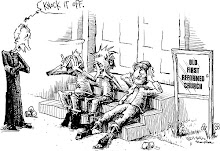
On Luke 13:1-9, preached by seminary intern Rachel Daley
Did you hear about the Galileans? The ones who came to offer sacrifices, and whom Pilate had put to death? He spilled their blood so that it mingled with their sacrifices. What did they do to get into trouble? What was Pilate’s agenda? We don’t know the particulars of this incident, but we know the type. Such violence can be politically expedient. Coercive power is needed to enforce laws, to thwart criminals, and to maintain order and justice. We are familiar with the abuses of such power which is too often used to silence dissidents, sow uncertainty and fear, or tighten the grip of a corrupt ruler.
Someone mentions the incident to Jesus, asking for a bit of political commentary, maybe a theological account of this sobering piece of news. What is Jesus to do? Philosophize about the right use of violence? Incite the crowd to righteous anger against the Roman prefect who has committed yet another injustice? Call down God’s judgment on irresponsible rulers? Offer comfort to a people badly shaken by Pilate’s violent whims? Assure them that the dead have passed on to a better world? These would be valid responses to the problems of violence. They are the impulses that give rise to ethics, political activism, prophetic critique, lament, and hope in a more just world. Each of these is part of the Christian calling and witness.
Jesus doesn’t say or do these things. He teaches about something else- an attitude that is costlier than righteous anger.
While called to respond to an act of political violence, Jesus lifts up an example of destruction that is outside of human control. Eighteen Jerusalemites were killed when a tower collapsed on them. Violence is deliberate and gruesome, but it is also accidental and indiscriminate. There is an element of violence in the world that is outside of human control. We try to control and limit destruction. Today this incident would be followed by an investigation into the practices of building inspectors, a suit against irresponsible contractors, and push for reform in building codes. The inevitable fact is that we make our lives within buildings that age and wear; we make our lives on plates that shift, war, and crash.
Are the victims worse sinners than everyone else? No! - Jesus says. We would probably say the same. The Galileans were victims of an unjust use of power. The Jerusalemites at Siloam were in the wrong place at the wrong time. It is not true that suffering happens to the worst sinners while the righteous remain unscathed. The world is not mechanized. Violence and death are not distributed as punishment for sin. Jesus rejects the unvoiced suspicion that good things happen to good people and bad things to bad.
It is hard to live in a chaotic and unordered world. There is always bad news of the outbreak of war, the escalation of conflict, another report about the disastrous effects of climate change. It is hard to understand undeserved suffering. There is a lingering temptation to order and to mechanize. Do we ever interpret our safety as a sign of the superiority of our own way of life? Do we assume that wellbeing is evidence of God’s tacit approval? I feel secure because I live in well-constructed buildings. I live among decent people. My leaders are not perfect, but our government does not allow violence against innocent citizens. I don’t get mixed up with the wrong sort of people. I protect myself and my family. Self-satisfied security protects us from the demands of violence; it’s something that happens to other people, in another neighborhood, on another continent.
We know the woes of our troubled planet, but there is a tendency to locate such problems outside of ourselves. We philosophize and theologize, protest and complain, ignore and grow apathetic. In such action and inaction, we fail to address a fundamental truth. The truth is that the sin of the world is in us too. Sin is not something other people do. You can’t dismiss sin as a problem of those without education or good values. Sin is not limited to tyrants, corrupt politicians, and greedy executives. We can’t respond from a position of comfortable privilege or moral superiority.
Jesus won’t allow his followers to make this question of violence and death abstract - it is always personal. Suffering, corruptibility, and death are in us. The ache of the poor, the sick, and the fearful is our ache. The seeds of greed and selfishness that prompt war and violence are in me, in you. We share in the violence of the oppressor and the suffering of the oppressed. We are bound to those who have perished. We are bound in our common humanity; by the flesh and the weakness we share, by the inevitability that we will meet the same end. We are all equal in the face of death, equal in our need to repent of our part in evil.
The parable of the fig tree is a challenge to the comfortable. The tree has stood for several years and yet it bears no fruit. The axe is at the foot of the tree, but the gardener speaks up - Wait. Wait one more year. I will tend and nurture the tree, I will make one final experiment before cutting it down. It is warning. The barren tree still stands, but it has not escaped judgment.
It is tempting to grow comfortable while we are allowed to stand. That we do not see the end, does not mean that it is not coming. That we don’t yet feel the impacts of our lifestyle on the environment, does not mean we will be safe forever. That war begins in a distant land does not mean that it will always so far away. Prosperity and security give us no advantage before God. Rather we will be called to give an account of how we have acquired and dispatched such gifts.
Jesus has one word for the self-satisfied, the despairing, the indignant: Repent. Unless you repent, you will perish just as they did. Jesus takes these events as a call to redirect the heart and life toward the purposes of God. We don’t need to abandon our rage and sorrow, but we do surrender them to a God whose anger and lament over violence is more fervent and more faithful than our own. Repentance means to make confession of our part of violence and our complicity in violent structures. We confess the things we have done and left undone. We confess that we have been unjust and indifferent while pursuing our own security in a violent world. Repentance is the category through which we interpret and respond to painful events. Repentance itself is painful as we realize that sin and death cut to the core of our being.
Jesus expects that the fig tree will bear fruit. John the Baptist preached about the fruits of repentance. The crowds asked him what he meant and he said- Anyone who has two coasts must share with anyone who has none, and whoever has food must do likewise. Then he told the tax collectors not to collect more than the amount prescribed, and told soldiers not to extort money through threats or accusations. The fruits of repentance are to be just and fair, and to give to the one in need.
John the Baptist does not tell the people to take up an ideology, does not launch a campaign under a grandiose slogan like World Peace or End Poverty. Those are worthy efforts, but they are not repentance. They keep the issues abstract and allow us to circumvent the problem of our own sinfulness. Repentance is a turn from selfishness to ethical concern for neighbors. The fruit of repentance is in ethical patterns of assistance, honesty, equity, in the prudent and moderate use of material possessions. The logic of these small acts is that repentance must be personal and physical, because sin and suffering are personal and physical.
I think it’s really hard to get this right. Jesus warns us against getting too comfortable. Do we then live in fear, expecting violence and judgment at every turn? Jesus reminds us of our sin. Are we then plagued with sorrow about our part in suffering? Jesus us tells us to repent. Do we then shoulder responsibility for every pain and sorrow? Must we earn God’s favor through the sincerity of our confessions or through many good deeds? No, this mandate would twist Christ’s message into its opposite. Christ’s work is a free movement of God’s love toward humans.
Have we forgotten where Jesus is? Have we forgotten where he is going? He is on the road. Some time ago he set his face to go to Jerusalem. He has embarked on a path that leads to violent death. In taking this journey, he has already put on the suffering of the Galileans and the Jerusalemites. He has taken up the sin of the crowds, the abuses of unjust power, the ache of a turbulent, crashing world. He himself will die at Pilate’s hands, even while bearing the sin of those who put him to death. He carries your sin, your suffering and the hurts of a world that are too great for you to bear. A word of fear and guilt has nothing to do with this good news. Christ’s teaching is sobering, but it is given by him who takes sin and suffering upon himself, and so it is not without hope. His message exhorts us to watchfulness, but never to despair.
Monday, March 08, 2010


Saturday, March 06, 2010
Guest Homily: Ash Wednesday
By Rachel Daley, our seminary intern
Winter is the quietest of all seasons. Large summer barbecues give way to quiet evenings at home with only our closer friends. The cold makes things quiet. Carefree youth may venture out for the occasional snowball fight, but the sensible will pass their time in the warmth indoors. The snow makes things quiet too, muffling the noises of a hectic world. The earth clothes itself in subdued grays, whites, browns, pale blue - shedding, for now, its blazing greens, reds, and yellows.
My grandfather, a Canadian, might suggest that winter makes us stronger. When he remembers the hardships his family faced, he tells me that they survived because of the strength of his mother, my great-grandmother, Kate Pike. To explain the source of her unyielding determination, my grandfather will say, “Well, she was a Newfoundlander, you see.”
Newfoundland is a large island in the North Atlantic Ocean known for long, brutal winters. My great-grandmother came from a place where winter was not peace and tranquility. Winter was a battle against ice fogs, freezing rain, and of course for the many who were fishermen, rough seas. After such adversity, Kate Pike was not to be undone when life proved difficult.
Though I don’t always like winter, I’ve come to think that it is a necessary part of life. However, that view may represent the sensibilities of my Canadian ancestors and you are free to disagree. Preferences of weather and climate aside, we certainly do need times of quiet and solitude. Nor can entirely escape the dark, quiet times, times when we struggle for our very survival.
As Christians we have set aside a season for silence and self-examination. We call it Lent, and like winter, it can be a difficult time. We’re something like the Newfoundlanders, perhaps, made strong through centuries of cold, dark struggle.
Like the chill of winter that keeps us inside, Lent is a season to shut the door to the world, to tend to our souls, to pray from the secret recesses of our hearts. We withdraw from religious displays and the ostentation of the streets to be alone with our Father. We seek out solitude and refuge from our noisy, demanding world. To those who would pray rightly Jesus commands, “Go into your room. Shut the door.” Examine your private room, turn over its contents, cleanse the heart of all invasions and interruptions. Pray secretly, earnestly, with single-minded striving for God your Father.
Lent is not like the beginning of winter when we are more inclined to relish the falling snowflakes. Those were busy days of sparkle and holiday cheer. We greet Lent in the middle of winter, as the fresh, shimmery snow turns to dirty slush. Where I grew up in the Midwest, days and weeks and months will pass without a trace of sunshine. By mid-February, the collective consciousness grows cranky; the winter blues set in. The days take on the monotony of the cloudy, grey skies above us, we long for warm air and bare feet, everyone is living at the edge of their skin. Lent coincides not with our December eagerness for snow angels and igloos, but with our tired February spirits that yearn for the day we will step outdoors without a winter coat.
Lent is a time when we remember the weakness of our own bodies. We meditate on the dust from which we were formed. Traditionally it has been a time for fasting or for doing without some luxury we enjoy. We fast so that by denying the body, God might feed the soul.
Now try explaining that logic to my childhood friend Amanda Wilwert. She complained that Lent did nothing except increase the general irritability of her household as her parents stayed clear of soda and chocolate. Certainly the fasting Jesus describes seems out-of-sync with today’s world. Christ would teach us that the path toward spiritual growth does not bypass our physical bodies - their discipline or their weakness. We give up the earthly things that rule us so that hearts may hunger for God alone. In the frayed nerves and noisy stomachs that a lack of food, caffeine, or sunlight might induce, we begin to realize how desperately we need God to sustain us.
This season reminds us that our bodies are ash, lifeless without the breath of God’s nostrils. We remember our limitations and our dependence, and, yet strangely perhaps, these limits are a comfort to us. We are dust, dependent on God in all ways, even for our very righteousness. We seek to do what is right, but when we do good with the right hand, the left hand knows and we congratulate ourselves. Jesus commands us to a righteousness that is not concerned with itself, so habitual as to be unaware of itself.
True righteousness gives for the sake of the one in need, prays out of need and for communion with God, fasts to glorify God alone. Of such goodness we are not capable, even our best efforts are imperfect and stained with sin. Repentance comes not so much in striving, but in weakness. Repentance takes root as we abandon the pretense that we will ever deserve God’s grace.
Even so, there is so much grace. Christ promises that in the cold, silence of winter, God will make your heart new. In struggle, in doubt, and in hunger, God will feed and comfort you, will meet you with the force of a sharp, winter wind. Let your heart draw near to God in repentance, that in this Lenten season God may plant the fruits of gratitude and righteousness.
Winter is the quietest of all seasons. Large summer barbecues give way to quiet evenings at home with only our closer friends. The cold makes things quiet. Carefree youth may venture out for the occasional snowball fight, but the sensible will pass their time in the warmth indoors. The snow makes things quiet too, muffling the noises of a hectic world. The earth clothes itself in subdued grays, whites, browns, pale blue - shedding, for now, its blazing greens, reds, and yellows.
My grandfather, a Canadian, might suggest that winter makes us stronger. When he remembers the hardships his family faced, he tells me that they survived because of the strength of his mother, my great-grandmother, Kate Pike. To explain the source of her unyielding determination, my grandfather will say, “Well, she was a Newfoundlander, you see.”
Newfoundland is a large island in the North Atlantic Ocean known for long, brutal winters. My great-grandmother came from a place where winter was not peace and tranquility. Winter was a battle against ice fogs, freezing rain, and of course for the many who were fishermen, rough seas. After such adversity, Kate Pike was not to be undone when life proved difficult.
Though I don’t always like winter, I’ve come to think that it is a necessary part of life. However, that view may represent the sensibilities of my Canadian ancestors and you are free to disagree. Preferences of weather and climate aside, we certainly do need times of quiet and solitude. Nor can entirely escape the dark, quiet times, times when we struggle for our very survival.
As Christians we have set aside a season for silence and self-examination. We call it Lent, and like winter, it can be a difficult time. We’re something like the Newfoundlanders, perhaps, made strong through centuries of cold, dark struggle.
Like the chill of winter that keeps us inside, Lent is a season to shut the door to the world, to tend to our souls, to pray from the secret recesses of our hearts. We withdraw from religious displays and the ostentation of the streets to be alone with our Father. We seek out solitude and refuge from our noisy, demanding world. To those who would pray rightly Jesus commands, “Go into your room. Shut the door.” Examine your private room, turn over its contents, cleanse the heart of all invasions and interruptions. Pray secretly, earnestly, with single-minded striving for God your Father.
Lent is not like the beginning of winter when we are more inclined to relish the falling snowflakes. Those were busy days of sparkle and holiday cheer. We greet Lent in the middle of winter, as the fresh, shimmery snow turns to dirty slush. Where I grew up in the Midwest, days and weeks and months will pass without a trace of sunshine. By mid-February, the collective consciousness grows cranky; the winter blues set in. The days take on the monotony of the cloudy, grey skies above us, we long for warm air and bare feet, everyone is living at the edge of their skin. Lent coincides not with our December eagerness for snow angels and igloos, but with our tired February spirits that yearn for the day we will step outdoors without a winter coat.
Lent is a time when we remember the weakness of our own bodies. We meditate on the dust from which we were formed. Traditionally it has been a time for fasting or for doing without some luxury we enjoy. We fast so that by denying the body, God might feed the soul.
Now try explaining that logic to my childhood friend Amanda Wilwert. She complained that Lent did nothing except increase the general irritability of her household as her parents stayed clear of soda and chocolate. Certainly the fasting Jesus describes seems out-of-sync with today’s world. Christ would teach us that the path toward spiritual growth does not bypass our physical bodies - their discipline or their weakness. We give up the earthly things that rule us so that hearts may hunger for God alone. In the frayed nerves and noisy stomachs that a lack of food, caffeine, or sunlight might induce, we begin to realize how desperately we need God to sustain us.
This season reminds us that our bodies are ash, lifeless without the breath of God’s nostrils. We remember our limitations and our dependence, and, yet strangely perhaps, these limits are a comfort to us. We are dust, dependent on God in all ways, even for our very righteousness. We seek to do what is right, but when we do good with the right hand, the left hand knows and we congratulate ourselves. Jesus commands us to a righteousness that is not concerned with itself, so habitual as to be unaware of itself.
True righteousness gives for the sake of the one in need, prays out of need and for communion with God, fasts to glorify God alone. Of such goodness we are not capable, even our best efforts are imperfect and stained with sin. Repentance comes not so much in striving, but in weakness. Repentance takes root as we abandon the pretense that we will ever deserve God’s grace.
Even so, there is so much grace. Christ promises that in the cold, silence of winter, God will make your heart new. In struggle, in doubt, and in hunger, God will feed and comfort you, will meet you with the force of a sharp, winter wind. Let your heart draw near to God in repentance, that in this Lenten season God may plant the fruits of gratitude and righteousness.
Monday, February 15, 2010
What is Passionate Spirituality?
Here is a working definition for Old First: Passionate spirituality is receiving the power of God in the Spirit of Jesus for transformation of our lives, yielding love and joy.
Why this? The phrase "passionate spirituality" comes from the program called "Natural Church Development" (NCD) which we are using at Old First. This program measures the health of a church by means of eight categories. The goal is to measure your church to find out which of the categories it's weakest in, and then address that category.
Three years ago, we determined we were weakest in Small Groups, so we addressed that. This last time around we determined we are weakest in Passionate Spirituality, so we are addressing that.
But what does that mean, Passionate Spirituality? It's very hard to define. What's the difference between spirituality that's passionate and spirituality that's not? What's the difference between passion that's spiritual and passion that's not?
Well, I doubt my definition is the best one, but I don't think it's a bad one, and at least it's a place to start, so I offer it. Once again, Passionate spirituality is receiving the power of God in the Spirit of Jesus for transformation of our lives, yielding love and joy.
Why this? The phrase "passionate spirituality" comes from the program called "Natural Church Development" (NCD) which we are using at Old First. This program measures the health of a church by means of eight categories. The goal is to measure your church to find out which of the categories it's weakest in, and then address that category.
Three years ago, we determined we were weakest in Small Groups, so we addressed that. This last time around we determined we are weakest in Passionate Spirituality, so we are addressing that.
But what does that mean, Passionate Spirituality? It's very hard to define. What's the difference between spirituality that's passionate and spirituality that's not? What's the difference between passion that's spiritual and passion that's not?
Well, I doubt my definition is the best one, but I don't think it's a bad one, and at least it's a place to start, so I offer it. Once again, Passionate spirituality is receiving the power of God in the Spirit of Jesus for transformation of our lives, yielding love and joy.
Saturday, February 13, 2010
Daughter of the Regiment
Am I the only one not convinced by Diana Damrau's performance of Marie in the "Daughter of the Regiment" at the Metropolitan Opera? I mean, I enjoyed it, this Saturday afternoon, on WQXR, and of course, I didn't SEE it, so maybe I shouldn't even say anything, but from what I could hear, it sounded to me like a lot of forced funniness.
What a great voice, yes, but when you watch Damrau's performances on Youtube of, say, Glitter and Be Gay, she always seems to try too hard.
Ja, ich weiss das du Deutsch bist, aber, "Lighten up."
Juan Diego Flores has that wonderful light tenor voice in his role as Tonio (with the famous nine High C's), and it would seem to me that the Marie should be as light and delightful as the Tonio.
Ah, everybody's a critic.
What a great voice, yes, but when you watch Damrau's performances on Youtube of, say, Glitter and Be Gay, she always seems to try too hard.
Ja, ich weiss das du Deutsch bist, aber, "Lighten up."
Juan Diego Flores has that wonderful light tenor voice in his role as Tonio (with the famous nine High C's), and it would seem to me that the Marie should be as light and delightful as the Tonio.
Ah, everybody's a critic.
Saturday, January 16, 2010
What to Pray for Haiti
Here in Brooklyn we have a very large Haitian community, and we meet up with Haitians everywhere. So I have been asking the Haitians I talk to for one name to pray for, and that means that now I am praying for Alfred, Margaruite, and Desiree. Aflred is the uncle of one of the custodians at Congregation Beth Elohim. Margaruite is the aunt of a friend.
Desiree is family of the woman who served me coffee at the Burger King at the NY Thruway rest stop yesterday. Her accent sounded Haitian, and I could see she was having a bad time of it, so I said to her, "You've lost someone, haven't you," and she said yes. So I'm praying for Desiree.
I don't know what specificially to pray for. That's okay, cause I don't know the people personally. I just repeat their names. To the God who created the world which has tectonic plates which have to move and cause earthquakes.
We're all stunned and numbed, of course. Some people are saying that some good will come out of this for Haiti, such as better buildings (when rebuilt), massive investment, and new attention from the world. Maybe. Maybe. I have no idea.
After 9/11 in New York we could blame the Terrorists. But where can we go with our anger over the death and destruction in Port-au-Prince?
I can't explain it, I can't justify it, all I know is that it drives us all into the depths of our faith and the deepest realities we know. I find that it doesn't shake my belief in God one bit, but it forces us beyond our limits and to the face of God.
It's not that I blame God, or even that I hold God responsible. I mean I do hold God responsible for creating this world with physical and chemical laws, and I thank God that the laws of nature are binding, and I know that the rock formations in Haiti were just obeying the law. So in a sense I do hold God responsible for this earthquake and also for allowing us the freedom to live our lives. So this does not at all cause me to lose my respect and honor for God.
By now you have been revulsed by Pat Robertson's idiot words about "the pact with the devil." (What is this guy like at home?) It wasn't the French they kicked out, it was their slavery. Their slavemasters were the ones, if anyone, who had made a pact with the devil. Not that the phrase makes any real sense, but for a Christian people to keep slaves and use slaves and support slavery as acceptable is, as the Bible says, "to make a covenant with death."
So where should we go with our anger? Well, it might be better to turn our anger against the inequitable effects of the political-economic systems which we support and which give us comfort and profit but which have their grinding underside and their usual victims. We have met the devil and he . . . is us?
But more important than that, I'm guessing that the people who are busiest in the work of relief have the least time to get angry or to look for someone to blame.
I'm also praying (I really am) that God will speak to me in my own life for how best I can do my part. Why don't you do the same. (And donate. See the entry below.)
Desiree is family of the woman who served me coffee at the Burger King at the NY Thruway rest stop yesterday. Her accent sounded Haitian, and I could see she was having a bad time of it, so I said to her, "You've lost someone, haven't you," and she said yes. So I'm praying for Desiree.
I don't know what specificially to pray for. That's okay, cause I don't know the people personally. I just repeat their names. To the God who created the world which has tectonic plates which have to move and cause earthquakes.
We're all stunned and numbed, of course. Some people are saying that some good will come out of this for Haiti, such as better buildings (when rebuilt), massive investment, and new attention from the world. Maybe. Maybe. I have no idea.
After 9/11 in New York we could blame the Terrorists. But where can we go with our anger over the death and destruction in Port-au-Prince?
I can't explain it, I can't justify it, all I know is that it drives us all into the depths of our faith and the deepest realities we know. I find that it doesn't shake my belief in God one bit, but it forces us beyond our limits and to the face of God.
It's not that I blame God, or even that I hold God responsible. I mean I do hold God responsible for creating this world with physical and chemical laws, and I thank God that the laws of nature are binding, and I know that the rock formations in Haiti were just obeying the law. So in a sense I do hold God responsible for this earthquake and also for allowing us the freedom to live our lives. So this does not at all cause me to lose my respect and honor for God.
By now you have been revulsed by Pat Robertson's idiot words about "the pact with the devil." (What is this guy like at home?) It wasn't the French they kicked out, it was their slavery. Their slavemasters were the ones, if anyone, who had made a pact with the devil. Not that the phrase makes any real sense, but for a Christian people to keep slaves and use slaves and support slavery as acceptable is, as the Bible says, "to make a covenant with death."
So where should we go with our anger? Well, it might be better to turn our anger against the inequitable effects of the political-economic systems which we support and which give us comfort and profit but which have their grinding underside and their usual victims. We have met the devil and he . . . is us?
But more important than that, I'm guessing that the people who are busiest in the work of relief have the least time to get angry or to look for someone to blame.
I'm also praying (I really am) that God will speak to me in my own life for how best I can do my part. Why don't you do the same. (And donate. See the entry below.)
Thursday, January 14, 2010
Reformed Church Responds to Haiti Earthquake

Reformed Church World Service
has responded with an initial contribution of $10,000 to earthquake relief efforts in Haiti.
How You Can Help
Pray for the people of Haiti, especially for those who are injured, homeless, or have lost loved ones. Pray also for the hundreds of rescue workers and disaster recovery personnel.
Donate to provide water, blankets, temporary shelter, and food to the tens of thousands who are homeless. Send contributions, designated "Haiti Earthquake," to Reformed Church in America, P.O. Box 19381, Newark, NJ 07195-1938 or, in Canada, to Regional Synod of Canada, 201 Paradise Road N., Hamilton, ON L8S 3T3. To donate by credit card, call (800) 968-3943, ext. 247 or go to the Haiti Earthquake Donation Page.
Assemble hygiene kits and baby kits and ship them to Church World Service. Detailed information on creating and shipping of kits is available at http://www.rca.org//page.redir?target=http%3a%2f%2fwww.churchworldservice.org%2f&srcid=8667&srctid=1&erid=183834.
Check for updates on the RCWS website: rcws.rca.org.
"The people of Haiti have urgent needs rights now," says David Dethmers, coordinator of Reformed Church World Service, "basic needs of water, food, and shelter. We make this contribution on behalf of the members and friends of the Reformed Church in America, confident that in the longer term we will be able to do much more."
The initial support will be directed through the RCA's partner, Church World Service (CWS), which has staff permanently placed in Haiti and the Dominican Republic and therefore is able to mobilize quickly. In the early days of the response, CWS will be providing blankets, water, and hygiene and baby kits.
In a conference call with CWS communions on Wednesday afternoon, Donna Derr, director of emergency response programs for CWS, highlighted the urgency of the need for donations to address the crisis in Haiti.
"We are emptying our warehouse in Maryland," she emphasized. "We're intending to ship over 25,000 hygiene kits and several thousand baby kits. That's almost everything we've got. There's a desperate need to replenish our supplies. I urge churches and individuals who are seeking a way to help to put these kits together and ship them to us as soon as possible."
RCWS Partners with Christian Reformed World Relief Committee
On Friday, David Dethmers will travel to Haiti with a delegation from CRWRC, the relief and development arm of the Christian Reformed Church. "It's a sign of the growing relationship between our two communions," Dethmers says. "Within hours of hearing about the disaster, we were in communication with each other. Very quickly it became clear that it made sense to travel and work together."
In Haiti, Dethmers will meet with a wide variety of local partners of both Church World Service and CRWRC. He is also hoping to meet with the RCA's new partner in the Dominican Republic, the newly emerging Reformed Church in the Dominican Republic. The recovery in Haiti will be a long one. "The goal of the trip," he says, "in addition to encouraging and supporting RCA partners in Haiti and the Dominican Republic, is to listen to local partners, developing a mid- and long-range strategy that will support the Haitians as they plan and implement their own recovery and plan their future."
Monday, January 11, 2010
Parrots On My Street

One morning last week, when it was "ridiculously cold" (in the words of WQXR's Jeff Spurgeon) I noticed a pair of Monk Parrots in the tree outside our building on Seeley Street.
These are two of Brooklyn's famous feral parrots. They're also known as "Quaker Parrots."
Well, at last they've arrived on my street. I've seen them in Greenwood Cemetery, of course, and at Brooklyn College, and at City Island, and last year near the Fort Hamilton F stop, but this was the first time I saw them on Seeley Street. I'm assuming they're expanding their territory.
They are an invasive species. But I love them. Their energy, pluck, and intelligence. Tropical birds who manage to survive and even flourish in this foreign environment. And it was so flippin' cold outside!
They're quintessential New Yorkers. Immigrants making it. They belong in Brooklyn, don't they? I guess they have as much right to be here as any of us do.
If You Meet the Buddha on the Road, Kill Him
This morning I am working on my sermon for the second Sunday after Epiphany. The gospel text is the story of the Wedding at Cana, where Jesus turns the water into wine. I am reminded of an event in my own life.
I am quite content to be a parish pastor. But for most of my life it had been my dream to become a seminary professor. Twice I got very close. In 1991 I was one of the finalists for a position in teaching liturgy at the University of Toronto.
In the final interview with the search committee, one of the theologians asked me something like this, “I wonder if you could teach our students some new traditions and new kinds of sacraments. I am thinking of a kind of sacrament that is not violent. You know, Holy Communion uses violent symbols—the broken bread for a broken body and the poured out wine for bloodshed. What would you think about teaching a non-violent sacrament?"
I remember not answering right away as I tried to figure out what I would say.
Then the theologian added this: "What about teaching a sacrament where we all ate fruit together?”
At that point I knew I would not get this job. But I did control myself—I did not say, “You mean like in the Garden of Eden,” or “I wonder how the fruit feels.”
Inventing new traditions is not my gift (or my desire). And as for the violence (maybe they were testing me because I was American), the violence signified by broken bread and poured out wine, well, it’s not the violence itself, but that we find ourselves in the middle of violence and brokenness and grief, the reality is that our lives are constantly poured out.
The tradition of Holy Communion is so powerful because it allows us to accept the reality of our lives and our suffering, and to believe that God meets us there, and goes through it with us. It is the acknowledgment that we are violent, and that God comes through our violence to bring us peace, that God passes through our mournfulness to bring us joy, and that Jesus wept so that we might laugh.
Oh how we fantasize of getting back to the Garden. But there's an angel with a sword of fire in the way. "It is in dying that we are born to eternal life." And, "If you meet the Buddha on the road, kill him." You know what I mean?
I am quite content to be a parish pastor. But for most of my life it had been my dream to become a seminary professor. Twice I got very close. In 1991 I was one of the finalists for a position in teaching liturgy at the University of Toronto.
In the final interview with the search committee, one of the theologians asked me something like this, “I wonder if you could teach our students some new traditions and new kinds of sacraments. I am thinking of a kind of sacrament that is not violent. You know, Holy Communion uses violent symbols—the broken bread for a broken body and the poured out wine for bloodshed. What would you think about teaching a non-violent sacrament?"
I remember not answering right away as I tried to figure out what I would say.
Then the theologian added this: "What about teaching a sacrament where we all ate fruit together?”
At that point I knew I would not get this job. But I did control myself—I did not say, “You mean like in the Garden of Eden,” or “I wonder how the fruit feels.”
Inventing new traditions is not my gift (or my desire). And as for the violence (maybe they were testing me because I was American), the violence signified by broken bread and poured out wine, well, it’s not the violence itself, but that we find ourselves in the middle of violence and brokenness and grief, the reality is that our lives are constantly poured out.
The tradition of Holy Communion is so powerful because it allows us to accept the reality of our lives and our suffering, and to believe that God meets us there, and goes through it with us. It is the acknowledgment that we are violent, and that God comes through our violence to bring us peace, that God passes through our mournfulness to bring us joy, and that Jesus wept so that we might laugh.
Oh how we fantasize of getting back to the Garden. But there's an angel with a sword of fire in the way. "It is in dying that we are born to eternal life." And, "If you meet the Buddha on the road, kill him." You know what I mean?
Wednesday, December 16, 2009
The Annual Rick Moody Christmas Quotation
As Jessica Stockton reminds me every year:
"Why is it that the worse the Christmas service, the closer we get to the idea of Christmas?
Children's services, with children running aimlessly in the aisles in lamb costumes or dressed as wise men, neglecting or refusing to say their lines, why so much closer to the idea of Christmas?
What is this thing about Christmas, the paradoxical tendency of Christmas, that the more heartbreaking it is the closer it seems to get to the point? Why is failure and awkwardness so human and so natural at Christmas?... Why is it that desperation is closer to God?...
At the same time, what about the Mean Estate stuff, what about Mary lying in bad circumstances? Why is it that the no-room-at-the-inn part is inevitably moving, even when you are skeptical about the whole thing?... And why an ideology of the neglected and left out and miserable and disinherited and lonely and poor and ill and exiled, anyway?...
And why is it, meanwhile, that singing is the thing that enables me to understand this, why is it that singing makes the Christmas holiday what it is, what it can be, what it ought to be?"
- Rick Moody, Christmas 2006
"Why is it that the worse the Christmas service, the closer we get to the idea of Christmas?
Children's services, with children running aimlessly in the aisles in lamb costumes or dressed as wise men, neglecting or refusing to say their lines, why so much closer to the idea of Christmas?
What is this thing about Christmas, the paradoxical tendency of Christmas, that the more heartbreaking it is the closer it seems to get to the point? Why is failure and awkwardness so human and so natural at Christmas?... Why is it that desperation is closer to God?...
At the same time, what about the Mean Estate stuff, what about Mary lying in bad circumstances? Why is it that the no-room-at-the-inn part is inevitably moving, even when you are skeptical about the whole thing?... And why an ideology of the neglected and left out and miserable and disinherited and lonely and poor and ill and exiled, anyway?...
And why is it, meanwhile, that singing is the thing that enables me to understand this, why is it that singing makes the Christmas holiday what it is, what it can be, what it ought to be?"
- Rick Moody, Christmas 2006
Wednesday, December 09, 2009
Book Drive
Our Deacons are really at it.
They're also conducting a Book Drive to benefit African Refuge's After-School Program.
African Refuge is a non-profit org. on Staten Island offering aid to West African refugees. Due to a 14 year civil war, many Liberian children have missed one or more years of school. They need a library for their after-school program. We can help them build it. Please bring your 'gently read' or new books to Old First (7th Ave.&Carroll St.) on Sunday, Dec. 13th from 3:00-7:00pm. The books should be for readers age 5-17. Adult-level books also welcome.
They're also conducting a Book Drive to benefit African Refuge's After-School Program.
African Refuge is a non-profit org. on Staten Island offering aid to West African refugees. Due to a 14 year civil war, many Liberian children have missed one or more years of school. They need a library for their after-school program. We can help them build it. Please bring your 'gently read' or new books to Old First (7th Ave.&Carroll St.) on Sunday, Dec. 13th from 3:00-7:00pm. The books should be for readers age 5-17. Adult-level books also welcome.
Tuesday, December 08, 2009
Christmas Carols
Come Sing for Peace!
Old First Christmas Carol Sing-along
Please join us for a SING-ALONG of all your favorite classic carols.
Suggested donation
$8.00/familes $15.00
Proceeds support our mission in Africa in the work of Debbie and Del Braaksma as they teach trauma-healing, reconciliation and trust building to people who have previously only known war.
December 13, 2009 5.00pm
Old First Church 7th Ave & Carroll St. Park Slope
Old First Christmas Carol Sing-along
Please join us for a SING-ALONG of all your favorite classic carols.
Suggested donation
$8.00/familes $15.00
Proceeds support our mission in Africa in the work of Debbie and Del Braaksma as they teach trauma-healing, reconciliation and trust building to people who have previously only known war.
December 13, 2009 5.00pm
Old First Church 7th Ave & Carroll St. Park Slope
Sunday, November 15, 2009
Sermon for November 15, Een Goed Begin

Mark 13:1-8
Een Goed Begin
Exordium Remotum:
Geliefde gemeente, dames en heren, mensen en kinderen. The exordium remotum was the preview of the sermon. My text is from Mark 13. Seest thou these great buildings? there shall not be left one stone upon another, that shall not be thrown down. And when ye shall hear of wars and rumours of wars, be ye not troubled: for such things must needs be; but the end shall not be yet. For nation shall rise against nation, and kingdom against kingdom: and there shall be earthquakes in divers places, and there shall be famines and troubles: these are the beginnings of sorrows.
Now hear it in the Statenvertaling that was heard by us till 1824. En wanneer gij zult horen van oorlogen, en geruchten van oorlogen, zo wordt niet verschrikt, want dit moet geschieden; maar nog is het einde niet. Want het ene volk zal tegen het andere volk opstaan, en het ene koninkrijk tegen het andere koninkrijk, en er zullen aardbevingnen zijn in verscheidene plaatsen, en er zullen hongersnoden wezen, en beroerten. Deze dingen zijn maar beginselen der smarten.
That word smarten is not accurate to the Greek. The better translation iweeën, "labor pains." The famines and troubles are the beginning of labor pains—the most painful of pains, yet not pains of death, but of new life. The doom in these words is not doom and gloom, but doom and dawn, doom and gladness.
The pain is the pain of conversion and repentance, what the Heidelberg Catechism calls "the dying-away of the old nature and the coming-to-life of the new nature." We are to see our lives as a daily breaking-down and daily new beginning. So my topic is Een Goed Begin. From the proverb, "Een goed begin is het halve werk," a good beginning is half the work. They began here began well, but their work is only half finished, and there is very much for us to do.
The rest of my exordium remotum is announcements. I welcome our visitors today. Thank you for coming. We are marking the 400th anniversary of the voyage of Hendrick Hudson which opened up the colony of New Netherland, the ground in which forty-five years later our church was planted. I invite you to our colonial dinner with its historic menu, and let me thank you in advance for your donations at the meal.
I thank our committee who prepared all this, especially Lois Wingerson, and our kitchen volunteers. I thank our voorlezer and voorzanger Hans Bilger. I thank Jennifer Nelson and our children for learning the psalms. The psalms are all we sang in church for 200 years, unaccompanied, but churches with organs were allowed to hear improvisations on the psalm tunes before and after the service, which Aleeza Meir has given us today.
Our psalms and our liturgy date from 1563, which we know our children to have memorized. In 1792 we added an English service, with this translation of the Liturgy, and the Dutch and English overlapped till 1824, which means that we prayed in Dutch for 205 years after Henry Hudson! The liturgy ends with "Gedacht de armen," "Mind the poor." We do. Please take a grocery bag and bring it back next Sunday with food for the poor. Now, let the congregation pray. Laat de gemeente bidden.
Predicatie:
When the first Dutch settlers came to Brooklyn, half of them were ethnically something else than Dutch, but they were all becoming Dutch in language and culture and religion, and they would maintain that language and culture and religion for 200 years. For the first few decades they were outnumbered by the Native Americans, the Canarsees. The settlers called them the wilden, the wild ones, not wild and crazy but wild as in the state of nature, like the wildlife in a nature preserve. That they lived in a state of nature does not mean they left no imprint on the land. Their trails through the woods were easily followed, and the clearings they had cut in the forest for planting their crops, and then abandoned, were easily discernible in the various stages of regrowth. But when the Dutch cleared the trees they made it permanent.
That’s the difference. The aboriginal imprint on the landscape was as passing and organic as nature itself, like the passing of the seasons, the rising of spring and the falling of autumn, the wealth of summer and the dearth of winter, seasons of plenty and seasons of hunger. But the Dutch, although at first they lived more like the wilden than like their relatives in Europe, they had a different vision of the world.
They had a vision of a future, of a continuing orderly development, of well-ordered fields and stout barns and solid houses, a vision of human life abstracted from nature sufficiently to offer insulation from the cold and protection from hunger, a vision of life which the Canarsees considered curious and unnatural.
That vision extended to commerce and civics and religion. After Pieter Stuyvesant established our church in 1654, our very first services were in a barn, doubtless without windows, and it must have struck the Canarsees as crazy to pray to the God of Heaven from inside a barn (unless, of course, they had learned that the Lord had been born in one). But the congregation in that barn will have had a vision of a decent church of stone on stone, and in twelve years’ time they built it.
What that church looked like we do not know—the picture in your bulletin is only one historian’s guess. We do know that ten years after it was built one Dutch visitor described it as a "small and ugly little church standing in the middle of the road." Eight years after that our small and ugly little church became the home of that communion beaker, right there, our avondmaal beker from 1684. Four times a year that beaker was put out on the table in that ugly little building, and the people drank the holy wine from it. On that very cup, 300 years ago, there gleamed the reflected light of the interior of our first building. Wouldn’t we love to be able to still discern what was reflected there, but light has no memory; light is always of the present.
In 1766 that building was torn down, and its stones were included in the walls of the new and larger church, and that beaker reflected that new interior. Forty years later that building was taken down, and what happened to its stones we do not know. They built a new church of bluestone over on Joralemon Street, and that beaker reflected a third interior.
The membership grew so great that after only thirty years they took down that bluestone church and they built a great new edifice in the classical style. Our congregation swelled to more than a thousand and then it gradually dwindled, and that great edifice lasted only fifty years, and its stones too were taken down, and we built this great place here, for a thousand again, but we never had more than two hundred.
This building we have used the longest of any so far, by twenty years, but who’s to say how long before its stones too come down? What will be reflected in our beaker a century from now, and of what sort will be faces of the folks who drink the wine around the table?
Why are doing this today? Why does a church participate in these Five Dutch Days celebrations? For some of the same reasons that a school or a museum or a gallery or consulate may do this, but the driving motivation for a church has to be the motivation of love. The Love of God. For us to love as God loves and to love what God loves has to be under the surface of what we do.
Let me remind you of the love that’s just under the surface of our two scripture lessons. The Ten Commandments were summarized by our Lord Jesus as "Thou shalt love God and thou shalt love thy neighbor." And in the gospel lesson the love is hidden in the image of the pain of childbirth. Childbirth comes from love and goes towards love. It comes from the love of father and mother making love, and it goes toward those two lovers increasing their love by sharing their love with a third, their child. The pain of childbirth is the most painful of pains but it ends in the most joyful of joys, the beginning of a life, which depends on our love just in order to stay alive.
We have this joy at childbirth in spite of everything we know about the reality of life. This child will have her share of trials and troubles. She will do some things she should not do and she will not do some things she should do. We shall have to forgive her of something or other, and we will need her forgiveness back. She may reject what we teach her and rebel against what we hold dear, but we will love her. And if we love her we will not reckon her points against her but will be always ready to begin again. There is pain in the love, not just at childbirth, but all through love and even in the joy, for love remembers, but always begins again.
What we do today we do for love. We love our tradition and our history and our Dutch connection in all its reality both good and bad. We have to forgive it and be forgiven by it. We love what our ancestors in this church began, and what they built, even what they built was as passing as Canarsee clearing in the forest. The stones went up and came back down, but we judge it was a good beginning, and we continue to build the work, even if our own stones come down in the future that God has for us. We will feel the pain, but we should not be dismayed, for the pain is the signal of the birth of whatever new beginning that God has for us.
How impermanent our history has been. Three locations, five buildings, stones put up and down. And yet there is that cup of Jesus’ love. How many hands of the faithful have held that cup and put their mouths on it and drunk from it.
I don’t know the last time that wine has been inside that cup. It is such a priceless and fragile artifact that I would not dare to have us drink from it today. But its surface still contains the light. The light which we believe to be the robe God, and the sign of the splendor of God’s glory and God’s grace.
That light is ever present because, as Einstein taught us, light is the constant of the universe. Everything else is relative and passing, but light is constant. E=MC2, light is what reconciles energy and matter, the light of God’s grace is what reconciles all to which we put our energies and all we think that matters. And by that light upon the cup we can read the promise of the wine inside the cup, we can recognize the blood of Jesus’ sacrifice and the atonement for our sins, and we can discern the new wine of the wedding feast, the gift of always a new beginning, of reconciliation, of truth and reconciliation, of forgiveness, of healing and resurrection, of the conversion of our old nature into the new nature, of the conversion of our sin into righteousness and our weakness into strength and our pain into childbirth, of the conversion of our fear into hope.
By the constancy of that light, that light that shone upon the Canarsees in their ceaseless round of years, and then upon the Half Moon as it sailed up the river, and then upon the settlers as they cleared their fields and built their humble homes, that light which came in through the windows of five successive buildings, by the constancy of the light of the gospel of God, we can believe the promise that in the love of God there is an enduring significance to every passing thing that we have done and yet may do.
We can never know the whole significance of what we do, we cannot stand far enough away from it in time and space to read it in the light at the source of the universe, but we put our trust in the promise of the light and of the blood and of the wine. Our hope for the future is not empty, its solidity is God’s promises, which are more solid than stone and more constant than the earth. And when we believe these promises, this old church may ever new be born again.
Copyright © 2009 by Daniel Meeter, all rights reserved.
Friday, November 13, 2009
Ruled By Children
Park Slope is a "utopian commune ruled by children." So says John Hodgman as quoted in Only the Blog Knows Brooklyn. Too true.
I read this to my wife this morning, and she laughed. "That's great," she said, and then, "You know, I think when people stop worshipping God they start to worship their children. And that's more burdensome."
Ja, and it generates more guilt than any other religion I know of, along with oppressive legalism. I am continually amazed at the guilt and legalism of the Park Slope cult of children. I fly for refuge and relief to the lighter and more pleasant ease of Calvinism.
The worst part of it is the poor kids. The last thing they want is to be in charge. And yet they are never in charge of their own little lives, being so ceaselessly watched and constantly taken care of. But that is what one does with something sacred. Like the Masai with their cattle in East Africa.
On Sunday mornings, as I walk to church through Prospect Park, I often pass a "soccer school" for toddlers. Their parents dress them up in soccer gear and pay some hip jocks to teach their kids how to kick the ball, and then they watch them like medical students at a surgical theater and applaud them when they kick the ball near the goal. Those poor sacred kids.
I read this to my wife this morning, and she laughed. "That's great," she said, and then, "You know, I think when people stop worshipping God they start to worship their children. And that's more burdensome."
Ja, and it generates more guilt than any other religion I know of, along with oppressive legalism. I am continually amazed at the guilt and legalism of the Park Slope cult of children. I fly for refuge and relief to the lighter and more pleasant ease of Calvinism.
The worst part of it is the poor kids. The last thing they want is to be in charge. And yet they are never in charge of their own little lives, being so ceaselessly watched and constantly taken care of. But that is what one does with something sacred. Like the Masai with their cattle in East Africa.
On Sunday mornings, as I walk to church through Prospect Park, I often pass a "soccer school" for toddlers. Their parents dress them up in soccer gear and pay some hip jocks to teach their kids how to kick the ball, and then they watch them like medical students at a surgical theater and applaud them when they kick the ball near the goal. Those poor sacred kids.
Wednesday, November 11, 2009
The Kids Are Getting Ready For Dutch Day
Eric is learning Psalm 42.
You think it's easy? Here's the lyrics (it's antique Dutch of 1563):
Als een hert ghejaeght, O Heere,
Dat verssche water begheert;
Also dorst myn siel oock seere,
Nae v myn Godt hoogh ghe-eert.
End spreeckt by haer, met geklagh:
O Heer waneer komt die dag,
dat ick doch by v sal wesen,
End sien v aanschijn ghepresen.
Seeking water, seeking shelter,
gasps the thirsty, weary deer;
So my soul, in days of trouble,
longs for God’s refreshment here.
In this stressful course of life,in its loneliness and strife,When, say I, will God deliver;
is his mercy gone forever?
Monday, November 02, 2009
The Menu for Dutch Day at Old First
 On Sunday, November 15, after church, is our Colonial style dinner, as our congregation might have eaten it centuries ago. We will eat it in that style—entirely with wooden spoons!
The menu is based on recipes from an authentic cookbook of the period,
De Verstandige Kok, (The Sensible Cook)
Spÿskaart (menu)
Gerecht schotel (main course) Beef with Ginger, Chicken with Orange
Groenten (vegetables): Stewed Cabbage, Belgian Endive, Leeks
Brood (bread): Pumpkin Cornmeal Cakes, Rye and Wheat Bread
Nagerecht (dessert): Almond Tart, Pear Tart, Spanish Porridge, Zoete Koek
Eet smakelÿk (bon appetite)
For information and reservations, see the webpage.
Monday, September 28, 2009
Beth Elohim our Guests for Yom Kippur


The plaster started falling from the ceiling of the synagogue of Congregation Beth Elohim, a block away from us, just in time for the High Holy Days of Yom Kippur. They had a problem, but Rabbi Bachman knew that all he had to do was ask . . . .
So Old First has been delighted, thrilled, and gratified to host this congregation in our building for their Yom Kippur services. (You can read all about it in the newspapers. Just Google "brooklyn church synagogue".) And they filled the place. Our own Old First volunteers worked like crazy on Friday and Saturday to get the sanctuary ready for 1200 people.
Rabbi Bachman said in his sermon for Yom Kippur: "God did this." We say "Amen."
Monday, September 14, 2009
Old First on Dutch Television
The Dutch television network NOS came to Brooklyn as part of the Henry Hudson 400th Anniversary festivities. They visited the New Utrecht graveyard and also Old First, where they interviewed Melody (my wife). I was in South Africa, so I missed it all.
Wednesday, August 05, 2009
My Other Career


I don't know why these photos got posted in reverse order, but the top one should be the last one. This is from the Jinglebell Jamboree of 2008, the community holiday concert at Old First. That's Ethan Schlesser and myself. I'm the Garfunkel to his Simon. We're performing his song-and-dance number, "At the Jinglebell Jamboree". He's at the piano, and behind us is our band, the Bilger Family Band (they're "The Band" to our Bob Dylan; ha ha.). That's Marty Markowitz, the Brooklyn Borough Presient, who's our chief fan.
Ethan wants to do this again. Well, it brings out a part of me I had put behind. The last time I took stage was at the Sayville (Long Island) High School musicals. In 1970 I was the first tenor in the quartet for The Music Man. In 1971 I was Marryin' Sam in Li'l Abner. Strange, in that role I played a renegate preacher. Hmmm.
Thursday, June 25, 2009
New Hope Saints Paint


Here's some more photos of our young saints from Powell, Ohio. And you know what, they also donated the paint!
Wednesday, June 24, 2009
Sanctuary Renovations


 These are the wonderful young people from the New Hope Reformed Church of Powell, Ohio. Thirty high-schoolers plus eight adult sponsors. Working hard and with love. This is their second trip to Old First, as part of our Project Samuel program. Four years ago they painted the Lower Hall.
Elaine Beery is the interior designer at Old First. The photos are by Jane Barber of barberdesign.com.
They will have made a great beginning. There is much more to do, it's a huge sanctuary. Thank you for your inspiration and your love.
Subscribe to:
Posts (Atom)