skip to main |
skip to sidebar
Genesis 22:1-14, Psalm 13, Matthew 10:40-42
I love the story of the Binding of Isaac, and I was happy that it showed up in the lectionary for my last Sunday with you. It’s one of the great stories in all religious literature. In its artful simplicity it captures the greatest issues of the human experience of God.
But on Tuesday Melody told me she hates the story. She said not because the human experience is not true, for we often sacrifice our children, like when we go to war, and we claim God’s blessing. But it’s rather how capricious God is, like God plays with us. And there’s no getting around that part of it.
“God tested Abraham.” Why? Why should God do that? Why the set-up—why did God play this trick on him, deceiving him? Does God test us this way? We know we are being tested all the time, by life, and we pray “lead us not into temptation,” but should we believe that God tests us like this?
God said, “Abraham,” and he said, “Here I am.” In Hebrew, Avraham, and Hinneini. A first time. And then, “I want you to sacrifice and roast your son on a mountain I will show you.” Well, not “roast,” but that would be the result. The gods of Abraham’s neighbors, the Canaanites, required them to roast their children in sacrifice. And all the gods and goddesses of the empires were capricious, and tricked and played with human beings like toys, but wasn’t this God supposed to be different?
Early in the morning, like Hagar had had to, Abraham sets out with Isaac and the servants. Again he does the servants’ work, and saddles the donkey and cuts the firewood. He heads north, 43 miles. What was he thinking those three days? The story keeps silence, but here’s a hint: “On the third day he looked up and saw the place far off.” Yes, “he looked up and saw,” a first time. What did he see? Just the place?
What God had been seeing all along. I think, because when he tells the servants to stay there and wait, he says, “we will return to you”—not “I” but “we.” Maybe he is tricking them in turn, but I think he has seen something, with maybe prophetic vision. After all, in a previous story he was called a prophet (with Abimelech).
He loads the firewood on Isaac’s back and carries the knife and fire himself. “So the two of them walked on together.” A picture of quiet affection. Isaac says, “Poppa,” and he says, “Here I am, my son.” In Hebrew, “Avi,” and, “Hinneini b’ni,” an echo of God with Abraham, but affectionate. And then the tragic question: Where is the lamb?
And the answer, “God will see to it, my son.” The verb is the verb “to see” (ראה) again, but in a conjugation that means “provide”. God will see to it. So yes, I think Abraham has seen something—not all that God sees, but enough of what God sees for Abraham to come to his resolution. His answer to Isaac is the hinge of the story, that “God will see to it.” And “the two of them walked on together,” a second time; that intimate affection.
Then he dutifully carries out his part in the drama, and he’s not just acting, so a part of him must be raging inside that God will not provide, and he’ll have to kill his son, and this God really is no different than the other gods. Do you see what I see going on? This testing of Abraham is now Abraham testing God. Yes, Abraham is testing God, and how wonderful of the Torah to bring us here. This is the climax of the whole life of Abraham, everything else has led up to this.
And God says, “Avraham, Avraham,” and a third time he answers, “Hinneini,” “Here I am.” God says, “Don’t lay your hand on the boy, for now I see that you fear God.” That verb “to see” again, but this time in the sense of “to recognize” or “to know,” like, I see! But didn’t God already know? Doesn’t God know everything, doesn’t God see the future before it happens? The story doesn’t answer that, and we who fear God have to work it out. You can’t work it out unless you also say, “Hinneini, here I am,” and put yourself into the presence of this God, this sometimes troubling God.
Then Abraham “looked up and saw.” A second time he sees what God saw, the ram in the bushes, and that is what he sacrifices. But it's a bit anticlimactic. The tension’s already been resolved, and now it’s reconciliation. Which of course is the whole purpose of the substitutionary sacrifice, an atonement, a reconciliation, and right here is the root of the difficult doctrine of the Substitutionary Atonement, which is another thing that takes a lot to work out, and also requires, “Here I am.”
So Abraham names that place, “the Lord will see to it.” Again the verb “to see,” and again with the meaning of “provide”. Do you hear in the words “provide” and “provision” the roots of “video” and “vision”? This story is all about vision, and Abraham has seen what God sees, at least enough of what God sees. He passed the test of seeing that God will see to it, of seeing the vision that God provides. And so to this day, says the story, it is said of that place, “On the mount of the Lord is vision.”
Both God and Abraham have passed the test. Abraham is proven by the test as fearing God, and the idea that fearing God is something positive is one more thing you can work out only if you start from “Here I am.” And Abraham’s been proven faithful, just as God has been proven faithful, and not capricious, even if the times of trial of our lives might tempt us to think otherwise.
I invite you to believe this even with our troubling questions: Is God always faithful? Why doesn’t God always provide? Why does God expect our sacrifice? Is God ever cruel? Does God ever trick us? Does God have the right to ask whatever God wants of us? Does God still test us? You can wrestle with such questions whenever you say, Here I am.
So now I have three messages for you, my three last messages for Old First. The first is that you will be tested, you will be tested as a congregation in the times ahead. I don’t say that you will be tested by God directly, as in the story, because God does not test us that way, at least not since after the resurrection of the Lord Jesus. But God does test you indirectly, by the interaction of what God has given you to believe against the circumstances that you face. How you apply what you believe to the circumstances that come at you is your testing. And because your belief is your vision of God’s promises, you will have to test God as well. If you answer “here we are” whenever God speaks to you, you will be testing God as much as God is testing you.
But in your testing God will provide, and that’s my second message for Old First, that God will see to it. And in order for you to see what God sees you have to look up. Look up and see how God has provided for you already. In the circumstances that come at you there will be much that you can’t see, but you can look up and see some of what God sees. You can be prophetic as a people, a congregation. The vision has been given to you by the Gospel of Christ, and your power of sight by the Holy Spirit. But you have to look up! And whenever you remember and believe that God will see to it, you will pass the test.
Before I get to my final message I need to mention the subsequent interpretations of our story. The Jewish sages have seen in Isaac the whole identity of their people, who are bound to the covenant as both a privilege and a burden, a people living out their whole long history with all the risk of God. Christians have seen in Isaac a type of Christ, with God the Father being both God and Abraham, and the ram is Jesus too, whose substitutionary sacrifice frees us from our own being bound.
That interpretation is why this story shows up on Christmas Eve, in our liturgy, as the second lesson. For fifteen years we’ve been having that second lesson chanted in Hebrew by someone from Congregation Beth Elohim, some of whom are here with us today. One year Rabbi Andy Bachman said to me, “What is it with you guys and sacrifice?” Even on Christmas Eve!
If you attend that service, maybe you noticed that what’s chanted there was not in the First Lesson that we read today. The lectionary has left out the last three verses of the story, the verses that are the last words of God to Abraham in Genesis. I’m not going to read them now, or quote them, but I will paraphrase them now, as my very last message to you.

In the name of the Lord Jesus, because of how you, Old First, have so welcomed me and my family, and have welcomed me as a prophet, and you have not withheld your souls from me-- your souls that you love--that in God’s blessing you I bless you, that God multiply your seeds that you sow as the stars of the heaven, and God prosper the works you do as the sand upon the sea shore, that the works you do bear fruit beyond your gates, and in your works and your witness, Old First, shall the all the people be blessed by you, because you have obeyed God’s voice. You precious people of Old First, I bless you from my soul, and from my heart I love you as you have loved me.
Copyright © 2020 by Daniel Meeter, all rights reserved.
Genesis 21:8-21, Psalm 86:1-10, 16-17, Romans 6:1-11, Matthew 10:24-39
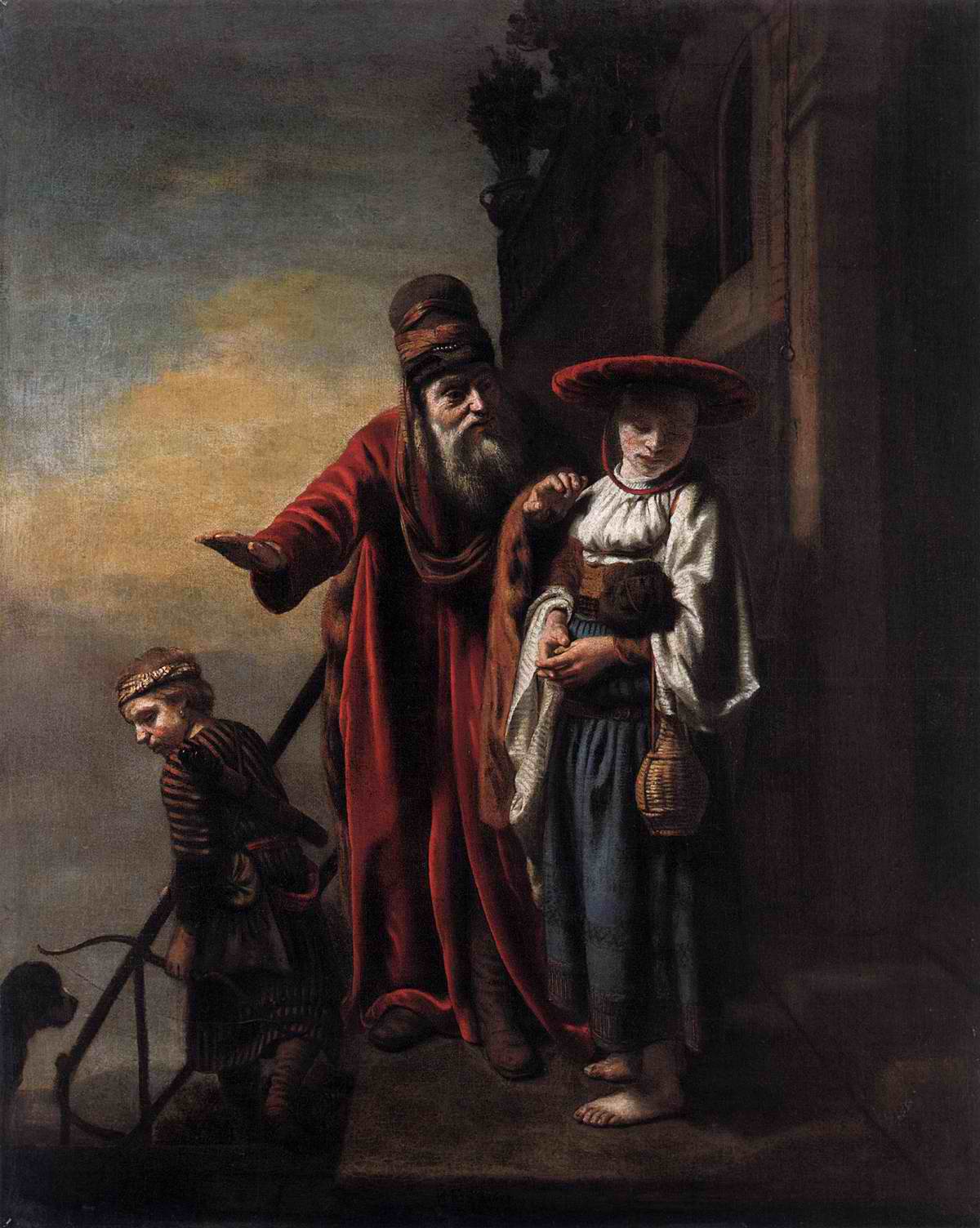
Is Hagar a character from The Handmaid’s Tale? Hagar was a slave who had been made use of to bear a son for Abraham, because Sarah could not. Hagar had had no say in the matter. And now fifteen years later, when Sarah gives birth to a boy of her own, as we saw last week, Hagar’s boy is inconvenient, and gets disinherited, which Abraham has the right to do.
Abraham has all the rights here, including the right to free his slaves, which he does to Hagar, but her freedom does not give her any rights. Her freedom is dangerous to her. Every woman has to be under the protection of some man. Every village will be dangerous for Hagar and her boy, so she takes her chances in the desert.
Abraham does Hagar no favor by setting her free. And the story depicts him as shameful, for all his distress over his son, his only son for fifteen years. He sends them out before dawn, by himself, surreptitiously, and he packs their provisions, which is a servant’s job, and he does it on the cheap, with just some bread and water, after the lavish feast to honor little Isaac. He puts the skin of water on her shoulder, that once he had embraced in something like love. She has to yield to him one more time. This is how he treats the mother of his firstborn son—dishonorably and shamefully.
How can good people treat other people so poorly? Well, the system allowed it and everyone accepted it. The system allowed good people to treat certain other kinds of people poorly with impunity. Back then it wasn’t skin color, but economic class, the haves and the have-nots, and Hagar was allowed no economic power of her own, nor any social power. And now she is getting punished for having obeyed her mistress by yielding her body to her master. As long as she was a slave her life had value, but now that she has her freedom, to Abraham her life and her son’s life do not matter.
We are troubled by God’s complicity. God tells Abraham to do what Sarah said. True, God was not complicit in their having used Hagar to begin with, which they had done because they doubted God. True, God promises Abraham that Hagar and her son will survive and someday flourish, but imagine him telling her that as he casts her out in the dark. True, God rescues them, but we are troubled by God letting them suffer first. True, God answers their cry, but not hers, only the boy’s.
The story ends well enough for all, but let’s not skip over her wailing and weeping. It’s crucial to the story, as the opposite of Sarah’s laughing. And what so angered Sarah was to see her slave’s son laughing too; in grammatical terms, his jesting is an intensification of her laughing. But a day later his mother is wailing and weeping, with him under a bush, a bowshot away, lifting her voice in fear and grief and anger. “I just did what they made me do, and all is lost, and my child will die.”
It’s wonderful to me that the Book of Genesis is not afraid to show us the underside of God’s great plan. Yes, there is the official story of the great covenantal history developing from Abraham to Israel, the providence and promises of God to these patriarchs who live by faith and walk with God. But the Bible also shows us the underside, like in the misery of Hagar that resulted from the joy of Sarah.
I wonder if it’s also suggesting the weeping that Abraham should have been doing for his firstborn son. And is it also the weeping that Abraham should be doing in our story next Sunday when he’ll be asked to sacrifice Isaac, but shows no visible emotion? Or, maybe—why not sacrifice Isaac, since he’s already given up his firstborn son and exposed him to death in the desert!
In these Genesis stories, the lives of the children are so close to death. And the fear of that is always lurking in the back of every parent’s mind. We make our kids wear helmets just to ride their scooters. I’m not big on helmets, but when I was caring for my granddaughter I used to have these terrible images of us crossing the street and her getting hit by a car, before my eyes. Do those kinds of things come into your brain? And I’d imagine myself screaming at the driver and doing whatever damage I could manage to punish him, even though it would do no good for my granddaughter.
So I can well imagine the violence and destruction in the demonstrations after the murder of George Floyd. I think it’s partly about children. It’s not just that store windows are symbols of an economic system that serves others well but treats us poorly, it’s also fear and anger for the future of our children, and, watching from a bowshot, we know they could die, simply by exclusion from the benefits of the system, good people or no. I can imagine our lashing out, doing what damage we can manage, with the only power available to us, even if it does no good.
Every great story has an underside, and the story of America is no exception. We who treasure our great stories prefer to keep the underside covered. But to honor the world-significant greatness of America is also to expose and bewail its cruel and shameful underside, for “nothing is covered up that will not be uncovered, and nothing secret that will not become known.” I thank God that the Bible story shows us its own underside, and it invites us to weep for it and for our part in it.
But she persisted! Go Hagar. She made honor out of their dishonor. Abraham acted shamefully, but her son will have reasons to be proud of her. She reveals her strength and determination. She determines to keep her freedom. She does not submit to some other man to be their protection. She determines freedom for her son, and that he be expert with the bow, which frees him from the culture of his rejecting father. She gets him a wife from Egypt, which frees him from obligation to some local chieftain. This woman is mother and father to her son. She’s a fugitive slave with nothing but her own determination, and then God’s blessing. So thank you, O God, for the story of Hagar.
I am not discrediting the official story of Abraham. I am not disavowing the sovereign choice of God to draw the line of the covenant through Sarah and Isaac and not through Hagar and Ishmael. But even the Lord Jesus in our Gospel exposes salvation’s underside. To find your life, you must lose it. If you follow him, you can expect resistance and even suffering. If you stand for peace, you will face the sword. If you follow him, your foes will be from your own family. To follow him, you must take up your cross, and in the Roman Empire, that means to take on the punishment of a slave condemned to die. Not unlike Hagar and her son being cast out by Abraham.

Abraham walked with God and lived by his faith. And yet his old and shameful self lived on him, to use the language of St. Paul in our second lesson. We all of us have our own undersides, we who are baptized into God’s people and the communion of saints. We have our body of sin that we must daily put to death, the sin to which we are enslaved. And to carry your cross is to expose this and bewail ourselves and grieve our fallen natures that live on in us.
But you are also invited to not live there, down in your underside. From your enslavement you are called to freedom, albeit a freedom that the Lord Jesus has told you can be dangerous. Yet he calls you to not be afraid, because you share in his resurrection, which means you are living already in your future, already beyond your death. And you are able to walk in your newness of life, when you walk by faith, as we will see Abraham do next week.
And in your freedom from servitude you are called to a freedom for service, to weep with those who weep, to bear their anger, to lift up their voices in your voice. Shout from the rooftops what you hear whispered—whatever grievous whispers from the underside’s experience—lift up your voice and proclaim it. Because the final salvation is for the underside, that it be brought into the light.
I love it that the Torah gives us Hagar, and I love it that the Bible is so written that it lets you be her voice. In your remembering her you give voice to her fear and grief and anger, and also to her final vindication as the mother of her own nation. I love it that the story speaks to our own situation, that light from Hagar shines upon America today.
And I don’t mind how troubling God can be to our own sensibilities, because if God is worthy of being God, then God should trouble us. God is free from us, and sovereign, and not accountable to us. But yet it is God who inspired this story, with Hagar’s inclusion, and in that I read the inspirer’s ultimate morality, for the story itself loves Hagar and her son. In our very reading and repeating this story is the expression of the love of God for her, and her son, and in your remembering them, God’s love for you as well.
Copyright © 2020 by Daniel Meeter, all rights reserved.
Genesis 18:1-15, 21:1-7, Psalm 116:1, 10-17, Romans 5:1-8, Matthew 9:35-10:23
I have three more sermons to give you. My gift is not topical sermons on the issues of the day. My gift is these ancient Bible stories that have formed God’s people for 3000 years. But I don’t pick the stories. I accept whatever stories the ecumenical Lectionary has chosen for all the churches. That means I have to wrestle with them too, on your behalf, and I believe that is my gift to you.
Our three next stories are about Sarah, Abraham’s wife, and then Hagar, their slave, and then Isaac, their son. The Laughing of Sarah, the Crying of Hagar, and the Binding of Isaac.
The two constant characters are God and Abraham. God is treated as a character who acts in ways we might not like. Abraham varies. In the final story, he is tragic. In the middle story, he is shameful. Today Abraham is comical, with his rushing about and his exaggerated hospitality, even though he offers his guest “a little bread.” How much can three men eat? Eight pounds of flour makes how many hotcakes, and how long will that take Sarah? The three men have to wait and wait for their little bit of bread while the calf is selected and slaughtered and dressed and seasoned and roasted.
When does Abraham figure out that this is the Lord, and how can three persons be God? They play with him a little, and there’s the back-and-forth with Sarah in the tent. But even though it’s she who laughs, she isn’t comic. She hears what God predicts as a cruel joke, and her laughter inside the tent is bitter–we call it sardonic laughter. And yet she’s ashamed, so she denies that she laughed.
She carries shame. Her childlessness is blamed on her, as Abraham had been able to impregnate his slave-girl. What use to having been beautiful. When she was younger and Pharaoh saw her, he took her from Abraham, but God made him give her back. Over the years of her disappointment, when Abraham told her that God had promised them many descendants, did she laugh at him?
My two grandmothers both carried shame, sexual shame, body shame, for what they were innocent of. They lived in the Dutch immigrant community of North Jersey, which was very religious and very judgmental, which they both had to endure.
My mom’s mother, my Grandma Hartog, had that inside laugh. She could be sardonic. She was smart and funny and a cut-up. She was a devout believer but she rarely went to church, and that was from her shame. Her husband, my Grandpa, was an adulterer. For forty years he had a girlfriend, a married woman, and people knew. I’m sure the good people of this conservative community suspected that it must be partly my grandma’s fault.
She had been attractive in her youth. Back in the Netherlands, at the age of fifteen, she was sent out as a housemaid for a pastor, and in just months she was sent back in a hush, and she never trusted ministers again. If that story came up, her eyes froze and her face hardened. But she told us many other stories and sang songs and cooked great food and entertained us and teased us and giggled with us, and our Christmas presents she always made by hand. My mom says Grandma would take the bus downtown, study a dress in the store window, and then make the dress without a pattern.
Just before I was born my grandpa left my grandma to move in with his girlfriend, which didn’t work out, so he moved in with us. He repented and my grandma somewhat reluctantly took him back. But in his last year she cared for him like a professional nurse, even at the hospital. She could do anything. I adored my Grandma Hartog. But her laughter was always an inside laugh.
My dad’s mother, my Grandma Meeter, carried double shame. The first was my grandfather’s disability. He was crippled, and so he was never put up for deacon or elder. He didn’t marry till he was 37, and then to my Grandma, who was not a prize, as she was illegitimate, born out-of-wedlock. That was her deeper shame, a sexual sin of which she was innocent but yet the proof of.
When she was three months old her mother fled with her to America, and never told who the father was. Her step-father beat her. Her mother eventually lost her mind and ended her days in a mental hospital. My Grandma Meeter was always self-conscious, and never broke the rules. She loved to go church, twice on Sunday, and was in the Ladies Aid and did good works.
She bore her shame with dignity, and not only because she was blameless in the causes of her shame. I think it was more the depth of her faith and her love of God. I am proud of how relatively progressive she was on racial matters. She was proud of my dad as a pastor in Bedford-Stuyvesant, and she had no fear of taking the subway on her own, and she made friends in our congregation. She didn’t do handicrafts, and she didn’t tell jokes and stories, but she enjoyed them, and she had a loud and hearty laugh, with a high hoot. She had an outside laugh.
And so did Sarah, at the end, after the birth of Isaac in her old age. Her inside laugh became an outside laugh, and she invited others to laugh along with her. There is redemption in this story, even though there is misery to come. I see in these three women the cycle that St. Paul writes of in our second lesson, from suffering to endurance to character to hope. Of course the cycle so often runs the other way, from suffering to breaking to bitterness to despair. So what makes the difference?
Well, this passage from Romans is personal to our own Michael Cairl, and I call him as my witness, that what makes the difference is love, especially the love of God that has been poured into our hearts through the Holy Spirit. It is the presence and power of love that helps you to endure your suffering, and the presence and power of love that converts your endurance into character, and from your character it’s love that generates your hope, and your hope allows you to laugh out loud, even in your suffering. I invite you to believe this. I have four witnesses: Michael, my two grandmothers, and Sarah.
In 1982 we hosted an African Dutch Reformed domine who pastored a church in Soweto. He was doing graduate study in America, and during the Soweto Riots his congregants were suffering for fighting Apartheid. It pained him terribly, but his hope did not disappoint him. He told me, “We will be free, soon, and it’s up to us when, it just depends on how many of us are willing to die for it.” The great thing about this Domine was his laughter, despite the suffering, how frequent and buoyant his laughter was. God’s love had been poured into his heart, and that love could laugh out loud.
It’s not that suffering is good. Suffering in itself is never good. But if God’s love has given us hope that does not disappoint us, and character, and endurance, then from out of our own suffering we can voluntarily enter and endure the suffering of others. Of course I’m speaking about Black Lives Matter.
It has not been difficult for us to share the suffering of people from the coronavirus, where there is no shame, nor rage, nor years of guilt of which people may be innocent but yet the proof of. And we are right to honor our doctors and health-care workers and those who put their lives at risk. But it is proving difficult and challenging for people to share the suffering of generations of Black Lives, for whom our happy lives and our prosperity have been mostly a cruel joke.
To share their suffering is not to preach about their need for hope, nor to encourage yet more endurance, nor judge their characters, but humbly to ask how to share their suffering on their terms. And with their words, not our own, as our consistory had to remind me of last week. It will cost us, and we don’t look forward to it. We will have to question ourselves, and start all over. We will get it wrong, and when we’re told we’re getting it wrong it will hurt, but we will endure it, and adjust our characters one more bit, and whatever hope we hold out is for ourselves, if we believe God’s love.
In sharing this suffering, even if you cry—and you must cry—you are not to have a long face nor act as if you’re a martyr or in pain, for we’ve only just begun to feel the pain. You are rather to keep joyful and keep on laughing. That’s how I interpret what Paul says about “boasting in our suffering”—laughing within it. Not sardonically, not derisively, and not self-righteously, because the joke’s on us, but with relief. The joke is our obstinate foolishness and the laughter is of judgment recognized. The joke is the riddle of God’s undeserved grace and the laughter is the joy of God’s love.
Copyright © 2020 by Daniel Meeter, all rights reserved.
Acts 2:1-21, Psalm 104:25-35, 37, 1 Corinthians 12:3b-13, John 20:19-23
A couple years ago I told you that before I could retire, I had to do three things. I had to lead you back into the sanctuary, I had to help you get used to the sanctuary, and we had to bring the public back into the sanctuary. Which all we did. But then a virus came. And now you’re going to have to do all three all over again.
So it’s like my legacy is cancelled—that is, if you’re one of those who have said that the return to the sanctuary is my legacy. But I don’t think it ever was my legacy. It’s the legacy of Jenn Cribbs and her team. She and they deserve the credit, not me. And even now their work is not in vain. You will get back in there, and the public too, I have no doubt, in less than seven years!
I admit that it’s premature to be speaking about my legacy, and I had not dared to think about it, until a consistory member brought it up this week. We were having coffee, six feet apart, my first live meet-up with a consistory member, in the flesh, since Lent. Remember Lent? She told me that my legacy was not the sanctuary, but something else. She said that what I gave you was “a vision of the kingdom of heaven.” Well, I was gratified. And I do think Jenn Cribbs would agree that the sanctuary is an expression of that vision, if you use it that way, which you will do.
I want you to see the kingdom of heaven as something big and over-arching and spacious and welcoming, and all the way down to the ground. I want you to see it as rich and colorful and vibrant and vital, right now, not just for when you die, but for now so that you can engage it and rejoice in it. And I want you also to see it as tiny and fragile and vulnerable and hidden and patient and generous.
I want you to see it as embracing you but not controlled by you, and enriching you but also beyond you. I want you to see it as both dependable and constantly surprising—because it is of God. I want you see it for the sake of God. The kingdom of heaven is the kingdom of God, the realm of God, the reign of God, the rule of God, the dominion of God, the sovereignty of God. It’s about a sovereign God and it’s for the glory of God.
But it’s also for you, and for your salvation and your flourishing. It was for you that God did all these things in history that we’ve been celebrating since Lent, from the Passion to Pentecost. The death of the Lord Jesus and his resurrection—he did that for you. His ascension in his body and his gift of the Holy Spirit—he did that for you. The Kingdom of Heaven does not belong to you but it is for you. We don’t build it, it is not ours to build, its builder and maker is God, but you receive it because God gives it to you. The Kingdom of Heaven belongs to God but it is for your flourishing.
And that’s partly why a human being is in charge it. Last Sunday when I preached about the Ascension, I said that it was hard to believe that an embodied human being, an earthling, should now be seated in heaven at God’s right hand. Well, it gets further complicated today, at Pentecost, when that earthling is in charge of pouring down the Spirit of God, God’s inner self. And that’s what the Holy Spirit is—not just a third of God but God’s inner self, God’s very soul. And poured out by an earthling!
A human being in heaven sends God down to earth! All this up and down, all these exchanges. The Son of Man goes up to inhabit God, and the Soul of God comes down to inhabit you people. It’s all quite hard to believe, but I invite you to believe it for the praise and glory of God, and also for your good and for the good of the world.
How do you feel this Spirit within yourself? What are the signs of this Spirit within you? Fire on your head? Speaking in tongues? Ecstatic prophecies, the thrill of healing? Something supernatural or inexplicable? People do look for that—impressive manifestations sharply contrasting to ordinary experience. “Oh yes, I felt it, and there is no other explaining it.” They want the Spirit to draw attention to itself, to prove the Spirit’s presence in them.
But the Spirit does not like to draw attention to herself. She likes to be hidden within the baptismal water, and hidden within the broken bread and poured out wine. She prefers to be known for doing such wonders as the forgiveness of sins.
What kind of signs you want for the wonder of the Holy Spirit dwelling in you depends, I guess, on how deep and wide and all-encompassing your vision of the kingdom of heaven is. Both how all-pervasive the Holy Spirit is and yet how hidden, not drawing attention to herself but to her work.
So let me return to my conversation with that consistory member. I said that the legacy I had always wanted was a strong consistory, not only competent and capable but also spiritually strong. I learned that from my dad, and what he did with his consistory in Bedford-Stuyvesant. That consistory was the joy of his ministry. Our Old First consistory is a joy to me as well, and full of the Holy Spirit.
And then we talked about our zoom worship services. I compared them to those of my pastor colleagues. Their services are broadcast from their sanctuaries, and because of social distancing it’s always the same two or three professionals who do everything. But in our service we have half a dozen different leaders every week, and you read and you pray and you sing and you testify and you set your table and break your bread each in your own creative ways. I said that I’d like that for my legacy, that I’ve left a congregation that does all this.
And she said, Well, that’s because you support us.
And I said, Thanks, but actually I’m the most privileged pastor I know, when I consider the power of the people I serve.
That’s you! In your power hides the power of the Holy Spirit, whenever you exercise your power in the name of Jesus Christ and you experiment for the kingdom of heaven.
The legacy of the Lord Jesus was the Holy Spirit. Notice that Our Lord had to leave for heaven for the Spirit to come down. If the risen Lord Jesus had remained among us, he could be in only one place at a time, though any place he chose, and we’d be tempted away from the expansion that the Holy Spirit loves.
The wonder of the Holy Spirit is the sheer multiplicity of her actions and investments. She likes manifold pluriformity. Many languages. Many cultures and many creatures. She likes to come down on physical things like water and oil and the human body and she likes to ride the column of your breathing down into your soul. She likes your mind and she loves your creativity. She likes experiments. It was right for the Lord Jesus to be perfect, but the Spirit does not mind passing ventures and only momentary monuments as the results of your experiments.
In both Judaism and Islam, the authentic Word of God is confined to just one book in just one language. But if you love someone, you want to speak their language, and so at Pentecost the Holy Spirit expressed God’s love for the many nations and cultures of the world. We Christians too have just one book, but in any language it’s just as much God’s Word. And even our preaching from that book in many languages becomes the passing and experimental Word of God again each week. The churchly gift of tongues is a sign of the Spirit.
And prophecy is a sign of the Spirit, because she likes your minds when you use them. And she likes physical things, so physical healing is a sign of her, even when done with ordinary medicine. But she’s just not into being impressive or spectacular. She isn’t into proving God, and so she’s hiding in plain sight. You will see no sign of her unless you seek her with a humble and repentant heart. So you look for her from out of the forgiveness of sins.
She loves to give the forgiveness of sins. That’s a real sign of the Holy Spirit, and she delights in peace and the giving of peace, as when Our Lord gave it to his disciples and breathed on them. You don’t win peace, you give it, as a gift of the Holy Spirit. And you give understanding, as a work of the Spirit, and you cultivate wisdom, yet another sign of the Holy Spirit.
But as you knew I’d eventually come to, the greatest sign of the Holy Spirit is love, the miracle and wonder of God’s love. The energy of God is love, passing between the Father, Son, and Holy Spirit. God’s inner self is love, for God is love. So when you see a miracle of love, that’s a sign of the Spirit. When you just try to practice that love, you signal yourselves as experiments by the Spirit. You know that fire upon the heads of the disciples? That fire is the heat and passion of God’s love.
Copyright © 2020, by Daniel James Meeter, all rights reserved.
Acts 1:6-14, Psalm 68:1-10, 33-36, 1 Peter 4:12-14, 5:6-11, John 17:1-11
In the name of the Father, the Son, and the Holy Spirit, Amen.
For the nineteen years I’ve been with you I’ve been firm on having us repeat the Creed every week. Usually the Apostles Creed and during the Easter Season the Nicene Creed. You could say I’ve been rigid.
Many Protestant churches don’t repeat the Creed. Or they make up their own, or borrow one, which usually is easier for modern people to believe. But the real Creed is full of things that are hard to believe. And that’s the point. If something’s not hard to believe, it’s not worth having in a Creed. A Creed is a challenge as much as a comfort. And it reminds us that truth is a gift to us, and not our own. Designer religion is one reason I’ve been rigid about the Creed. But soon that all will be up to you.
The Ascension of Jesus is in both Creeds, and that tells us that it’s one of the essentials, and that we are expected to believe it, and that it’s hard to believe. The disciples who watched it were totally surprised. The Epistles claim it but never explain it. It’s not in the Gospels of Matthew and Mark, and St. Luke is the only one who depicts it. At the end of his Gospel he does so briefly, and he does it more fully at the beginning of The Acts. My sister-in-law suggested to me that St. Luke wants to make sure that we know that the Lord Jesus ascended not just as a spirit but in his body, and that even in heaven he remains in his body, his resurrected body, still with skin and bones and muscles.
His Ascension does not undo his Incarnation, although in a way it is the opposite. For thirty-three years he walked with us as the infinite God contained within a human being. And now, with this, he is a human being with the infinity of God. A human being now unconstrained by time and space. Still about five foot six or so, still ten fingers and ten toes, and how can this be true? Why should I invite you to believe such a thing? Why not a purely spiritual God, philosophically more sensible, no conflict with science or physics or biology, much easier to believe?
Touch your forehead. Feel your body. Skin and bone. There’s a body like yours in heaven. Touch your head where you were baptized. There’s a baptized person on the throne of God. Your body will die someday. There is a person who died at the center of the future of all things. Is this only metaphor? How literally do you want to take it? Well, how valuable is the physical reality of the world? How important should it be to God, with our plague and pandemic and suffering? Our world of skin and bone and muscle and blood?

How far shall we push the story by St. Luke? Did Jesus float up like Mary Poppins, minus the umbrella and a hat? How high up did he go? Up to the clouds, or did a cloud come down? How far away is heaven? Does heaven come down, or is it all around us, but closed to us, unless it opens up? This is a specialty of St. Luke. He says that on the night of Jesus’ birth, an angel stood among the shepherds and their flocks, and the glory of God shone around them. He says that at Our Lord’s baptism “the heaven opened.” He says that at the Transfiguration Jesus lit up with glory and a cloud enveloped them, in which God spoke. So did heaven come down or was it just opened, or both?
You see it already in the Exodus, at Mount Sinai, when God spoke to the people from the cloud on the mountain. And God led the people in the pillar of cloud and the pillar of fire right up there in front of them. It’s technically called the Glory-cloud, capital G-Glory, with the Glory that belongs to God alone. The cloud both hides God and reveals God’s presence. But isn’t God everywhere? Well, yes, but the God who can be everywhere can also focus and concentrate particularly here or there—like in Jesus. Just so, heaven is immense and high and all around us, and when God wants it to, it opens up.
When Jesus is lifted up and enters the cloud, that is the sign of his enthronement. “For thine is the kingdom, and the power, and the glory.” He is seated at the right hand of God the Father. But hadn’t he always been there with his Father before all worlds? Well, yes, but this is new, now he’s also a skin-and-bones human being, one of us, and seated at the right hand of God of the Father.
The Bible doesn’t explain this theoretically, because probably it can’t, as it’s such a mystery and wonder, but it’s offered to us as being very good for human beings.
It means that someone with first-hand knowledge of being human is there with God to intercede for us.
And it means that he governs all things in the world for our good, which he knows first hand about.
And it means that he limits God’s unlimited power in order to do only the sort of things a self-sacrificial human being would do, so no more plagues, for example, as punishment, or to teach a lesson.
And it means that a human as God is always with us, as one of our Deacons passionately reminded us on Monday night. Not just the general presence of a spiritual God, but the spiritual presence of an embodied God, the son of Mary, who is always with us.
Now, what about the two men in the story, robed in white? St. Luke calls them “men,” not angels, like the two men who just forty days earlier had met the women at the empty tomb and told them Christ had risen. I take these two as humans like us, but from the other side of death, and sent back from our future as messengers, as emissaries of the Life of the World to Come, when Jesus will come again, in glory.
This glory is ahead for us to share with Christ, as St. Peter says in his Epistle, which is to encourage us during the fiery trials that we suffer today. Apart from that I have only a vague idea about what it means for us to share that glory.
You know, in nineteen years I’ve never preached about Glory, even though it’s a big deal in the Bible. It’s hard to relate to in our lives, unless we’re watching the Olympics. But in church our language is full of it. By the end of our service today you’ll have used the word “glory” twenty times. We hardly notice it when we’re saying it. It’s abstract and disconnected. We might have things in our lives that are somewhat glorious, but the actual, singular, capital-G Glory of God is not in our experience, not like for people in the Bible. So we relegate it to a distant mystery, like a wonder to believe in but a wonder that’s far off from us.
So St. John makes this move in his Gospel. He reports the Lord Jesus saying that he will be glorified when he is lifted up—on the cross! For St. John, the cross was already Our Lord’s ascension. The Lord Jesus made his crucifixion his enthronement. From his shame he made his majesty, his curse his holiness, and his humiliation his glory. In the injustice against him he justified the world, the hatred against him he turned to love, and the malice around him he filled with grace.
So I think it’s grace that is your sign of glory. Glory is the wonder, and grace is the sign—the capital-G Grace that you live by, the grace that you practice, the grace that you extend. As Jonathan Edwards said, “Grace is but glory begun, and glory is but grace perfected.” The wonder and the sign.
Grace is but glory begun, and glory is but grace perfected. That’s how the Lord Jesus, upon his throne, is now signifying glory—by grace. That’s the only glory the church has the right to, that we are held by grace. That’s the glory of your community of Jesus, that you are so gracious to each other and to the world. In God’s eyes you are robed in grace. Look it you. Did you know that you are like those two men, that just by your graciousness you are ambassadors of the Life of the World to Come!
Copyright © 2020 by Daniel Meeter, all rights reserved.
Acts 17:22-31, Psalm 66:7-18, 1 Peter 3:13-22, John 14:15-21
In the name of the Father, and the Son, and the Holy Spirit, Amen.
St. Paul is the intellect, St. Peter is courageous, and St. John is the lover. St. Paul is the Scarecrow, St. Peter is the Cowardly Lion, and St. John is the Tin Man. Yes, I know, that’s a out of order.
St. Paul is the Scarecrow who did have a brain. He loved philosophy. He was educated in both Greek and Hebrew literature. He was trained in rhetoric and argument. So when he gets to Athens he makes his case to the intellectual elite. He appeals to their religion and he quotes their authors. But the Book of Acts reports that his speech was unproductive.
Not that he shouldn’t have done it. We should “always be ready to make our defense to anyone who demands from us an accounting,” and the intellectual coherence of the Gospel deserves demonstration in the court of public opinion. But intellectual argument doesn’t win people over.
The Gospel did not compel the urban elites. The early church grew in the ghettos and villages among wives and servants and soldiers. And not by evangelistic crusades. The sociologist Rodney Stark has shown that the church grew slowly, one by one, by treating women better than their neighbors did, by rescuing unwanted babies who were thrown out on the rocks, and, during plagues, by taking in the sick whom their neighbors abandoned. They modeled a new kind of humanity, caring and compassionate. And gradually, over 200 yeas, their numbers were finally exponential. Against the power of the Empire they demonstrated the long, slow power of love, even during persecutions.
Imperial systems of power resist the rule of love. The persecutions were mild when St. Peter wrote his First Epistle, but already they were suffering. If you love, you will suffer. You suffer from doing wrong, and you suffer from doing right. They suffered from social dislocation and cultural exclusion. Maybe like gay folks have to endure, or a black man in a white suburb. Always the potential for exclusion or for harm.
So St. Peter’s question that opens our second lesson is not rhetorical but real. Let me translate it literally: “Now who is the one who will be harming you if you are zealous for the good?” Because you will be harmed. History is full of examples of those who do good getting harmed by the prevailing powers that preserve their power by doing harm.
St. Peter tells them, “Do not fear what they fear, and do not be intimidated.” Well, he should know. St. Peter is the Cowardly Lion who did have c’ourage. After Easter and Pentecost he was the fearless leader of the church. And earlier, when the police arrested Jesus in the Garden of Gethsemane, it was Peter who said, “Lemme at-em, lemme at-em,” and Jesus had to tell him to put his sword down.
But! Only hours later, he denied his Savior three times, from being intimidated by a serving-girl and fear for his own skin. And every Good Friday thereafter he’d have to remember his cowardice. He knows whereof he writes: “Do not fear what they fear, and do not be intimated.”
Are you afraid of the world right now? I am. Do current events intimidate you? They do me. I’ve got abiding fear right now. Not just for my health, but whether I’m not up to this, that I’m afraid to do the good I should do. For other people, like the early church did. I could say that I’m over 65, with a history of asthma, so I should protect myself.
But my conscience says, “Really?” And what about you? What is your conscience asking you? About anything good you might be doing better?
The issue of conscience is what leads St. Peter to that strange passage that careens through some obscure Jewish mythology about spirits in prison in the time of Noah. In the legend these were the offspring of angels that had intercourse with human women. What St. Peter means by this, no one knows any more. He is mixing metaphors and jamming thoughts in the fluid and pulsing rabbinic style that you can still hear in synagogues in Brooklyn. But his main point is clear, which is to put you on the ark with Noah, with the Flood as your baptism, and your baptism is for your conscience.
Your baptism is your appeal to God for a good conscience when your conscience accuses you of not doing enough good, or having compromised. It’s for the Christian wife of a Roman husband, who had to compromise her faith. For the Christian slave of a pagan master, who had to do wrong things. For the Christian soldier in the Roman army, who had to break the Ten Commandments. For the parents protecting their babies during a plague and not taking in a dying pagan. Your conscience accuses you, but you can appeal to God on the merits of your baptism. Your baptism is your certificate, your birth certificate of being born again, your passport, your ticket for passage on the ark, even when you are an unclean animal.
Which brings us to St. John. He reports that Jesus said, “If you love me, you will keep my commandments.” What the Greek actually means is this: “If you love me, you will be keeping my commandments.” Jesus says it for your comfort, he is your Advocate, your Comforter. It’s a confidence-builder, it’s a conscience-clearer. Oh St. John, you’re the Tin Man, but you certainly have a heart.
St. John is the lover, the one whom Jesus loved, Our Lord’s best friend. All four gospels speak of love, but love is largest by far in St. John. And love is largest in the Christian faith among the world’s religions. In the novel The Life of Pi, the author says that compared to the real virtues of Hinduism and Islam, what Christianity offers is the bottomless love of Jesus. On Good Friday at our St. John’s Bluegrass Passion I noticed that those old gospel hymns are love songs. “What wondrous love is this, O my soul, O my soul.”
“They who have my commandments and keep them are those who love me.” You keep his commandments just by loving him. “And those who love me will be loved by my Father.” You love Jesus just by being loved by his Father. “And I will love them, and reveal myself to them.” You just be open to God’s revelation of love in Jesus, and trust that love, and you’ll be loving God back, and doing God’s commandments, with your conscience clear. Does that sound too passive? But the Holy Spirit of God is doing the acting within you, and is your Advocate and Comforter.
That’s the sign, the community of love, like you, the sign for the world around you watching and needing and doubting. The sign of the resurrection is your community practicing the love of God as best you can in small and gradual terms on matters right in front of you, supporting each other and bearing each other in your inevitable compromises and even denials, but of which your conscience can be clear. It is not sentimental love, not hippy-dippy love, but God’s love, God’s divine and sovereign and sacrificial love among you. Your community of love is the sign of the wonder of God’s love among you and within you.
Copyright © 2020 by Daniel Meeter, all rights reserved.
Acts 7:55-60, Psalm 31:1-5, 15-16, 1 Peter 2:2-10, John 14:1-14
You are a people. Once you were individuals, but now you are a people. You were always persons, and you belonged to other people, and you still do, but now you are a people. You are more than members of a church, you are more than adherents of an institution, you are a chosen race, a royal priesthood, a holy nation, God’s own people. Once you were no people, but now you are God’s people.
And you know the way. You are a people who know the way. You know the way to the truth, and you know the way to the life. You are a people who know where to go for truth and where to get your life. You know his name, who is the way. The life in him is God’s life, and the truth in him is God’s faithfulness. You know him to be the way, and not a wall around the life and truth. His way has no walls along it, and his life and his truth spread out from his way, and all across the world.
You know the way to God the Father. There are many ways to God. Jews and Muslims know the same God we do, they pray to the same God we do. I have prayed in synagogues with Jews more times than I can count, and I can sing Avinu Malkeinu with gusto, but only occasionally do they call God “Father,” as one of many metaphors. I have prayed in mosques with Muslims, and I have felt their matchless devotion to the same God I pray to, but they never, ever call God “Father.” They have 99 names for God, and “Father” is not one of them.
But you know the way to God as Father, because you go the way there with God’s Son, God’s only son. And only because of him is God a Father. The God of Jesus is not some general father of mankind or some uber-father of the world. The Romantics had it wrong, Schiller and Beethoven had it beautifully wrong, Michelangelo had it gloriously wrong; that way leads to all kinds of dangers, not least were World War 1, and then Fascism. That way is not to the truth of God the Father. To get to the truth and the life of God as Father you have go there in the way of Jesus.

In the way of Jesus it’s about intimacy, the intimacy of a little child with a parent, and of a parent with her child. It’s about safety and security, like you’re in your mother’s arms. It’s about God feeding you with God’s own life, like a mother nursing you with “pure spiritual milk,” as St. Peter dares you to imagine. It’s about the truth of God as faithfulness, like the passionate loyalty of a mother, and God’s care for you like the unshakable protection of a father. That’s the kind of God as Father that Jesus is the way to, and he takes you with him deep inside the intimate, inner life of God.
You are a people who know the way. And you know the way God comes to you. You know that God comes to you as your shepherd in the valley of the shadow of death. You know God comes to you in the oil on your head and in the breaking of the bread. In the mark of the nails in his hands you meet your Lord and God. You know these ways, and later this month, on Pentecost, you will remember how God comes to you in the Holy Spirit, and how the Spirit stays and dwells inside you.
You are God’s house. And in God’s house are many dwelling places, many rooms. How many rooms do you have today? How many of you have logged in? In your house for God are many rooms. There were rooms in the Temple in Jerusalem. Each rebuilding of the temple made more rooms. In those rooms you sat and ate your sacrifice with God. In the glorious and final temple of the vision of Ezekiel, there were 120 rooms, where even the Gentiles could come and eat with God. That’s what Jesus means, that the communion of his people is God’s new temple for all the world.
In the days of St. Peter’s First Epistle the only buildings the Christians had were their own homes. Their only altars were the tables they ate on. They had no images, no shrines, no priesthood, and the Romans condemned them as atheists, because they could see no signs of any gods among them. The Jews at least had a temple and a priesthood, and the Romans tolerated them as long as they kept their God to their own people. But these Christians were welcoming everybody in without regard, and all withdrawing from the service of the Roman gods, which put them in danger of the Empire.
How to deal with that danger is all through First Peter, but in our lesson for today St. Peter rises to affirmation. His rhetoric is unschooled and his metaphors mashed, but with power he tells them who they are: you are a people, you are a priesthood, you are a temple, you are a dwelling place for God, a house for God built of yourselves as living stones. Stones that live. An awkward metaphor.
Unless you are a structural engineer. Take our church building for example. Do you know much is going on within the stones of our building? With its arches and pinnacles and flying buttresses? Those stones are not just sitting there—they carry great forces of tension and compression.
The stones in our flying buttresses are living stones indeed. An engineer told me that if we took the pinnacles off the corners of the roof, the whole vaulting beneath them would eventually collapse! Those stones in our building are working stones, and you might call them stones that live.
You are a people, you are the living stones, and the wonder is that God dwells in you, that’s the wonder, and you are the sign. You are a sign for the world. The other signs we’ve looked at these last few weeks are signs for you, and for your faith and hope and comfort. But for the world the sign is you (as I said two weeks ago).
No, you are not the proof! There is no proof of God for the world, but the best sign to the world of the life and truth of God is nothing other than vital communities of believers, like you, quietly building each other up, and opening yourselves in welcome and service, to exhibit to the world God’s love. You are the sign, and God's presence in you is the wonder.
You know the way. You know the way from the world to God, and you are the way from God to the world. You are God’s way and you are God’s people. God loves you.
Copyright © 2020 by Daniel Meeter, all rights reserved.