Thursday, September 24, 2015

September 27, Proper 21, You Can Do This #5: Practicing Honor


Heidelberg Catechism 104, Lord's Day 39, Psalm 124, James 5:13-20, Mark 9:38-50

“Honor your father and your mother, that your days may be long in the land the Lord your God is giving you.” 

This morning I’m not going to preach about either the gospel lesson or the epistle, at least not directly. Instead I will pivot off them on the way to the Fifth Commandment. I preached on the gospel lesson three years ago, and interpreted what the Lord Jesus really meant by the word “hell”, which is actually a mistranslation. That sermon is still online at www.oldfirst.blogspot.com.

My first pivot is the first part of the gospel. Here the Lord Jesus refuses to give his community clear boundaries. The disciples want boundaries. A kingdom should have borders, and a sovereign should defend those borders. The Lord Jesus says No. His kingdom has no boundaries.

This has been hard for the Christian church. We’ve often said that there’s no salvation apart from the church, or you can’t be a member unless you agree with us, or you can’t take communion unless you belong to us, and you can’t belong unless you are white, or straight. None of that’s from the Lord Jesus. So his community may not be a closed community. Closeness is to be valued, of course, but our closeness must always be open. The community of Jesus is an open community.

But it’s not an undefined community. It’s not a formless mass, it’s not a blob, it’s not a mob. The community of Jesus has texture, it has patterns of authority and offices: apostles and prophets, elders and deacons. Those patterns poke through in the New Testament, as in our epistle, where the community addressed by St. James already had a group of elders to go to—a group of officers with some authority of prayer and ministration.

But while those offices and patterns keep poking through, the New Testament is remarkably vague on them. It never defines them nor ever gives us a nice, firm structure of church government. Which is one reason we have so many denominations, with each of our differing systems of government appealing to different Biblical suggestions.

This is all a result of the Gospel’s premium on freedom and flexibility. And it’s not just the New Testament. It’s in the Old Testament too. If you compare what the Torah teaches to the other ancient civilizations, the freedom is remarkable. Every Israelite is absolutely equal to every other Israelite.

So who has the power? Who’s in charge? Whose authority should one respect? There is not one hint of hierarchy or nobility or chieftains or chain-of-command or upper class or lower class. Oh yes, there were traditional tribal patterns that poke through in the stories but they were tolerated and not divinely sanctioned. We could wish that women were the equal of men, but even here, unlike in any other ancient culture, women were equally in God’s image, and this was the seed of the future equality of women that St. Paul would advance.

I tell you all this to give you the context for the Fifth Commandment and the practice of honor. The context is freedom. But how do you keep freedom from turning into anarchy, and every man for himself? How do you keep the mass from becoming a mob? How do you convert your freedom from into the freedom for, your freedom from others into your freedom for others?

Freedom is a gift and a problem. You can control it with hierarchies and structures and authorities. You can limit it with rules and regulations. Or you can leaven it with honor, the spiritual practice of honor.

You begin with your parents, your father and your mother, and practicing on your parents gives you the skills and competence to honor others too. In principle. Your parents powerfully represent both God and neighbor. They are your first and closest neighbors, and in your infancy they might as well be God to you.

They were officers of God to you. No matter how good or bad they were, they gave your life to you. Literally. We say in the Nicene Creed that the Holy Spirit is the Lord and giver of life, but that life was passed along to you mostly from your mother and somewhat by your father, and the givenness of your life is the underlying energy of your spiritual practice of honor.

You think of your life as your own, and in many ways it is, and you think you have a right to your life, and in many ways you do, but of course, most deeply, you do not. You don’t have a right to your life, unfortunately, against the infectious diseases in the air. Your life is not your own against the realities of hurricanes or earthquakes or even traffic on the BQE. No matter how much freedom and discretion you might deserve, your life is contingent in so many ways. If you can accept your contingency and even enjoy the absolute givenness of your life, then you are learning wisdom.

Maybe you own your home, maybe you own some land, but speaking both spiritually and ethically, you must regard that too as having been given to you, no matter how smart you are. To “live long” is a gift. To “live long on the land” is a gift. “That your days may be long upon the land which the Lord your God is giving you” is the symbol of the contingency of your freedom, and so the stated benefit of this commandment befits the challenge, and why it is wise for you to honor those two fallible older people especially who gave your life to you, without you having had any say in the matter.

Your spiritual practice of honor. Your stance and habit of honoring as you address the world. Honoring who and what have come before you, even when they are far from perfect. Even in your freedom, that you recognize your limits and your neediness.

When I teach seminarians, I tell them that when they enter their first charges, they will have visions for the future of where they want to lead that church. But they dare not do it without honoring what that church was and as it is right then already. Do not dishonor the preacher there before you. Do not dishonor the maybe faltering attempts those people made to be good and faithful in their way. Not just as the better strategy to accomplish your own vision in the long run, but as your own spiritual discipline of receiving gifts in which you had no say, of gaining that humility which is not servile but joyful and generous and free.

The more freedom you are given, the more honor you must practice, if, like Christ, you want to use your freedom for each other. You exercise your freedom for your neighbor as much as for yourself. It doesn’t matter how you feel about your neighbor. Good feelings toward your neighbor makes loving easier, but the proof of love is when you honor the neighbor you dislike, the bad neighbor.

This does not mean either endorsement or approval, nor does it mean not protecting yourself or your loved ones when necessary, just as the child of an abusive parent is not required by this commandment to keep yourself in danger, and you may need to cut that parent off, but you will not get healed from your abuse, and you might even pass it along, unless you can find the way somehow to honor the office of parenthood, if only inside your own soul with God. You can do it. I have seen it.

All of you can do it, but it’s tough. Like when the Bible enjoins us to honor the government authorities, even when it’s Caesar! Both St. Paul and the catechism say that God has put them there. Really? That’s harder to believe in than the Virgin Birth. Right now the dominant theme in America is distrust of politicians, and everybody trades on this cynicism, which is toxic for democracy. So we have to teach our children the practice of honor as counter-cultural. And you teach your children by practicing it yourselves. You can do it, and you can do it because you believe in God.

The Hebrew word for “honor” is also the word for “glory”. You give your parents a portion of the glory that you give to God, because they’re whom your Creator used to create you. The Source of life has given you your life through them, so you honor them for God’s sake. You honor these fallen and even hurtful people as one way of honoring the world that God has given you as “good” despite it all.

You practice this by living your life as a constant unspoken and even barely conscious prayer. You train yourself. “Okay, here I am in the DMV, and this minor official who has temporary power over me is being a real pain. And God allows this in the world that God has given me. It’s because of you, O God, that I will honor this person as best I can no matter how he treats me.”

People of color have to do this all the time. Women have to do this more than men. Children have to do it. All of you can do it. Now, honoring also means working to change the social structures to make the reality fit the honor. Be activists. Be agents of change. But do it with honor. Have salt in yourselves, and be at peace with one another. Always treat them like God loves them as much as God loves you.

Copyright © 2015, by Daniel James Meeter, all rights reserved.

Saturday, September 19, 2015

September 20, Proper 20, You Can Do This #4: Practicing Sabbath


Heidelberg Catechism 103, Lord's Day 38, Psalm 1, James 3:13–4:3, 7-8a, Mark 9:30-37

“Remember the Sabbath Day, to keep it holy. Six days shalt thou labor, and do all thy work. But the seventh is a Sabbath to the Lord thy God. In it thou shalt not do any work. . . .” 

Envy and ambition (from James 3).The disciples contested who was the greatest: who would be the prime minister when Jesus would be king. Who would be next, perhaps a chamberlain, controlling which people get received before the throne. They want to establish rank, like any group of guys together for a while. Envy and ambition. Normal.

So they couldn’t understand Jesus, because if you’re the Messiah, if you’re going to have that power and prestige, why would you plan on throwing it all away?

In The Lord of The Rings, the good guys are in possession of the “One Ring to rule them all,” but they decide to throw it away, knowing that the Dark Lord Sauron would never imagine them doing that. And they entrust the ring to the hobbits, the halflings, the little people. The Lord Jesus takes a little person, a child, and tells the disciples to make room in their lives for such a one, make space in your life for a child who cannot assist your ambition. Make that room inside your heart.

Look, some ambition is good. The Lord Jesus himself had to have some measure of ambition. I’m ambitious. But my problem is, I’m also envious. Envy is one of my besetting sins. You folks have no idea. And envy is what corrupts ambition, and unfortunately, the corruption of ambition by envy seems to be universal in our species. You won’t find ambition without some envy in it.

Think of this current Presidential campaign season. It is monstrous and grotesque. It’s a 24/7 national celebration of envy and ambition. This is how we select our most important leader! This is the expression of the best and brightest of our common culture! You can’t be a contender without appealing to the envy and ambition of the public, and without exhibiting it in your person.

It is unrelenting and oppressive. And the politics represents the whole of our culture. Envy and ambition drive our financial institutions and our energy companies, and we accept that it has to be this way. Consider how far down it reaches into your personal lives, explicitly and implicitly, economically and socially, with the schools you send your kids to and even the clothes you wear. And your smartphone is the proof that if it’s not oppressive then it’s addictive and unrelenting and 24/7. I’m not saying anything you haven’t heard already.

So how do you as a Christian address this world? I mean, you’re not going to give it up and go live on a commune in the wilderness. So God commands you to practice Sabbath in your life. You can’t change the whole, so you make a space within the whole. You clear a space of time and attention, for quiet and rest and letting go.

The world of nature knows this and does this, creation builds in rest and quietness for health and restoration. The law-giving God is the creator God, so while the Law of the Sabbath is not binding on Christians in the way that it is on Jews, it is the deeply-rooted gift that challenges the 24/7 chasing after this-and-that as unnatural, unhealthy, and oppressive. The Law of the Sabbath was given as a restoration and a liberation.

It was the first ever Labor Day. This was the first law in history to give workers a regular day off. Women included. Slaves included. Oxen included. Strangers and refugees included. The result is that your Labor is both relativized and sanctified. And so is Time, by making space in it, by making room in it, for now it’s clear that Time belongs to God, and Time is also God’s gift to you.

You have enough Time. You really do, because it is God’s gift. God says, “I give you Time, but it does not belong to you, it is my gift to you, and one day out of seven you must let go of it. And one day out of seven you can be like me, you can be like God. I do not have to work, because I’m God, I don’t have to do anything, and neither do you, one day out of seven.”

So if somebody asks you what you did on your vacation, how would it feel if you said, Nothing. What do you do on your day off? Nothing. Well you can’t. You’ve got to clean house, get groceries, do the laundry, pay the bills, balance the checkbook—all of that on your day off, so doing nothing is a luxury.

And so this is the hardest commandment to keep, I think. It’s not hard to keep some of the others. You successfully do not kill, you do not steal nor commit adultery, but keeping the Sabbath day holy, that’s very tough, and the culture you live in does everything against you doing it.

And yet this is the central commandment of the ten. You can see this in our sanctuary on the reredos, where the commandments are set out not as a list but as a single speech, just as in the Bible, and this commandment is right in the middle. It displays the unity of loving God and loving your neighbor, including your servants and your cattle and any strangers among you. You honor God not only by your not working but also by your not being the cause of anyone else having to work.

So this is a holiday, a holy day, a vision of shalom, an early moment of eternity, a foretaste of the new heaven and new earth. Liberation from the grind, liberation from routine, and liberation from the constant nagging temptation that you haven’t done enough. God says, Stop, rest, relax, count on me, count on my creative goodness to carry you through. As St. James says, “A harvest of righteousness is sown in peace for those who make peace.”

So how can you practice Sabbath in your life? It’s remarkable that this great gift of the Old Testament gets so little addressed by the New Testament. I imagine this was because it was just plain impossible for most early Christians. Many of them were slaves, and others soldiers, and others low class laborers; only a few had the means to take days off. It’s only after the conversion of the Roman Emperor and the development of Christendom that we got the Christian Sunday that everybody recognized.

When I was a kid it was still a reality. We complained about it, because my parents were fairly strict. We couldn’t play ball or ride our bikes or go to the store or do our homework or even change out of our Sunday clothes. And now I miss those days, I miss what we took for granted. But Christendom is over, and now so many things are scheduled for Sunday that were not then, especially for kids. Soccer, little league. And shall you deprive your children because of your belief?

So while it is true that carving one day out of seven remains the most natural and organic way to practice Sabbath, the sheer complexity of life today, which makes it more necessary, also makes it less possible. So you have to attend to other ways to make space and room in your life for the goals of both liberation and holiness. And I wish I had more practical steps to give you.

For myself, I am training myself, that when I walk down the street, and I come to a corner, and the light’s red, I don’t stand out in the street while I wait. I just stay back and wait—and not so that I can quick check my messages! I just welcome the red light as a momentary gift. We have all the time we need.

Nowadays you have to carry your Sabbath inside yourself. You have take your time and give your time. Time for such a one as that little child that Jesus took. Time for someone who is at the bottom. The word that Jesus uses for servant is the word they would have used for a busboy, not the waiter. Not the one who tells you her name and gets your tip, but the nameless one who washes the dishes. For that such a one do you make room in your life and a space in your time.

Not constantly, as if you’re always on call. That’s even bad parenting. To love your neighbor is not to hate yourself. Figure about one-seventh of your working day. One hour out of your day, you make time, you give time. You take the call. You listen to the story. You receive, you wait while he or she talks, you wait on the person. Or you pray. Or sit in silence.

Some combination of all three is best. Not all day, no more than an hour in total every day, and when you’ve hit your sixty minutes, work as hard as you want the rest of the day. No guilt. It’s not meant to be a burden. But what might you gain from that one-hour break each day from the rule of envy and ambition.

God means this law to be humane. The Sabbath is a gift. The Jews call it a bride. They welcome the Sabbath as newlyweds. That must be because they sense the loving in the gift. For when you take the gift of this room within time, waiting for you within the room is your lover, who is God.

Copyright © 2015, by Daniel James Meeter, all rights reserved.

Saturday, September 12, 2015

September 13, Proper 19, You Can Do This 3: With All Your Voice


Heidelberg Catechism 99 & 101, Lord's Day 36, Psalm 19, James 3:1-12, Mark 8:27-38

“You shall not take the name of the Lord your God in vain, for the Lord will not hold him guiltless who takes his name in vain.” 

Good for Simon Peter and bad for Simon Peter. Good for him that he named who Jesus was, and bad for him that he named him in vain. He was the spokesman of the disciples and the first to name Jesus as the Messiah, the Christ, “the name above every name” (Philippians 2).

But then he rebuked the Messiah, and so badly so, that Jesus rebuked him back, even naming him Satan, for Peter had echoed the devil’s temptations in the desert. Simon Peter is an example of the problem of the tongue, as set forth in our Epistle of St. James.

I’m sympathetic to Peter, because I have the same problem. With my tongue I bless and with my tongue I curse. With my tongue I pronounce the blessings of the Lord to you each week, and with my tongue I gossip and chatter and say dumb things. Some years ago I was a guest preacher at a big event, and I did well, and then at the reception a seminary professor told me an off-color joke, and then, when two of the parishioners came over to thank me for my sermon, I repeated the joke, and they looked at me dismayed, and then I was ashamed. I felt like Peter after the cock crowed.

Why do we do it? I don’t know about Simon Peter, but I know for myself that I’d never learned how simply to say “thank you” after a compliment, but I was brought up to deflect it. And I know that I like to come off as cool, or daring, or impressive. How often do we use expletives or vulgarity or profanity to make ourselves sound stronger and to puff our personas. Like Richard Nixon.

Because I was a child of Dutch Calvinists I was not allowed to say, “O-my-God.” That was to break the Second Commandment, and to use God’s name in vain. We couldn’t even say “Geez.” My mom said she’d wash our mouths out with soap, although of course she never had to. And because my parents were also American Evangelicals, the Second Commandment was extended to “dirty” words, and you know what they are. But my immigrant grandparents, while pious, were also earthier, and when I repeated a few Dutch rhymes that my grandpa taught me, my mother was embarrassed.

As I got older I did not want to be a puritan. I would rather be crude than a prude. I learned to enjoy the lingual tingle of the expletive and the passing power of vulgarity, masking my insecurities, and impressing other immaturities. Simon Peter, you stand for me. I was the speaker in my family, and an extrovert, and I sin more by commission than by omission, but how about you who are the quiet types, or who sin more by omission, how do you dishonor your Lord? I asked my brother-in-law about this; he is a very quiet man and a self-proclaimed introvert. He said, “You don’t have to say it to think it. I always apply this commandment to my inward thoughts.”

There’s a larger issue here on how we use God’s name. I heard a story on NPR about the Syrian refugees stuck in Hungary, and how private citizens were coming to give them aid, and one of them said, “We do this because we are Christians.” And yet the Prime Minister of Hungary said that they needed to stop all the migrants in order to protect the Christian character of Europe. For an opposite reason he evoked the Christian name. Was that in vain? How about if he really believes it?

I myself believe that our presidential candidates Huckabee and Cruz are using God’s name in vain — for their personal political purposes. But I am not competent to force that judgment because I cannot see inside their hearts — only God can do that, which is why God is the only one who can “hold us guiltless:” no one else can. To use the name of God rightly and to use it wrongly is so close. If you suddenly say, “O my God,” might that not be an honest prayer? When I’m at the stadium and over the loudspeakers comes God Bless America, and I don’t sing along because I think it’s vanity, still I am not competent to judge the guilt or not of the guy behind me who’s singing it loudly.

So the Commandment is calling us always to measure in ourselves is how much we fasten the name of God upon our own interests, no matter how good we may think our interests to be, and no matter how much the world might approve us doing it. We all accept it when our presidents – this one included – end their speeches with, “And may God bless America.” Is that God’s only job? We dare not say, “And may God direct America,” or “And may God judge America.” Those would be God’s jobs too. So when do we rightly use the name of God? Compared to dirty words or swearing or cursing that’s both more difficult to measure and more important. But I think it’s all one package.

Do you know any Native Americans? Or any Native Canadians? Have you noticed they usually talk more slowly than we do? Not because they’re stupid, but because their cultures took their words as sacred and powerful. But in our media culture, words are powerful and cheap. Donald Trump and Ann Coulter are both self-proclaimed Christians, and he gets empowered by calling people “idiots” and she gets rewarded for calling people “retards”.

It’s easy to talk that way. But I got a book by a Mennonite with the title, Never Call Them Jerks. I was convicted. So I stopped. It doesn’t matter how much of a jerk that person might be. It’s not for me to call it. That maybe-jerk is in God’s image.

So you might think it better just not to say anything. But you are in God’s image too. And the God whose image you bear is, from the beginning, in Genesis, a speaker. And also in Genesis, the first thing Adam did in the world was to name things. He did that as God’s image. You must name things. That is to be a human being. Other creatures have voices, other creatures sing songs and call out messages, but only human beings name things. You must name things. You must name them for what they are. You must speak up, and you must testify, and you must whistle-blow.

And you must praise God, and do it not only in privacy, but in public. Every time you mention God’s name, for whatever reason, that is implicitly an act of worship. Just to say, “O God,” or “O Lord,” that is a miniature act of worship, so, if you consider it thus, that every time you say, “O my God,” or “Jesus,” it is a quick act of worship, then this can enrich your life and also enrich the world around you. God has given you a voice, and you can love God with your voice, and with your voice you can love your neighbor as yourself, and with your voice you can also love your enemies.

But naming is not name-calling. And that depends upon your heart. Are you angry? Are you resentful? Or jealous, or bitter, or afraid? If you work on the condition of your heart, that will affect what passes through your mouth. The Lord Jesus talked about this in our gospel lesson two weeks ago. When it comes to dirtiness, it’s not really about what comes in or out of your mouth, or what goes out into the sewer, but what is in your heart. Or as St. James says, the freshness of spring water is what’s in the source. The problem of the voice and of the tongue is located in your heart.

You can do this. You can attend to both: “the words of your mouth and the meditations of your heart.” You can work on your heart and you can work on your voice, and they will harmonize. You will spare your voice from words that are cheap. When you critique, you will not do it to advantage your own interests, but in the interests of the whole. When you name things, you will name them rightly for the honor of the whole, and if you can’t, if you don’t know the whole story, then you can quietly wait for someone else to name them rightly.

And you can work on your heart. You will work on your anger and resentment and your jealousy and bitterness. You will work on your own inner reconciliation. That comes from simple maturity and growing up, and then also from the Christian practice of repentance and forgiveness, and then finally from the incredible power of humility and openness.

What you want is your own peacefulness and quiet confidence inside, so that when you speak, it’s for what-you-have-to-say and not from pressure of ambition or the crowd. You can do this, you can work on your integrity of heart and voice. And you want to do this, I know you do, which is why you are here today.

To name things rightly is an act of love. To name your neighbor with a name of honor is an act of love, as to do so with your enemy. To speak up for your neighbor is an act of love. To speak up when it is costly is an act of love. To use the name of God only and always as an act of worship is to love God with all your voice.

Copyright © 2015, by Daniel James Meeter, all rights reserved.
Thursday, September 03, 2015

September 6, Proper 18, You Can Do This #2, With All Your Soul and With All Your Mind


The Second Commandment
Heidelberg Catechism Lord's Day 35, Q&A 96-98
James 2:1-17, Mark 7:24-37

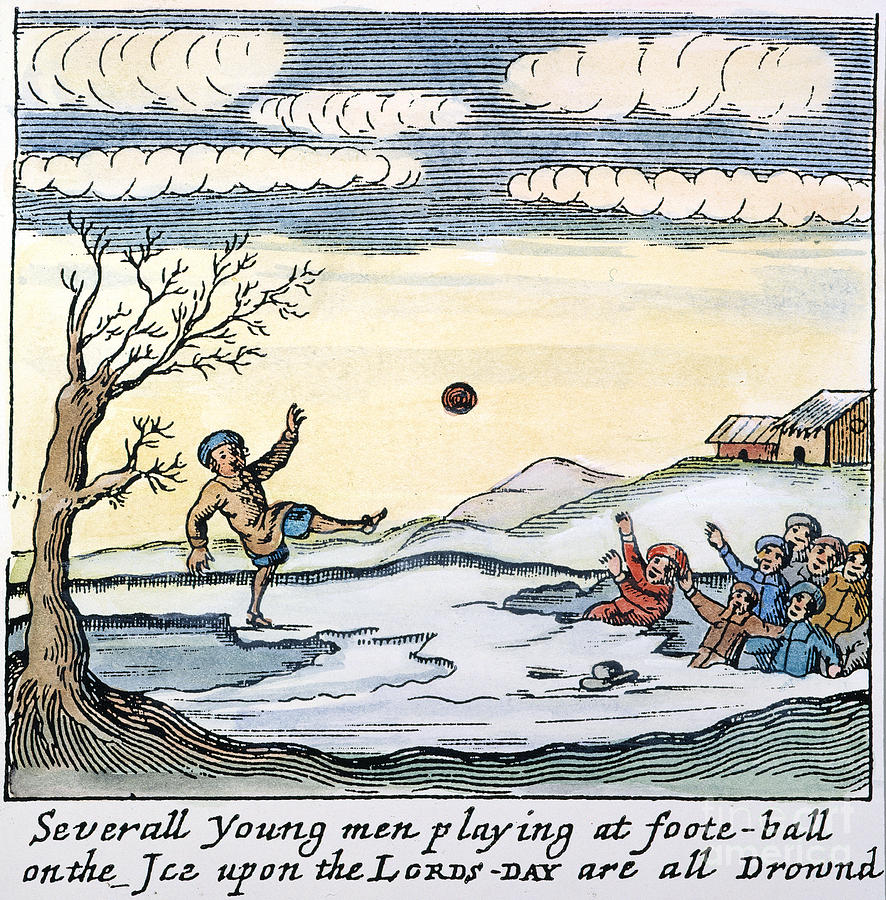
“You shall not make for yourself any crafted images, or any likenesses of anything in the world. You shall not bow down to them or serve them.” Okay, we get the part about not bowing down to them or serving them, but not making them at all? No images or likenesses at all? No photos? No pictures of our children? No icons? There go Instagram and Facebook and Windows, we’re taking the internet back to 1980 and you have to type out everything in MSDOS.

It’s human to make images. Imagination is God’s gift to you. You have images inside your head and you want to share those images. You can express your inner images with words, and you can evoke them with poetry, but a picture is worth a thousand words. My granddaughter is only twenty months old and already she loves to make her pictures.

You have an image of God inside your head. You can’t help it, it’s natural. It’s likely that your image of God was influenced by Michelangelo. You can tell this by how God is depicted in Monty Python. And that’s the point. There is no way that the Bible wants you to imagine the Lord God as an old man with a long beard.

Jews and Muslims have been stricter than Christians on this. You will never find anywhere a Jewish or Muslim picture of God. Nor from the first Christians either, until the third century AD, and even then they were controversial. The Christianized Roman Empire had civil wars over the issue of pictures of God. Ultimately the winners said they were okay as long as you did not worship them. That’s still the position of the Orthodox and Roman Catholic churches.

Well, where’s the line between worship and devotion? If you kneel down to pray in front of an Icon of the Trinity or a statue of the Blessed Virgin Mary, how is that not worship? That was the critique of most of the Protestants, especially the Calvinists. After the Reformation we famously pulled down the beautiful statues and shattered the glorious stained-glass windows and painted white-wash over the wonderful frescoes.  Not unlike ISIS! A Reformed Church sanctuary had great clear windows and lots of light shining in on bare structural surfaces and functional furniture.

Now this was often considered an impoverishment of art. The richest church buildings were not unlike the poorest. But they developed their own serene and clear-eyed beauty, the poor ones like a Zen Buddhist sanctuary, and the grand ones like the great mosques of Islam. Or like the Taj Mahal.

In recent times the Reformed Church has become less stringent. Our own congregation has had five buildings. They all had clear glass windows and spare interiors. The second one had stained-glass medallions in its windows, but of family coats-of-arms. When we built this fifth one we wanted show off our prestige and the advancement of our culture, so we put in our first real stained-glass windows, and even with three depictions of Jesus, but of Jesus as a man, not Jesus in heaven, and still, no picture of God the Father.

Okay, perhaps not sinful, but our Jesus was always a European white man, and what did that mean for black and brown believers? We didn’t care back then.

So maybe when we renovate the sanctuary, we could save money and be more righteous by not restoring the windows but selling them and replacing them with clear glass, and how much lighter and brighter our services will be. Well, if I really thought that was required of us I should not have accepted the call to this church, and it would also be disharmonious with the interior architecture.

Furthermore, St. James says in our epistle that we follow a “law of liberty” and that “mercy triumphs over judgment,” so we can assume God’s merciful toleration of our windows and that we are at liberty to restore them provided this: provided that when a poor person with dirty clothes comes in, as St. James says, that is the person whom we most honor in our renovated sanctuary.

Whatever we spend on our renovation has to include our giving poor people regular and convenient access to it. That’s how we can have God’s image in our church, because on that very person is the spitting image of God.

And now you see the positive purpose of this Second Commandment. You shall not make a crafted image, because God has already supplied you with God’s chosen image, and that is other human beings, as we are taught in Genesis chapter 1. (The Torah is a unity!) You shall not bow down to crafted images and serve them because you shall bow down to poor persons in dirty clothes and serve them. Do you want to spend time and money on religion? Spend it on "the poor in the world whom God has chosen to be rich in faith and heirs of the kingdom."

And so those poor, bare Calvinistic churches with clear windows and white-washed walls were full of lavish images of God, which were your humble neighbors in the pews. All the colors of their skin. That old couple there, they are your saints. That unmarried mother there, she is your Virgin Mary. Bless her. Honor her.

This Second Commandment is not just for pagan idol-worshipers. It challenges us all. You all have an idea of God in your heads and that’s the God that you will serve. It’s natural, you can’t help it, you have your brain, your mind, and your imagination. So this commandment is a constant feedback loop. No matter how right or advanced or Biblical your image of God may be, you’ve got to open it up again each week. You’ve got to be forgiven of it and healed of it, no matter how good your theology or philosophy.

And because God loves you God helps you with this, and the way that God helps you is not by your sight, but by your hearing. Through your ears, and not your eyes.

God’s preference for your ears is in our gospel for today, in the second miracle, how the Lord Jesus healed the deaf man with the speech impediment. As usual, St. Mark reports it without explaining it. He tells us that Jesus put his fingers in the man’s ears, spat, touched his tongue, looked up to heaven, groaned, and said in the local dialect, “Be opened.” 

Be opened up, be unclogged, uncorked, unstoppered. Be as fully opened as a human being should be. Be open to hear God’s words to you. Be open to speak back to God, to praise, to tell what God has done for you.

The Lord Jesus opened up the stopper on his soul. With his ears opened, the word of God could enter his mind, and go from his mind down into his soul, into his breath inside him, and once in his breath come back up and out of his mouth in speech. Ears, mind, soul, speech. And that made the man able now actively to love the Lord God with all his mind and all his soul.

The goal of this commandment is that you love the Lord your God with all your soul and with all your mind. The temptation is to love the image of God you’ve made in your mind. Yes, you have to use your mind, but you’ve got to keep revising and challenging your image by what you hear every week in the Word of God. That’s how the Lord God has designed it, that it happens more through sound than sight.

Jews and Muslims and most Christians agree on this. And this is why the Reformed churches have always emphasized sound over sight in worship. The message is the medium. The preaching, the hymn-singing, the sound of the community of Jesus, in the ear and on the voice, quite precisely the actual vibrations in the air to get it moving down into your soul. You are doing it now. You can do this.

The message is for your salvation, every week — that you find the Lord God not in richness but in poverty, not the richness of your idea of God, but in the poverty of your own soul where God has come to find you. Not in lofty ideas of God but in God’s grief and lamentation, in your losses and your tears. You eat the crumbs from the table with the other beggars here, and on those beggars is the face of God. And when they look at your own beggar’s face, they see God’s face too.

The message shapes you from the inside, from the inside out. It’s how God carves you out and crafts you into an image of God’s self. The word of God into your mind and your soul is designed to shape you into a shape that is worthy of the God who created you. You cannot ever separate your own self-image from your image of God, and you’re not supposed to. You can do this, on your inside, no matter what you look like on the outside, your own soul can carry the moral likeness of God.

Which is why, on your daily Christian walk, your might take the earbuds out of your ears and  be opened to your living soul. As you address the world, gaze not upon your iPhone and the icons on your screen but on the faces of the people around you. Let them see your face, which has on it (more than you know it, and even in your lines and blemishes) the image of the love of God.

Copyright © 2015, by Daniel James Meeter, all rights reserved.

Saturday, August 29, 2015

August 30, Proper 17, You Can Do This # 1: With All Your Heart.


Heidelberg Catechism 94-95, James 1:17-37, Mark 7:1-8, 14-15, 21-23

Last month, at the end of my sermon series on Life, I asked one of you what to preach on next. That one of you said, “Something about how we Christians address the world.” So I said, “Like how we walk in the world, like about the normal Christian life, like how we set our moral course from day to day.”

Then I got to work. During my study leave, I spread out all the lectionary inserts through this coming November to see how the lessons might speak to this, and if I could map out a series.

I saw problems. The Gospel readings are from the second half of Mark and are mostly about the Lord Jesus approaching the cross, but some of them do speak to this, like today’s, about the inner source of personal morality. The Second Readings come from the epistle of James and then from Hebrews. James is relevant, but Hebrews is all theological meditations on the comforts of Jesus’ high priestly sacrifice. The First Readings are from the poetical books of the Old Testament, and these don’t speak at all to the daily walk of the normal Christian life. So there was not much.

The Lectionary may be required in some denominations, but in the Reformed Church it is optional, and we are free to adjust it. So what we will do is replace the First Reading every week with one of the Ten Commandments.

For 3000 years now the Ten Commandments have been the most trusted guide for the moral life of the people of God. And think of it — in all the Bible, they are the one and only sustained public speech of the Lord God — that’s how important they are.

For Jews, they are the basis of their Halakhah, which means the “Walk.” They guide you how to walk with God. That’s true for Christians too. Christians are given less law and more freedom. You are called to what St. James calls “the law of liberty,” and so for you the Ten Commandments are a guide, a map, a compass, an inner gyroscope to keep you in balance as you address the world in freedom every day.

The Ten Commandments are taught by all the major Christian catechisms as the best map of morality to guide you in your daily Christian walk. That includes our own historic Catechism, which was written in Heidelberg, Germany, in 1563. The Heidelberg Catechism is used by the Reformed churches of Germany, Hungary, the Netherlands, North America, and Indonesia, and it’s also used by the Presbyterians and the United Church of Christ. It’s the most widespread and best-loved Protestant catechism of them all. And I’m supposed to preach on the main points of this catechism every, according to the Constitution of the Reformed Church in America. So what we’re going to do every week is substitute the relevant section of the catechism for our First Reading, as we did today. This series will have ten sermons in it, with three interruptions, and this will take us into November.

The Ten Commandments open thus: “And God spake all these words saying, ‘I am the Lord thy God, which have brought thee out of the land of Egypt and the house of bondage. Thou shalt have no other gods before me.’” Notice the preposition: “before me.” Literally, “in front of me.” That is, between you and me.

So no other gods in between us, no other forces or powers or principles or great ideas in the way. Just you-all and me, with nothing between us. So, when you walk, it’s always just me in front of you. When you address the world, I’m always before you. And I want you to keep it that way, and to want to keep it that way.

This means both obligation and freedom. Obligation to God and freedom from anything else. We all put other things alongside God—if not right between us, then just off center. But this first commandments means there’s nothing else in the picture between God and you, no other a priori, no other universal, no other loyalty, no higher calling, no other ideal or ideology, no philosophical truth, no worldview, no natural law, no iron laws of economics, no logical necessity, no nationality, no flag, no ethnic or racial obligation, no claim of sexual identity, no birth order, no parent, no spouse, no citizenship, no leader, no other ultimacy, no competing claims, just God.

Well, who are you, God, that we should do this? A fair question. “I am the Lord, Yahweh, Jehovah (sic), the great 'I am'—I am that god who comes out of nowhere, from outside the boundary of the universe, the creator of the universe, the god from beyond the limits of light, the source of light, the Father of lights; I am the Lord your God—I have given myself to you, I entered my universe to invest myself in you, I am for you, I am that god who came out of nowhere to bring you Israelites out of Egypt, and who then came out of Israel to bring all sorts and conditions of humankind out of your various houses of bondage, and that includes you Brooklynites! I am the God who saves you and sets you free.

“That’s who I am, and though by rights you ought to serve me out of fear and dread, and if you must start there, fine, and if you need the correction that fear is the trigger for, fine, but what I want is for you to love me out of gratitude and thankfulness.”

You’ll notice that the first commandment is predicated on God first announcing God’s identity, an identity not given in terms of a philosophical idea, but an identity manifested in God’s free actions toward you in the world. This is the God whom you cannot capture because God is always before you, and is always before you to be always for you, and God wants you to have nothing other before you as if it could also be for you as God is for you. For none other loves you as God does.

None other, and this is less a command than an impossibility. It is not possible for you who are freed by the true God in order to love God, to also offer loyalty to other gods or powers or ideas. For that’s what it means to love God. It’s not an emotion but a commitment and desire. It’s a commitment to the highest good, for God is the highest good, and a desire for that highest good. You want to be always present to this highest good, so you can address the world in terms of good.

I’m talking about a being present to God who is always present to you. It’s not a matter of sight, of course, nor of any of your senses. It’s not a matter of your head. Nor is a matter of your gut and your emotions, as if you could feel God. It’s a matter of your heart, and your inner sense of what it means to be a human being.

You were made for this, you were made to live through your heart, and to have this relationship that goes from your heart to God’s heart. It’s love to love, God’s love to you, who makes you lovable as the first-fruits of God’s love. God is always present to you, even if you are not present to God, so that every generous act of giving that you do ultimately comes from God, your actions are the fruits of God’s love that God pours into your heart.

So then, the issue of idolatry is really the issue of your own heart. It’s not so much what the other gods are, as why you would want to put them up there. Why do you place such value and ultimacy and uncompromise on the projections of your own needs and desires?

Well, we do. So we need the constant reminder of this commandment. And then what this perfect law offers is very different, it’s your behavior in the world that is not determined by your own desires extended and projected.

This is a revolutionary change in ethics. The classical Greek and Roman sense of virtue was the advancement of your own best selves, and that was Humanism too. But Christian virtue is not an projection of your best self. That would be what St. James calls “looking into a mirror.” It’s rather that you address the world in terms of how you might love the next person that you meet, how you might love that next thing you encounter. St. James calls this “the law of liberty, the perfect law.”

To keep God before you is to keep love before you. And you can apply this love in various ways as you make your way in the world. You can address your work with love, which is not the same thing as loving your work. You can address your circumstances with love, which is not the same thing as loving your circumstances; you can address your neighbors with love, even if you don’t like them, you can address your enemies with love, even when your enemies are your neighbors.

You can do this. With all your heart. From the heart means you do it in freedom, and not by means of a checklist. (What the Lord Jesus is getting at in the Gospel reading.) With all your heart means no defenses, and you are humbly open to the forgiving love of God.

You can do this because you are a human being, and this is what human beings are specially designed for, to know this God and love this God. You can do this because you desire that which alone can give you security and rest, and that is none other than the love of God for you.

Copyright © 2015, by Daniel James Meeter, all rights reserved.

A New Sermon Series


I'm starting a new sermon series this Sunday. It's on the Ten Commandments. It's called, You Can Do This. It uses the relevant sections of the Heidelberg Catechism as well as, when relevant, the Second and Gospel lessons from the Lectionary. My goal is to speak to the Normal Christian Life, or, The Christian Walk in the world, and how we address the world as Christians every day. Let's see how it goes! (Life is like a box of chocolates, after all.)

Saturday, July 11, 2015

July 12, Proper 10, This Is the Life #10: The Meaning of Life, the Universe, and Everything

Caravaggio's Beheading of John the Baptist

2 Samuel 6:1-5, 12b-19, Psalm 24, Ephesians 1:3-14, Mark 6:14-29

The Bible loves King David, but it also shows him for the shrewd politician he was, and how his most admirable actions were calculated to advance his ambitions. This is noticed by Queen Michal, his trophy wife, whose hand he had won from her father, King Saul. Her father’s political instincts were abysmal, and he was his own worst enemy, but he never tried to work the crowd, and he had not even wanted to be king. Her brother, Prince Jonathan, was never ambitious and calculating, but loyal and fearless and pure of heart, and really the best man in the whole cycle of David stories.

But they were dead and David had won and she can see what he’s up to. He’s bringing the Ark of the Covenant not back to its proper home in the Tabernacle up north in Shiloh, where the priests are assigned, but into his new fortress, and he plays the priest. He is God’s man, and now God belongs to him. How strange of God to allow some guy to so possess him. There is much to forgive in King David, and we forgive him much, because he had a great soul and was "every inch a king."

In the gospel story, Herod "plays the king" but is only a pretender. He is Herod Antipas, one of the sons of Herod the Great. When his father died, the Romans ended the Kingdom of Judea and made it a province under a Roman governor (that would be Pontius Pilate), and they let Herod Antipas be the Roman ethnarch of Galilee. But he wants to be king like his father was, in Jerusalem. He wants to be anointed King of Israel, the messiah, the presumptive nominee of God, and the deputy of Caesar while he’s at it. He imitates the behavior of Caesar’s family: incestuous, lascivious, lavish, boastful, superstitious, and visibly religious. He does feel guilty about what happened to John the Baptist, so it would be nice he came back from the dead.

He doesn’t understand Jesus. He certainly doesn’t see him as a rival messiah. Jesus isn’t acting like a messiah, he’s acting like a prophet. Not like David but like Samuel. Like Elijah, like Elisha, not like King Jehoshaphat. Prophets can be trouble, but not as competition for the throne. And even when Jesus eventually does make messianic claims, neither Herod or Pontius Pilate are ever threatened by him. They kill him because it’s so easy, not because they’re in danger from him. By all the expectations, both in strategy and outcome, Jesus was a failed messiah.

And yet St. Paul, in his letter to the Ephesians, claimed that this dead guy, this loser among a tribe of self-defeating losers, living at the back end of the Empire, that this guy was the pivot and center and focus of universal history. We are so used to this claim that we don’t recognize how nuts it must have sounded at the time. It’s not just audacious, it’s so preposterous as to have been nonsensical. Of course we Christians have spent 2000 years making sense of it, or we think we have, but I have good friends for whom it makes no sense at all, and it remains preposterous.

“You think that this universe has a creator (of which there is no clear evidence nor any necessity for it being true) and that this creator picked one galaxy out of the millions of galaxies, and from this galaxy one star, and on this one planet one species, and then ignoring all the many tribes and nations of the species just this one tribe, and just this one guy, to carry some meaning to the universe? That the whole universe is ‘gathered up’ in him? And that this one Friday-to-Sunday weekend was some ‘fulness of time,’ of 13.8 billion years? What are the odds? What about other planets? Do you think our planet is the only one with life on it? Why would you want to think such preposterous things?”

Fair questions. People ask them not from malice or meanness. I find them challenging and hard to answer. Yes, it kind of is preposterous. The whole thing is actually absurd, as Kierkegaard points out in his little book Fear and Trembling. And then he claims that’s why it hangs on faith.

Of course, in St. Paul’s time they imagined a vastly smaller universe, and they didn’t imagine the planets as other worlds, which could bear life. But what the Greeks and Romans would have found preposterous was that the Jewish god was the only god, and that this god was omnipotent and could be everywhere and could know everything, even what you thought. And that the world they had so wonderfully analyzed in their great tradition of philosophy and poetry would have completely to be rethought and revisioned and reimagined and reclassified and recapitulated in terms of this failed Messiah guy, just because his followers claimed he had been raised, and that his rising had converted him from a failed Jewish Messiah to some victorious global Christ of God.

Why do we believe such things? Why then, and why now? Well, if it helps, at least the odds are no better for this universe being the way it is without God than with God. Scientists report that the mere existence of biological life presumes a fine tuning of the universe against which the odds are also unthinkably enormous. Just your bare existence today is preposterous.

And the enormity issue is perspectival: We measure the enormity of the universe in billions one way, and the incredibly tiny spaces within atoms in billionths the other way, and did you know that the median is actually about the size of the human body? As my son-in-law the artist says, “Why shouldn’t God be so big?”

But that’s just room for belief, not reason for belief. What you believe about this dead Messiah was his vision for what God should be like, if there is one, and what God should want, against all other explanations in power at the time, which vision of his was vindicated by his rising from the dead (on which it all hangs!).

You believe in this dead Messiah’s vision of the interplay of law and liberty and love, a vision his own religious leaders found too dangerous not to get rid of him, which vision God vindicated by raising him from the dead.

You believe in his vision of righteousness and justice and the interplay of truth and politics that the Romans found so preposterous they had to mock him with a humiliating death, but which vision God vindicated by raising him from the dead.

You believe his vision of what a kingdom could look like, which the combined authorities found too challenging not to take him out, but which vision God vindicated by raising him from the dead.

And you love his personal vision of what a leader and a servant should be like. He was the Son of David but with Jonathan’s character and purity of heart, and there’s nothing we have to forgive him of.

You believe this story because what it tells you about life itself, life on the planet. All that he spoke of confirms the purposefulness that you sense in ordinary organic life, that life wants to live, and he confirms that the mystery of life is meaningful, that the meaning that you sense in existence is not just your wishful thinking imposed upon some hard reality of ultimate randomness.

That a flower opens and a bee goes in,

and that crows run through their repertoire of different calls to each other across the lake as the morning lengthens,

and that this planet has developed a species that can learn to read its rocks and by means of its geological strata tell the planet’s story to itself,

and that all this abundant purpose-driving and meaning-making is going on all the time around us without us but also through us to include us, tells us that it is not necessarily delusional or wishful thinking to see meaning in the universe, and that indeed it is reasonable at least to hope it’s true that “meaning is the essence of existence.” (“De zin is het zijnde van het zijn,” H. Dooyeweerd.) 

And that’s all what you get encouraged of when you believe that God raised this failed Messiah from the dead.

And that’s what inspires you to “live for the praise of his glory.” It’s not that God needs your praise nor even desires it. It’s that your appropriate humility leads you to wonder, and awe, and thus to deeper humility, and in that deeper humility to joy.

Yes, you are mixed. You want to live for yourself as much as for his glory. You are more like David than like Jonathan, and what you see can tempt you to the cynicism of Queen Michal. But you have also caught the vision of his salvation and his forgiveness,

and more, you notice his lavish grace that is widespread in the world, and you’ve got to sing of it,

and you reckon your world as blessing, and you want to thank someone for it,

and you testify that when you look at your own small share of the universe, it looks to you like your purpose and meaning has always been to live within the love of God.


Copyright © 2015, by Daniel James Meeter, all rights reserved.

Saturday, July 04, 2015

July 5, Proper 9, This is the Life #9, Weak Life

Staphylococcus bacilli

2 Sam 5:1-5, 9-10, Psalm 48, 2 Cor 12:2-10, Mark 6:1-13

The latest New York Review of Books has an article of relevance to this sermon series of mine. It’s a review of two new books on the origins of life on Earth. One book tells how this planet would have remained as inhospitable as other planets to most forms of life if the earliest microbes had not developed photosynthesis, which liberated oxygen, which profoundly altered the atmosphere, making the planet suitable for all other life-forms since. It’s not that this planet happens to have life. It’s rather that life has made this planet into a home for itself.

The other book tells about the earliest evolution of those microbes, how random molecules became the first living cells. Just to exist, a cell has to perform a process of building complex protein molecules, and cells do this using what are called nanomachines, minuscule devices that gather certain chemicals, break them down, and rebuild them into the chemicals needed by the cell.

When that first happened on this planet’s surface, 3.5 billion years ago, something came alive. I quote: “The nanomachines possess attributes of life, and when brought together in a cell they clearly cross the threshold into the self-regulating, replicating entity that we recognize as a living thing.”

But this raises a conundrum. A machine implies a purpose and a product. Cells make nanomachines for the purpose of their products, and no cell could exist without those products. But how could there be nanomachines existing before there were cells to want their products?

Is it possible that the first nanomachines came into existence willy-nilly, randomly, as if a pair of scissors were formed by some random molten iron suddenly cooling into that shape, both hinged and sharp? Before there was paper or cloth? This conundrum has led to proposals that the first organic proteins might have come from off-planet, from an asteroid, or even Mars. But no one has a real solution.

In reading the essay I noticed how often the author resorted to such words as “mysterious” and  “magical”. Science can tell us so much about life—this strange power that has occupied the third planet in our solar system—but science knows that there is more to life than science can account for. It’s as if life is a power with its own purposes.

Life wants to live. Life makes order out of disorder and generates magnificent biodiversity. Life has taken over this planet’s minerals and liquids and vapors and even its weather. As it says in Genesis 1, “Let the earth be fruitful, and multiply.” And then a million years ago, life generated a species that was capable of imagination, and self-awareness, and transcendence, and freedom, as if life had reached the ultimate purpose of its purposes.

This power and purpose in life is what humanity has accounted for by the notion of spirituality. The more-than-physical about physicality and the more-than-biological about biology is what we call spirituality. We locate it in the soul, the breath, the animating spirit, the constantly vibrant air that inflates your body and inspires your mind and flows in and out of you to connect you with the living planet’s atmosphere and thus with every other breather of that same air and thus with every other soul and heart and mind.

The Lord Jesus sent out his disciples with power over the unclean spirits. This was for healing the bodies of the people and liberating the landscape and cleaning up of the culture of the villages. As I’ve told you before, these unclean spirits are not demons from hell. They are the natural spirituality of the landscape and culture that is out of whack because of human sin. They are unclean, dirty, polluted, and infectious, and like every corrupted system they oppress the weak and oppose the good. So Our Lord has sent his disciples on a campaign through the villages to restore the ordinary life of the people to the kind of whole and healthy life that life should be.

St. Mark reports it without explaining it. We are left with mysteries. How long did this campaign last, and how far did it go? Where did the unclean spirits go after being cast out? Why do this only for a while? Why not do this in Jerusalem? Did they lose the power they’d been given? If they could have power over the spirits, why not give them power over the Roman soldiers, or over the tax collectors who enforced the system of debt and poverty?

Then there’s the mystery of Our Lord’s lack of power in Nazareth. He had just had power over the wind and the waves, and the power in his body had electrified his clothing, and he’d just raised the dead, but in his hometown he feels powerless. And he’s surprised at their unbelief in him.

This complicates the conventional picture of Jesus taught by the church. The Son of God finds himself powerless? And by surprise? Because of his lack of support by those whom he’s known all his life? The liquids and vapors of the planet submit to him but his second and third cousins can resist him. A conundrum. And who are these creatures who can resist the power and authority of God?

We are the first living creatures on the planet to oppose life. We are the only living things to cultivate the power of death. We are that species in whom life has developed freedom, and we are the only species to poison and pollute the biodiversity of this living planet. We are the unclean spirits of the Earth. We’re not demons from hell, but we’re certainly creatures out of whack. And apparently God will not intervene miraculously to fix us or stop us. God lets us resist the good life of the world. God lets us get away with doing what we want until it is too late. Why does God seem so weak?

And then this weakness that we see in the Lord Jesus at Nazareth is held up as a virtue by St. Paul. That weakness should be a virtue went against all the aspirations of the Hellenistic culture of the day, as well as our own cultural preferences, not to mention the deep instinct of life itself, which uses power for its purposes. A strong organism is a healthy organism. In terms of our first two lessons, a strong king is a great king and a strong citadel is a sure refuge.

This is why the gospel of Jesus has to be believed, instead of being proven, because it feels contradictory and it seems to go against nature. When the disciples preached repentance there were those who would not believe them. The Lord Jesus told them not to resent this, but just shake off their rejection like dust off their feet. Do not fret at unbelief, just move on to your next opportunity. God does not force it, God respects our freedom. God invites us, God waits for us.

And we make God wait. Repentance feels like weakness and surrender and like dying, and life wants to live. To be sorry is to lose and remorse is a defeat. Your lawyer will tell you to not admit your guilt. Your in-house attorneys will advise you to settle with no mention of wrong-doing. And aren’t there worse guys getting away with it, so it’s not fair anyway. Repentance will cost you. Is it maybe true that there will be no real racial justice in this country unless we consider some form of reparations? Isn’t it true that it’s the perceived economic cost more than anything else that keeps us from doing environmental justice?

Repentance only begins in remorse, it’s more about repaying, refunding, restoring, rebuilding, reviving. If you think of the Apostles Creed, toward the end, what follows the forgiveness of sins is the resurrection of the body. That’s the process: repentance is sort of a machine that takes what’s dying and converts it into life. Where it comes in the Creed is under the work of the Holy Spirit, who is the Lord and giver of life.

Repentance is a mystery you have to learn and a magic that you practice. It’s not a bondage but a liberation, a clearing away, a cleaning of the poison, for the new and godly life to grow within the old. And you don’t deny the old life or even hate it, but rather the old and unclean life becomes the soil for the rising up of the new and godly life. Even what’s been bad and sordid and dirty in you has the value and purpose of being the fertile soil for the life of grace and love. This machine works like magic, and the magic of it, that you learn to work, is what St. Paul means by grace.

This grace is what you use within your new and godly life to love that old and dying life that still lives on in you. Do not hate your weaknesses, please do keep on loving that old and dying you that still lives on in you. Even your fallen self is the object of your love. Clean it up in love. That’s what God does. Imitate in yourself how God is with you and with the whole life of the world. And that’s why God filled this planet so richly with life: so richly to receive God’s love.

Copyright © 2015, by Daniel James Meeter, all rights reserved.

Saturday, June 13, 2015

June 14, Proper 6, This is the Life #6, Your Life Is Not Your Own


1 Samuel 15:34-16:13, Psalm 20, 2 Corinthians 5:6-17, Mark 4:26-34

What do you think—does life exist only upon the planet Earth, or is life also out there in some other galaxies somewhere? We have not found it yet, not as far as we can tell. You know there is no purely scientific reason to assume the existence of life elsewhere. Just because it’s here does not require that it be elsewhere.

So then, when we confess in the Nicene Creed that God created “all that is, seen and unseen,” and then also that the Holy Spirit is “the Lord and Giver of life,” are we saying that God made the whole vast universe but maybe chose only to put life in one small planet in the orbit of a minor star at one end of a third-rate galaxy? Really? Of course that’s not unlike God having chosen David from all the more likely sons of Jesse, indeed from all the other persons living in the world that day. But even if it makes sense Biblically that doesn’t make it easier to believe.

It is strange that life should be so rare, because the necessary elements of life are widespread in the universe. All you need is for the five elements of carbon, oxygen, hydrogen, nitrogen, and sulfur to start forming compound molecules, provided that some of the oxygen and hydrogen are already formed into water, H2O, and the water is not ice or vapor but liquid, which admittedly does narrow the planetary options. All it takes is for those five elements start forming into their compounds.

But that’s the trick, because to do that, those elements have to go against the Second Law of Thermodynamics and have to counter the natural resistance of entropy. So life would be that force, that drive, that inexplicable drive that seems to want to form those compound molecules, and keeps forming them into ever more complex structures until you get to ant colonies and blue whales and the human brain. That’s life, so extremely simple, and yet so rare.

We don’t know how this drive arose within the universe. The laws and theories of astrophysics do not predict it nor account for it. We can make our guesses only when it comes to our own planet. Scientists suggest that this drive must have spontaneously self-generated a couple billion years ago in earth’s primordial soup. Okay. But if that happened once why doesn’t it ever happen any more? Right now absolutely everything alive has inherited its life from a parent or progenitor. So then to get life going did some spark come from the outside? We have not been able to replicate such an event in our laboratories. Life is all around us and we still can’t explain it.

Life distinguishes the planet Earth. You could argue that life is that system which distinguishes our planet from the other planets. Life is very much more than just those five elements forming compounds; it’s all the profusion of protein-building and DNA-constructing and organic creativity and evolutionary invention and then bacteria and then eye spots and then orchids and spider webs and hummingbirds and camouflaging octopuses, not to mention singing and dancing and wine-making and love-making. All that is life; only with life do we get all that. And only on this planet?

Science tells us that for all this to exist it took exquisite fine-tuning of the energies and elements. One tiny difference since the Big Bang here or there, and none of this exists. Is that fine-tuning just coincidental? Was it God’s guiding hand? Was it the Holy Spirit who touched the spark of life into those five elements to give the inner drive to form new compounds? Whatever it was, apparently that first spark is all it took, because once it gets going, life asserts itself. Well, it has to, because it must assert itself against entropy—life is that which swims upstream against the press of entropy.

You can see how strong this opposition is by how quick and irreversible is death. You take your last breath, and in no time all your cells go out. Once they go out that’s it, they’re dead, and no force in the world can ever turn them on again. Your wonderful body becomes that awful thing we call dead meat, and all your once-living proteins are now only food for other living things. And yet—and yet a seed, a little dry mustard seed, can hold its life in suspension for many years. Such a mystery.

Life can be cut-throat and unforgiving. Life is as fragile as it is powerful. Life has to assert itself to stay alive. Life gambles, life experiments, life invents, life evolves, life adds variations, life adds order in opposition to entropy. Life is driven to grow and develop and expand. Like a seed within the ground. The farmer scatters it and then sleeps and rises and counts on it to have its way.

So the parable of the Lord Jesus is not coincidental. The life that he talks about in his parable is not just a homey example. It’s not that organic life is just neutral and you can add spirituality onto it. In the Bible, even ordinary biological life belongs to the Kingdom of God and is in the providence of God and under the sovereignty of God. You don’t have to be a six-day-creationist to believe that life on earth is in God’s purpose, and you can accept the whole theory of evolution and still believe that God ordains it and desires it, and you can fully go along with modern science and believe that God is the source of life and the Lord of life, and that what life serves in all of its mystery and majesty is what God wants it to serve. You can believe, not unreasonably, that the drive that’s in life is the drive that God has given it, and that drive is part of the parable. Ordinary biological life on earth belongs to the kingdom of God.

But if life asserts itself there is a problem. The inner drive is a problem in the case of our species, which is unique among all the species because of our strange self-awareness. We assert too far, and we come to think of our lives as our own. We decide that the main purpose of our lives is self-realization and our operative stance is self-validation. These things have their place, but as every sin is the perversion of a virtue, so these natural assertive drives in us become rebellious and idolatrous and demonic. We want freedom from everything but ourselves. Selves get selfish. And destructive.

But if we think of the planet as God’s garden, that it belongs not to us but to God, and that God has put us in it as stewards to serve God’s purposes and not our own, then we find that confining, like we’re the zookeepers of God’s vast zoo or the servants on some planetary Downtown Abbey. We don’t want to be servants, thank you very much, and we assert ourselves against the rule of God, or if we’re religious we say that we are loyal and yet we keep side-stepping the rules of God. And the cost of our invention and creativity is dwindling biodiversity and accelerating desertification, not to mention our constant violence and inhumanity to each other, and what war shall we start this week?

The assertiveness of life within our species is a terrible force unless it’s countered by the fear of God. Fearing God. Modern people hear that as a negative. Well, that’s as it should be. There should be some negative in your relationship to God. There is part of you of which God is your enemy and rightly so. God is your death as well as life. Your fear of God is the sensation of the vast disparity between yourself and God, who finally does say that you must die. Your life force which is so precious to you must go out. And yet it’s in love that God says that, that God spares you from the awful possession of a life of your own that will go on forever and ever in infinite assertion. It is a loving who God takes back the gift of life from you, even when you struggle to hang on to it.

You are choosing to not live for yourself. You are choosing the offer in the Epistle by St. Paul, who says that "Jesus died so that those who live might live no longer for themselves, but for him who died and was raised for them." You’re handing your life back to God, all your assertion and your right to life, and yes, from the outside this looks likes servanthood, but this service is not servility. In fact, it gives St. Paul a new kind of assertion, and twice he says that he has confidence. You can feel his drive and energy. You can be just as assertive and creative, but in the project of your own conversion. That’s the Christian offer that I remind you of again this week. There is no proof. But try it.

Because you don’t have to maintain your own Christian life. If you’re in Christ, boom, "there is a new creation" anyway. You don’t have to force it any more than the farmer can force the seed within the ground. God has planted mustard seeds within you that will grow up and branch out within you to give space and shelter within you to all the various birds of your peculiar personality. Because your life belongs to the kingdom of God. God is taking that force of life in you, which was given to you at your birth, God is carrying your life into the new life of the world to come. If that new life will have even greater mysteries, it will still enjoy the familiar certainty of God’s love for you.

Copyright © 2015, by Daniel James Meeter, all rights reserved.

Saturday, June 06, 2015

June 7, Proper 5, This Is the Life #5: Life in the Balance


The late Christopher Hitchens

1 Samuel 8:4-20, 11:14-15, Psalm 130, 2 Corinthians 4:13-5:1, Mark 3:20-35

Our first lesson is an example of the Biblical principle of “accommodation.” God accommodates to us. This principle is a tool to handle God’s apparent doubleness: God is eternal and omnipotent, yet God also comes down into our history and yields to us and works with us in creative tension with our resistance. The Israelites should have no king but God, but they demand one anyway, so God works in tension with their opposition for the solution that will be the house and lineage of David.

There is tension in our gospel lesson too. Jesus says, “Whoever does the will of God is my brother and sister and mother.” That’s a nice thing for him to say to the people around him who admire him, but outside the house, when Jesus’ mother hears of it, she will be embarrassed and dishonored. His siblings can retort that to do the will of God is to follow the Torah and honor your mother! They are thinking their big brother is over the edge, and should be stopped for his own good.

Already in chapter 3 of Mark’s Gospel begins the opposition to Jesus, from both his family and the people in charge. You can understand the motives of the leaders. The Middle East has always been a powder keg. Everyday life was always in the balance. Of course the leaders felt they had to keep control. And Jesus was threatening the balance. He made them nervous. They didn’t get what he was up to and they couldn’t foresee what he’d do next.

A committee of legal experts has come up from Jerusalem to investigate and issue an opinion. They decide he is a sorcerer, that he has real power, but it’s the unclean power of the enemy. Of this opinion Jesus is unforgiving. “You can slander me,” he says, “and I can forgive you. But you cannot slander the Holy God and get away with it. It’s one thing to deny that I’m with God, but it’s another to have equated God and Satan, to have disreputed the Spirit of God. I’m over with you guys.”

And yet his parable is playful: You guys say I am doing my healings by the power of Satan; then the house of Satan must be divided against itself, and it therefore cannot stand, so then I am Satan’s self-destruction, and that makes me good news for you even in your opposition! Even when you oppose me I am working in your favor, and from your opposition I will create a greater good.

When I was in the hospital this past week, recuperating from my little stroke, Rabbi Bachman came to visit me, and lent me a book by the late Christopher Hitchens. It’s called Mortality, and it’s a brief and brilliant atheistic meditation on dying from cancer. Listen:

“The absorbing fact about being mortally sick is that you spend a great deal of time preparing yourself to die with some modicum of stoicism (and provision for loved ones), while being simultaneously and highly interested in the business of survival. This is a distinctly bizarre way of ‘living’—lawyers in the morning and doctors in the afternoon—and means that one has to exist even more than usual in a double frame of mind.”

And then he adds, “The same is true, it seems, of those who pray for me.”

Precisely. This doubleness that is bizarre for Hitchens is familiar to believers. If you believe in God then your way of living in the world is always simultaneously preparing to die and being busy at survival. It’s what St. Paul describes in the epistle. “So we do not lose heart even though our outer humanity is wasting away, our inner humanity is being renewed day by day.” We are always balancing death and life within our lives, not just at the end, and if it’s true in theology it’s no less true in biology.

Living things have to eat, and they eat by killing and consuming other living things. Well, not always. Some plants survive on purely inorganic matter, but most plants require large amounts of organic matter in the soil—matter that was living once. Animals eat tissue that is still alive and we kill it to eat it. This is obvious with carnivores. Herbivores often don’t kill the whole plant, but they do kill the parts of the plants they eat. And to eat a seed or a fruit is to kill off a future life. Biological life depends on dealing death; biological life assumes the constant tension and balance between what Christopher Hitchens calls preparing for death and being highly busy with survival.

For this sermon series on Life I have been reading up on biology. Did you know that there are no reptiles in Iceland? Because they’re cold-blooded they can’t survive the climate. Birds and mammals have evolved warm-bloodedness as a strategy for global expansion.

A polar bear brings her own heat with her; but then to burn enough calories to keep her body warm she has to eat much more than any reptile does. She has to balance consumption with exertion, with the balance always tipped just enough past the median to stay alive.

And you too, Brooklynite, just to stay alive you have to eat things that were killed by someone else for you or are cooked or chewed to death by you, even if you’re a vegan. You practice both death and life just to stay alive.

It is no wonder that so much of religion hopes for an immortality that will be purely spiritual and disembodied and unbothered up in heaven. We won’t have to eat. That’s how many Christians interpret St. Paul, that he is telling us that we long for an immortality that is disconnected from this created world.

That’s actually not what St. Paul hoped for. He was trained as Jew, and he looked for the repair and restoration of this created world, and a disconnected heavenly immortality would be for him an unbearable lightness of being. And yet we so easily misunderstood him as offering us escape. Well, bodily life as we know it is always a struggle to survive, and if it’s a creative tension when it’s good, when it’s bad it’s the hypertension that put me in the hospital last week.

This past year I watched my granddaughter learn to walk. Nobody taught her. She was driven to discover it, to rise up on her feet against the force of gravity. To balance herself she had to master the complex interplay of many muscles in tension and expansion. And then to walk she learned to push and pull against her gravity. Propulsion uses gravity. If you have no weight, you cannot walk!

I say this is to help us with St. Paul’s terminology, that you are being prepared for an eternal weight of glory. Weight of glory—what does that mean? The terminology is Jewish. In Hebrew, the word for glory derives from the word for heavy, kabod. Glory has weight. If something’s glorious it’s heavy. You might think of the sun, one of our favorite images of glory, which is light and bright and weighs millions of millions of millions of millions of millions of kilograms. Heavy is good. It’s not a burden.

The Bible is not offering the lightness of the disembodied glory of Olympian immortality. St. Paul encourages you to hope for a real world more solidly enduring than we can imagine, of such gravity to make light of all our current afflictions, and a city of God so massively majestic that by comparison all our current achievements are as flimsy as tents in the wind.

And until then you have these tensions in your life. You have your hopes and then there are your outcomes. You have what you pray for and then there’s what you get. You see the vision of righteousness, and then you feel the sad reality. You want to live by your convictions but you have to manage your disappointments. You sing of glory and you suffer your afflictions. You pray, “Thy kingdom come, thy will be done,” and then you wonder, “How long, O Lord?” We Jews and Christians design our beliefs around the promises of God, and when there’s no delivery we can hear the people say, “Where is your God?” And you ask that question of yourself. I do. Can it be really true that what cannot be seen is more solid and lasting than what we can see? Or is it just bizarre?

I invite you to believe it, though there will be no proof for it before how it all turns out. It’s not just believers that have these tensions, everybody has them, every creature has them, and the difference is how you interpret them. Stoically or creatively. I want you to read the constant doubleness of your life as a sign of the continuing creativity of the active goodness and investment of God within your life and in the world, of God who even submits to you and accommodates to you in your own situation and your needs and hopes and dreams.

Whatever tensions you feel in your life, whatever you have to balance just to keep on going, I invite you to interpret it all within the massive love of God, and from within that love to act on it. That God should wait and submit to your real experience in the world is the measure of how much God loves you.

Copyright © 2015, by Daniel James Meeter, all rights reserved.