Monday, June 02, 2008

Sermon for June 1: Genesis Stories: Noah


Proper 04, Genesis 6:11-22; 7:24; 8:14-19, Psalm 46, Romans 1:16-17, 3:22-31, Matthew 7:21-29

Heidelberg Catechism Q 54: What do you believe concerning "the holy catholic church"?
A. I believe that the Son of God through his Spirit and Word, out of the entire human race, from the beginning of the world to its end, gathers, protects, and preserves for himself a community chosen for eternal life and united in true faith. And of this community I am and always will be a living member.

Now that Pentecost is behind us, the church calendar has entered what we call Ordinary Time. It’s called "ordinary" because we’re not in one of the two great seasons of Christmas or Easter, and Sundays are plain Sundays. Since our scripture lessons don’t have to relate to the seasons, we let the lessons follow the Bible books as they unfold. The gospel lesson will now just move continuously through Matthew.

And during Ordinary Time we also release the Old Testament lesson from having to serve as background for the gospel. We let the Old Testament lessons follow their own course and tell their own story. For the next few months we’ll be following the stories of Genesis.

I love these stories. We need to know them. We need to see how these Old Testament stories are gospel too, they are good news. My theme for these stories will be those phrases from the catechism, how from the beginning of the world, out of the entire human race, God was gathering, protecting, and preserving a community chosen for eternal life and united in true faith. Of this community we are part. Those of us who are not Jewish have been adopted into this community, and these are the stories of our adopted ancestors, and how God dealt with them.

I said recently that the story of Noah’s Ark is one of the favorite children’s story of all time. To debate its narrow historicity is to miss the point. We hardly need reminding that catastrophic floods are facts of life upon the surface of this planet. The ancient editors of Genesis have described the flood as an undoing of day three of creation, resulting in the death of everything created in day six. I would say therefore that we can read this story not as ordinary history but as primordial and paradigmatic. Sort of like the Iliad of Homer. This story gets repeated all the time. The story tells us what the world is like, and what God is like, and what God wants for the world.

We see in this story God’s anger and God’s judgement and God’s purging and washing clean. We see God’s indignation at humanity for corrupting the world from what it should have been. We sense God’s frustration, and we can imply God’s private grief and suffering.

We see in this story how God’s judgement includes a plan for salvation. It’s not that judgement is from a nasty God and grace is from a nice God. They are both from love, for the God who loves the world is grieved at all our violence and corruption, and out of love will not abide it, but also out of love will not destroy it, but graciously will save it, with a method of salvation that serves God’s justice and the integrity of God’s judgement.
We see in this story the vulnerability and fragility of our lives and the lives of other creatures. We are companions with the animals, and we are all so small against the larger forces of the planet, which can kill us by the thousands and the millions without pity, even though these forces ethically are innocent.

We see in this story that God requires our connection with animals, and holds our species accountable for the fortunes of the planet and all its creatures. We are made for this planet, and our salvation is for the restoration of this planet, not for our escape from it.

Even though this story stands on its own and in so many children’s books, it was given to us as one chapter in the larger story of salvation, the story of the covenants that God kept making, first with Noah, and then with Abraham and Isaac and Jacob, and then with Moses and Israel at Mount Sinai. By means of these covenants God was gathering, protecting, and preserving a community chosen for eternal life and untied in true faith. We will be watching this covenant history unfolding in the next few months.

But notice today how God, through Noah, gathered the animals and protected them and preserved the future of life on earth. The animals were Noah’s congregation, a zoological community of faith, who all were rescued for life because Noah believed the gospel of God’s judgement and God’s salvation.

Okay. Now this. The storms and troubles of our lives are of three kinds.
The first kind is the ordinary trouble of the world, which is natural and ethically innocent. Cyclones and earthquakes and floods. The fragility of our bodies, that get infected, that get disease, and strokes and heart attacks, for no other reason than biology, and we are not exempt from biology nor from geology nor meteorology.

I said to you recently that we can know from Jesus’ Ascension that we are not to interpret such disasters and diseases as the judgements of God, but simply the fragility of life in a world in which the laws of nature do their job without regard for mercy or compassion.

The second kind of trouble is the extra trouble which humanity has added to the world, what Genesis calls the "corruption of the earth," because we have "filled the earth with violence." You could write the history of the last two centuries in terms of violence and our attempts to deal with it. Exploitation in all its forms is a kind of violence. We are continually reminded that when we answer violence with violence, no matter how good our intentions, at best we only divert it and mostly we compound it. And now our exploitation of the earth has begun to aggravate the first kind of trouble.

The third kind of trouble in our lives is the judgement of God. This trouble comes exclusively through God’s Word. God doesn’t send diseases and disasters to judge us, whether by tremors or by terrorists. At least since the Ascension, God is faithful to judge us simply and completely through God’s Word. And by our response to God’s Word is how we either condemn ourselves or save ourselves.

God’s judgements are the wake up call, and they make us sense our guilt and give us shame and trouble us. This trouble is designed to drive us to the very God who judges us. All our own devices for solving our guilt and shame are only swimming against the flood. God tells us rather to get inside the ark.

The solution to the third kind of trouble is by our faith—faith in what God has done for the world in Jesus Christ. Outside of that is only judgement. Faith is not your power to swim. Faith is believing the instruction to get your hind end into the boat. It’s not our faith itself that saves us, but the faithfulness of God. Faith is our investment in the faithfulness of God.

The solution to the second kind of trouble is partly by us but mostly by God. Our corruption is beyond our own capacity to fix it or solve it. The Bible’s conviction throughout is that God will have to intervene somehow. But at the same time we can disembark out the boat and enter back into the world and we can serve the world as Jesus did with love and grace.

The solution to the first kind of trouble is not ours to make. And though God promised never to destroy the earth again because of human sin, I don’t know that God ever guaranteed to prevent us from doing it ourselves. We are invited to expect a new creation, a new heaven and new earth, where God’s intention for the world will be just as physical and natural but perfectly hospitable to human life, and something of a Paradise. Of that we only have the promise and not the sight. But already we have loved ones who have disembarked upon that farther shore.

Where all these Old Testament stories will lead us to, at the end of Ordinary Time, is the story of Mary and Joseph, and their baby. That’s the story of when God the Son became a creature, and God became a passenger on the boat.

Because there was no room for them in the upper deck, they laid him down in the lower deck, in a feed-trough, in the fodder which Noah had gathered for the feeding of the animals. I think that’s why children love to crowd the animals around the baby Jesus.

We love it that the Son of God is deep in the boat with us and all the animals. And we love it that God the Father is the Noah of this great ark. We are meant, like children, to feel the story, in all our storms and troubles, as the story of God’s love, which will see us through.

Copyright © 2008 by Daniel Meeter, all rights reserved.

In Memoriam: Vincent Edward Walker, 1964-2008

June 2, 2008

On John 11:1-45, The Raising of Lazarus.

It is a terrible honor and a grievous privilege to preach this funeral sermon for Vincent Walker. This sermon will be in two parts. This first is about Vincent, and the second is about his family and us. Nineteen days ago, at his kitchen table, in the presence of Deborah, he told me a remarkable story, a testimony, actually. I told him he needed eventually to tell it to others as well, so now I must do that for him.

As you know, Vincent was very sick since January, and we still don’t know exactly what his sickness was. Even the tumor on his brain stem left so much unexplained. He was paralyzed on one whole side. He struggled to recuperate, and he finally was able to come home. About a month or so ago he had a sudden total paralysis, but through water and touch and prayer he experienced just as sudden a healing. The doctors can’t explain it, and he was convicted that it was miraculous. I gave him examples from scripture and experience to confirm his conviction, because a miracle is simply a physical event that first, defies our explanation, and second, that leads to wholeness.

Was it healing? Yes. Even though he died so soon thereafter? Yes, because healing is not just physical recuperation, but when you are made whole, morally and spiritually. And that particular experience was the climax of a general process of healing that Vincent had been experiencing through the whole course of his illness. He dared to say to me, in Deborah’s presence, that his illness had been good for him; not that the illness itself was good, but that he had gained from it, and not least in terms of gratitude and spirituality.

In the hospital wards and waiting rooms and even on the sidewalk he had been touched and moved by the prayers and grace of even perfect strangers. And although he had always known of God and believed in God, he now had a whole new level of experience with God. And he felt that his sudden physical healing was the climax of that.

I told him that he had experienced an early foretaste of the final resurrection. Like with Lazarus in the gospel. The raising of Lazarus was not the final resurrection, but a foretaste of it, for Lazarus would someday have to die again. But the power of the Lord Jesus finally to call us forth from the grave is the very same power to call us to rise up out of sickness.

I have reason to believe that the voice of Deborah was the last voice Vincent heard. I know whose was the next voice Vincent heard. It was the voice of Our Lord, calling him, like Lazarus, "Come out"; calling him, "Vincent, come out of your death and come into the presence of your God."

And so, for us who remain here, we must bless God, if only at the level of our faith; we must bless God, because Vincent has reached his goal. Earlier than he expected, no doubt earlier than he would have wanted, but we are not given the choice of when, and in moments of clarity we recognize that this is for the best. But when we look back over the last few months we have to understand that Vincent must have been getting ready, practicing to hear the voice of God. His last few months were preparation, were they not?

I have wondered how Lazarus must have felt when he was told by God to return. Like winning a race and being asked to run it again. We might imagine that if given the same chance as Lazarus Vincent might ask to come back, for the sake of his wife and his two boys. From our perspective that makes sense. But our perspective is so limited, and we know that Vincent is already seeing the future of his family from the perspective of eternity, and the perfect knowledge of the grace of God, so that even about his family, it is well with his soul. And his witness to us who are left behind would be to hold fast to this same God whom he beholds with unveiled sight.

The name Vincent is from the Latin for the victorious one. For him it his final victory but for Deborah and Justin and Evan it’s a grievous loss. Justin and Evan are young enough that the pain is not so sharp, though they will feel the ache of it for years to come. Deborah already feels the greatness of her loss, not only of her husband and her co-worker, but, as it seems to me, her best friend, and the father of her sons.

It is pointless to lessen the loss by comparing it to the losses from the earthquakes in China or the cyclone in Myanmar or the War in Iraq, for every loss by death is infinite and incalculable. It is not for nothing that Jesus wept; even though he knew what he would do, still he wept. It is unchristlike not to weep and grieve this loss. And even to groan as Jesus did. I am certain that in spite of God’s awful wisdom in calling Vincent home right now God also grieves for his family left behind. It wasn’t just Jesus in his humanity that wept, it was also Jesus in his divinity. God is grieving here for us.

It’s right in the midst of death that Jesus calls us to our deep capacity, which we so rarely go down into, but keep ourselves upon the surfaces. We are spiritual. We are the creatures that are special because we are spiritual, and we are designed to live by faith, not sight. So must this family do now.

And we all of us are called to support them according to the nature of community we have with them. The community of their families, the community of their church, the community of their neighbors and their friends. We must support them and encourage them to live out of that deep place in our spiritual capacities that can sense the long-term healing of the world, and that can work the reconciliation of this grief into a long-term wisdom and compassion. It is for us to help them through the inevitable temptations of frustration and resentment and bitterness. Grief can mature into wisdom, and anger into compassion, and it is only the heart that is broken that is open.

In the Biblical Book of Judges, Deborah was the judge and the leader who was proven stronger than any man, and she led the children of Israel out of misery. Deborah Rennie Walker, I don’t know strong you feel, but I recognize in you an inner toughness and resilience. You must be the leader now, and you must judge, and keep your eyes upon God’s promises like your namesake did.

In the history of the early church Justin was the pagan philosopher who converted to the faith and learned to understand the ways of God for the larger world, and gave his life for it. In the history of Celtic Christianity, Evan is the Celtic version of the name of St. John, who mystically saw deep into the heart of God, and was a friend of God, and wrote this story of Jesus and Lazarus to encourage the early Christians during loss and persecution. So we will pray today that as God has seen fit for Vincent to be victorious ahead of time, so the Spirit of God will strengthen these three to be strong and tenacious in their hold on the world and no less on the promises of God, so that they too may be victorious, and even in their loss and grief, honor thereby the name that is their legacy, Vincent Edward Walker. Rest in peace.

Copyright © 2008 by Daniel Meeter, all rights reserved.

Monday, May 19, 2008

Sermon for May 18: What Christians Mean by Trinity

Trinity 2008, Genesis 1:1-2:4, Psalm 8, 2 Corinthians 13:11-13, Matthew 28:16-20

(For the baptism of Elianna Simone Philips, daughter of Jason and Janet.)

We take it for granted what Jesus said in the Great Commission, but to the Jewish ears of his disciples it will have been a strange instruction, to baptize the nations in the name of the Father, the Son, and the Holy Spirit.

The Jews had been doing baptism for some time already, before Jesus came around. It meant repentance, and being washed clean from your sin, and starting fresh, like getting born a second time. It meant returning to the roots of Judaism by recapitulating the passage of the Red Sea in the Exodus and crossing the Jordan with Joshua. Baptism was a symbol of Jewish revival.

And Jesus says, Now do this to the nations. What? That would be like us asking the other nations of the world to say the Pledge of Allegiance. On top of that, Jesus says to put a name on the ritual, in fact, three names. Where did this naming thing come from, and what does that have to do with baptism? The disciples scratched their heads. Maybe some kept doubting.

Today we will follow the instruction. We want to do this, we can feel it in our hearts that it’s right for us to do this, but none of us fully knows why we do it. We know enough to do it with integrity, but the meaning of this ritual is open-ended, its meaning is an expanding one.

It certainly retains that original Jewish meaning of washing and repentance and revival and rebirth. It still retains that original recapitulation of the ancient stories, of crossing the Jordan River and passing through the Red Sea. It also recapitulates the story of being a passenger on Noah’s Ark and riding out the flood with all the animals.

You know, the story of Noah’s Ark is the most favorite children’s story of all time. That story has life-and-death elements that children love, and these are baptismal elements. That story makes a connection for children with the other creatures of the world, and their salvation too. That’s all expressed by baptism.

Baptism has added meaning from the naming thing that Jesus introduces into it. Each of the names that Jesus mentions carries a way that God relates to us. God relates to us as Father, God relates to us as Son, and God relates to us as Holy Spirit. God has promised to act in certain ways towards us, God has made commitments to us that we depend on.

These promises and commitments come under these three names. The pledge of these promises, the sign and seal, the signature of these commitments is the sacrament. So that we can say, "O God you promised. I have your signature right here, I was baptized on May 18th, 2008, you made a pledge, so now, O God, you be to us a Father, and a Son, and a Holy Spirit. I hold you to your pledge, O God."

We will baptize Elianna in the name of the Father. We claim God’s promise to be fatherlike to her. That God treat her not just as a creature but as God’s child. That God love her like Jason does. The way that you see Jason hold Elianna is how God has pledged to hold her. God will know her name and know her ways and what she needs. That God will comfort her and also challenge her as Jason does. As Jason provides for her, so God pledges to be providential to her.

Think with me about Genesis 1, this ancient poem about the structure of the world. It is so unlike the other ancient mythologies, in which the gods and goddesses generate the world by various combinations of sex and violence. In Genesis the creator is providential and peaceful and hospitable.

In the first three days, God makes three spaces, three great houses, and in the second three days, God invites the creatures to live in them.
On Day One God makes the houses of light and dark, and on Day Four God makes the sun to live in the light and the moon and stars to live in the dark.
On Day Two God makes room for the sky and sea, and on Day Five God calls the birds to live in the sky and the fish to live in the sea.
On Day Three God makes the house of the dry land, and he gives it a carpet of grass and furniture of trees and he stocks its pantries with fruits and vegetables, and on Day Six he makes the animals to live in it, including us.

God makes the world a place for us, as Jason makes a home for Elianna. And gives us room for us with freedom to play, and for our own creative development. Jason has to say of his daughter, Let her be, and so says God. And if Jason ever owns a house, or an apartment, then Elianna will inherit it. So God has given us the world as our inheritance, for us to see what we will do with it.

You know what happened. Soon after that in Genesis. We fell, we blew it, we began to ruin our inheritance. The Psalm says that God has made us a little lower than God, but very much lower is where we brought ourselves. The Psalm says God has put all creatures under our feet, and we have crushed them and extinguished them and poisoned the air and the water and the ground that is their home.

And in order to heal the world the God who made the world also entered the world. The God who is a Father became the baby of a mother. God became subject to the world, and subject to the suffering of the world, diagnosing it and judging us, in order to justify us and heal the world. And the power of that healing God extends to us. That is the promise under the name of God the Son.

We will baptize Elianna in the name of the Son. In the name of the son of Joseph and Mary, an Israelite of Bethlehem, descended from David and from Abraham, the Messiah, the son of man and the Son of God. This name means that all the promises of God to Israel are also pledged to Elianna, as her inheritance to enjoy but also to offer for the healing of the world.

This name means that just as Jesus was adopted by his father Joseph, even so in Christ is she adopted as a child of God, and God extends to her what Jesus did, his life of reconciliation, his death and resurrection, and his power of hope, and faith, and love.

We will baptize Elianna in the name of the Holy Spirit. God promises to send the Spirit to her to apply to her what Jesus did for us. God promises also to inhabit her, to dwell in her, to be at home in her, to delight in her, to rejoice in her, to quicken her and freshen her and bring to flourish her potentiality. The Spirit enables her to be spiritual and to hear God’s voice.

Let me return to Genesis 1. Verse 2 contains poetic imagery that is too rich to translate in just one way. It can also be translated as "the Spirit of God brooded over the face of the deep." The image is that of a mother bird that is brooding on her nest. Keeping her eggs warm. Even after her eggs have left her body, she keeps on giving them her body’s warmth. Giving to her eggs her energy, her force of life.

I remember when my wife Melody gave birth to our daughter and then took her back to hold her close to her, to keep on giving her her body’s warmth, and then later also to nurse her and to feed her from her body.

The Holy Spirit is like a mother. As Janet has given to Elianna a portion of her own life, so the Holy Spirit promises to keep on giving to her the energy of God’s own life. We draw our life from God as from our mother’s body. And as our mothers held us close and fed us from their bodies, so the Holy Spirit feeds our souls.

And as our mothers comfort us, with sighs too deep for words, as Mary held Jesus at his birth and at his death, as Janet holds Elianna and can feel in her what Elianna can’t yet even name, the grief and the fears and the sorrows of humanity and the sweet hope of her young life, so the Holy Spirit is how God feels the deepest parts of us.

These are the promises of God that are bound up in God’s name. These are the promises we claim. These are the pledges of which baptism is the sign and seal. These promises are unilateral. They don’t depend on us. God does them anyway. All we have to do is believe them, and live our lives as we believe them. And we will see in our lives the signs and wonders of how God is keeping them. Here is a sign today that you can wonder at.

Copyright © 2008 by Daniel Meeter, all rights reserved.

Sunday, May 18, 2008

Update on the Elm Tree

I wrote too fast. "It ain't over till it's over."

The elm tree is still up. They didn't take it down; they removed just a few large limbs.

But it can't be healthy. I don't know if it's completely dead, but it hasn't budded like it should by this time of year. The other elms on Third Street are fully fledged with leaves. On this one the only buds I can see are way high up, but they look like winter buds.

I will keep you posted. In honor of the tree.

Thursday, May 15, 2008

Sermon at a Requiem for an Elm Tree


This is a requiem for an elm tree in Park Slope.
It was such a grand tree, one of two great elm trees on Third Street. This is the one near Prospect Park West. I think the house behind contains a couple famous writers, but of the history of love I am an amateur. Ha.
I noticed last August how early it had lost its leaves. A neighbor said it did that every year, but I only half believed him, and I worried about the tree. Now I guess we know that it had been dying for a while.
This spring it barely budded at all. And so they came to take it down. Today, Thursday.
The tree surgeon was up in his bucket when I got there, but he asked me not to take his picture. As they lowered him I thought of a preacher in an old high pulpit, not least because of how loudly and confidently he was declaiming to all the people standing round, both workers and watchers. He announced that the tree had not died from Dutch elm disease. He said it died from what "someday will happen to me, and to you, and to you, and to you, and to every other living thing: old age." He knows a lot more about trees then I do, but I don't believe it died from old age. I wonder how much of what I say my parishioners do not believe?
Thank you tree, for the wonderful beauty you gave us while you lived. Thank you God for this tree. The birds thank you, and so do the bugs.
My older brother and I became tree lovers early on. As kids we spent our time in trees, and because we had the biggest backyard in our section of Bedford-Stuyvesant (we lived in a parsonage) all our friends and playmates were in our trees as well.
We were pre-teens when we first read The Lord of the Rings, and Tolkien only quickened and increased our love of trees. (One of the awful things about those movies is how little comes through of Tolkien's love of trees and flowers and birds and food. And language and poetry.) We feel like trees have personalities. There are some trees in Brooklyn I think of as my friends.
My brother especially loved elm trees. We grieved that so many had died of Dutch Elm Disease. (It's originally from Asia, but it got its name from its earlier victims in the Netherlands.) Right in the middle of downtown Sayville, Long Island, there was a majestic elm that must have been resistant, and its seedlings were growing in all the alleys and behind the stores. We transplanted two of them in our yard. They grew wonderfully. After we moved away from there, one of them was cut down, but the other one still thrives, and you can see it on Google Earth.
This elm on Third Street was five stories tall. Its cloven trunk was wonderfully vertical, in the manner of a deep forest tree. Urban elms more typically have great spreading limbs, torquing and twisting like great dancers in their places.
Dona eis requiem.
Et lux perpetua luceat eis.

Monday, May 12, 2008

A Little Ditty for Genesis 1

(with apologies to Richard Rodgers)
To the tune of "Do, a Deer, a Female Deer"

Let’s start at the very beginning,
a very good place to start.
When you read you begin with "ABC,"
ABC,
For the world God began with "Let there be,"
Let there be.
The first three words just happen to be, "Let there be,"
Let there be.
Let there be and so it came to be!

Let there be the light and dark,
Let there be the sea and sky,
Let the dry land now appear,
let the green things multiply.

Let there be sun, moon, and stars,
Let them be that swim and fly,
Let them be that walk on land,
let the creatures multiply.

Last of all, let there be
Humankind serving me.

God said, "Yes! This is the best!
Now let’s take a day for rest."

Copyright © 2008 by Daniel Meeter, all rights reserved.

Sermon for Holy Trinity from Three Years Ago


Trinity 2005
Genesis 1:1-2:4, Psalm 8, 2 Corinthians 13:11-13, Matthew 28:16-20 Daniel Meeter

The Hospitality of God: The Trinity

This is the seventh and last of my series on the Community of Jesus. Since Easter, I have been asking two questions of every set of lections: "What is the community of Jesus?" and "What is the power of the resurrection?"

Text: The grace of the Lord Jesus Christ, the love of God, and the communion of the Holy Spirit be with all of you. (2 Corinthians 13:13)

The Christian faith is more historical than philosophical. It developed from observation more than contemplation We put our hope not in a set of ideas but in a sequence of events, we look to the mighty acts of God within world history. The gospel is news, good news, headline news. It’s by telling the news that we spread the faith, by telling what happened, and what that means.

The doctrine of the Holy Trinity did not result from a group of early theologians proposing profound ideas. It evolved as the community of Jesus made sense of the news, as they worked out the implications of God’s activity.

The community put two and two together. They kept believing the earlier news from Moses: "Hear, O Israel, the Lord is God, the Lord is one." To this they added the later news, that the One Lord God of Israel raised the Messiah Jesus from the dead, and that Jesus was also Lord and God. It took a while to sort this out, but they put two and two together, and came up with Three!

Of course it wasn’t only the news but also their experience. Now experience is always unreliable, so they had to keep testing their experience The epistles of St. Paul are all about keeping the new community’s experience on track. But their experience did substantiate the news; God kept acting in their midst to vindicate the news.

And that led them also to the doctrine of the Holy Spirit—that the living God is present in a special way in the community of Jesus. They found themselves experiencing the communion of the Holy Spirit, and the grace of the Lord Jesus Christ, and the love of God. Their making sense of this is doctrine of the Trinity.

And they could look back at the old, old story of the God of Israel, and in it they began to see new things in it. In the way that science does—now that we know about DNA, paleontology can look back at human history and see new things in it; we can make new sense of the fossils and the archaeology. Looking back, we can see both new facts and new mysteries. Just so, looking back from the resurrection we can see new things in the God of Genesis.

Not that we try to prove the Trinity in the Old Testament, but more deeply to enjoy the God already there. And look! Community is built into a God of three persons. Look! God’s fellowship with the world comes out of God’s self, communion expresses God’s own nature.

It’s from the Trinity that we say God is love. The three persons in their eternal community are a constant fellowship of love. Yes, to love yourself is love, but to love your neighbor is lovelier, to love someone who is not you and will never be you, to love a person eternally distinct from you is the loveliest love. God the Father loves the Son, and the Son loves the Father, but they are always distinct from each other, they are always other than each other, and they delight in their mutual otherness.

Do you see how loving your neighbor as yourself is built into God if God is the Trinity? The love of God is an eternal hospitality. This is the love that God has shared with the world when God created it. God wants the world to have its own existence, God has given the world room and freedom to be itself, God is a very good neighbor, God does not want the world to merge back into God’s self. God practices eternal hospitality, for God is love.

God says, Let there be. Notice, not There must be, but Let there be. That’s very gracious on God’s part, rather polite, I would say. God is even more gracious and polite than I am with my flower garden. I have put there the flowers I want, and I classify as weeds the plants I do not want and pull them out. God is more gracious and hospitable than that.

In the news you’ve heard about the revival of Creationism by the Christian right. But isn’t evolution the very proof of God’s polite and gracious hospitality, that God allows the world to have its own existence? God says, Let there be, and then enjoys what comes to be, and calls it good, and blesses it. Don’t let fundamentalism ruin Genesis 1 for you. It is first and last a hymn, a poem, a cantata, a song of joy.

The first three days of creation are when God makes room. Out of God’s own self God makes room for others. God takes the intimate space between the three persons of the Trinity and shares it to give room and space for other beings too.

First God makes the spaces of light and dark.
Then God makes the spaces of sky and sea.
Then God makes the space of dry land, carpeted, as it were, with plants and trees. God makes room, God is extending God’s own internal hospitality.

The second three days of creation is when God makes communities to live in these spaces, and this is the extension of the community of the Trinity.

For the spaces of light and dark God makes the community of sun, moon, and stars.
For the sky and sea God makes the community of birds and fish.
And for the dry land God makes the community of animals, including us.

God looks at it all, and says it’s very good, I love it. Here is grace, here is love, here is communion.

It began with the communion of the Holy Spirit, the wind from God. Before God spoke God was breathing on the unformed world, God breathed into the otherness, God warmed it up with God’s own self, God prepared it to hear God’s voice. The communion of God’s Spirit made the otherness able to listen to God’s word, to answer God’s gracious authority by freely saying "Yes, yes, we will be. Yes, God, we will answer your word by developing and bearing fruit. Yes, God, we accept your hospitality."

God is so gracious and polite that God gave us freedom even to say No instead of Yes, God gave us room even to rebel. And God is so loving of the world as to also become a creature, to be born a little baby, accepting the burdens of having a body, suffering our rebellion, accepting our death. But with the resurrection God accepts that physical body into God’s own self. A physical body with permanent scars. A new fact and a permanent mystery.

I think that the surprising news of the resurrection is what forced the doctrine of the Trinity on the early church, that the one God had to have room enough inside God’s self to include a human body with scars. That the one God had such community within it as to accept the communion of our suffering.

So because of the resurrection, God’s own self is a community of Jesus. And because God is a community of Jesus, we are too, we are the expression in the world of God’s own self. Our mission is to express God in the world. Not to prove God or defend God but express God.

And one of the chief ways we express the character of God is by our gracious hospitality. And this sanctuary can be the symbol and expression of our hospitality, but all whom we graciously invite into it. All this room, all this space, much more than we need, right, we often feel like a small community inside it, but even when only two or three persons are here, we can be just like the community of God inside the center of a great big universe.

We often think of mission as giving, that we have something to give to the world. Can we think of it as receiving? It is generous to give, but isn’t it just as generous to receive? What is more hospitable than to accept the presence of others, especially when they are way other, and to receive their gifts, so different than our own? What gracious hospitality on God’s part to welcome a human body into the Trinity, especially a body with scars.

Look, our hospitality to Jews and Muslims in this church, without trying to convert them, is considered disloyal to Jesus by many good Christians. Well, we’re doing it because of the power of the resurrection.

Look, our openness to bless gay and lesbian Christians is even regarded as heretical. Well, Old First, you can regard yourselves as orthodox, very orthodox, capital "O" Orthodox, because the historic measure of orthodoxy is the doctrine of the Holy Trinity, and it’s the Holy Trinity we’re expressing with our hospitality.

Copyright © 2008 by Daniel Meeter, all rights reserved.

Tuesday, May 06, 2008

Rehoboth: The Homeless Men of Old First

I have good news. Thanks to Common Ground, and the NYC Department of Homeless Services, we have found housing for our homeless men.

For Andy, for Gary, for Will, and now, finally, for Robert.

(We haven't seen Frank in many months, so I have no news on him.)

The whole new approach is "Housing First." That's what we've accomplished. God is good. Allahu akbar.

There is still so much to be addressed. Unemployment, poverty, depression, medical needs, etc. etc. Different needs for each man. You will still see them asking for your money. But they have the dignity and security of a room of their own.

"Rehoboth," said Isaac, in the Torah, which essentially means "roomy rooms." He said it when he could see that God had given him a place for home.

Friday, May 02, 2008

Sermon for May 4, Ascension Sunday

Ascension 2008, Acts 1:1-11, Psalm 47, Ephesians 1:15-23, Luke 24:44-53

Thursday was Ascension Day. Ascension Day used to be a major holiday. Now I understand the city is considering transferring the alternate-side-of-the street exemption from Ascension Day to some Muslim holiday.

Two hundred years ago, Ascension Day was about as big as Christmas, and you got off from work to go to church. That’s no longer so, and now we mark it on the Sunday following. We still mark it because the Ascension is one of the essential doctrines of the Christian faith and one of the major mysteries mentioned in the Apostles Creed.

It’s not coincidental that Ascension Day has almost disappeared while Christmas has gotten so big. The last three centuries of modernity have been about narrowing the role of religion to something only private, and Christmas is where God gets very small, while the Ascension is where Jesus gets very big.

The two events are almost opposite. At Christmas, a great God in heaven comes down to earth and enters humanity. On Ascension Day a human being goes up to heaven to enter the presence of God. The first is very touching, we all can relate to a human birth, and to animals, and visitors. The second is abstract and supernatural, and instead of animals and shepherds it’s cherubim and seraphim, and who knows what they are.

The Ascension is where the story of Jesus crosses over into what feels mythology. It departs from that very human side of Jesus that we love in the gospels, his down-to-earth emotions and affections, how he talked about human life and what human life should be upon the ground. But the ascension feels like Wotan rising up to Valhalla or like Hercules being brought up to Mount Olympus because he’s been made into a god. It’s like going from Puccini to Wagner.

The devaluation of Ascension Day tells us that its themes and applications don’t mean as much to us. We have developed modern life to make it rational, predictable, insurable. The risks of life we’ve learned to calculate and manage. We don’t depend on having one of our own on the throne of heaven who is taking care of things on our behalf.

We believe that in order to get things done it should depend on what you know, not whom you know. What we believe in most is freedom, our own freedom, and the risks that come with that. We don’t want to hold our lives and our cultures and our nations and our economies accountable to another human being, no matter how highly exalted he may be. And our lives are not such that we look for comfort there.

The main theme of the Ascension is that the Kingdom of God is now invested in the Kingdom of Jesus, that the general sovereignty and providence of God is now focused in the Lordship of Jesus the Messiah. Well, for evangelical Christians, Jesus is more like a friend. Jesus is defined as your personal Lord and Savior who is enthroned upon your heart. Jesus is kept down here and actually made quite small. For liberal Christians, Jesus is the teacher, and the kingdom of God refers to all the good things that we good people do in the world, our own good deeds and our Christian institutions. In both cases our Jesus is domesticated. So neither evangelicals nor liberals much feel the need for what the ascension means.

The Ascension means that the general power and authority of God in the world, going back before the Big Bang, is now invested in a particular way for particular purposes in the Lordship of Jesus Christ. Someone is in charge. And we to a large extent are accountable to him. And we know by his teachings and example his standards and his expectations. About the poor, about the prisoners, about the orphans and the widows, we know what his judgments are and on what basis we are judged. Not just personally, but on what basis the nations of the world are judged.

On the other hand, the Ascension means God’s power is self-limiting. God doesn’t do things now which are outside the character of Jesus. There are things God did in the Old Testament, for example, which God won’t do anymore. Earthquakes and tsunamis are simply from the laws of nature working out, they are not the judgments of God, and that’s because of the character of Jesus. Disasters like 9/11 are not God’s ideas or even messages, and that we know from Jesus.

Those are positive themes and applications of the Ascension. You can know them and be comforted by them. At the same time, the Ascension has its mysteries that we cannot understand. We are tempted to gaze up into heaven, like the disciples, trying to figure out what happened, trying to make sense of heaven from the perspective of the earth, trying to make sense of eternity from inside the boundaries of time. The angels warn them not to stand there gazing up, but to get on with it, to be future directed, for the ascension is upward in the sense that the sunrise is upward, it’s up, but more, it is ahead, and we’re approaching it.

It means that we must live content with great aspects of mystery in our lives, that there is more that’s going on than we are privy to, and that’s all right, because of who’s in charge, and we know what his character and judgments are. It means that there is much beyond our view, but also that we know enough to be secure, and comforted. And yet that we’re accountable, and that we have to answer for ourselves and for our nations, and that this is actually very good for us.

I was at a Reformed Church meeting up in Ossining this week, and for our devotions on Thursday morning, the leader played a recording of the "Hallelujah" Chorus from Handel’s Messiah. He pointed out that by its placement in the oratorio it’s clear that Handel intended it to be about the Ascension. It’s the anthem of the angels at Jesus’ coronation, it’s the answering chorus of the faithful departed at Christ’s inauguration. As Jesus ascends to heaven and takes his place upon the throne, this is the official music going on.

But when do you here it on the radio and in the concert halls? During Christmastide. This goes back to my earlier point about how Christmas is more congenial to our culture than the Ascension is. Alright, so let’s not fight it, for that’s not the character of Jesus. The character of Jesus is always to tell the whole story, tell the whole truth, and then go with what you have.

So the kingdom of Jesus is like a little mustard seed. Small and weak, but powerful in its life-potential. Or as Jesus said himself, the kingdom of Jesus is like a little child. I suppose it’s true that even with the Ascension being true, the kingdom of Jesus is like a baby in a manger. Self-limiting, humble, claiming everything, taking nothing, waiting to be held, waiting to be loved.

What better way to express it than with the baptism of a child. When the child is a little infant, the child expresses that the kingdom of Jesus is like a mustard seed, and that the power of Jesus is made perfect in weakness, and the sovereignty of God is fragile, and the power of the resurrection is like a springtime flower that is so beautiful and gives you hope and then it fades.

And when the child is a three-year-old she represents the souls of all of us, that this little bit of water may be too much for us, and that the Lordship of Jesus demands too much, as weak and small as it may seem, as ephemeral its signs be, like water on our heads.

By the grace of God we will baptize a child today. As you look at her, I want you to put your own soul in her place. Let your soul see what she sees, let your soul feel what she feels, her fears and her uncertainty. Her clinging to her father as her security who also brings her to her challenges.

On this Ascension Sunday I don’t want you gazing into heaven trying to figure it out. I want you looking at a little child to see what kind of soul this Lord Jesus wants for his warriors and accepts as his officials. He’s got enough angels around him for brilliance and perfection. What he wants from you is that you express his own humanity.

Copyright © 2008 by Daniel Meeter, all rights reserved.

Tuesday, April 29, 2008

Sermon for April 27: Vicious Circles and Gracious Circles

Easter 6, Acts 7:22-31, Psalm 66:8-20, 1 Peter 3:13-22, John 14:15-21

What does it mean to love God? We know what love is, and we can tell the difference between the different kinds of love, like loving fried potatoes, or loving your mother, or loving your neighbor. We love best what’s close to us. How do we love a God so far away? How do we love a God who is so unknown? The saints and mystics call God the great unknown, the glorious mystery.

How do you love a mystery? If someone asked you directly if you love God, you might hesitate before you say you do. You might not have the same degree of confidence as saying that you love fried potatoes, or your spouse. You might say you want to love God, but you’re not sure you’re good at it.

How much is loving God like loving my father? Can I project the love of the unknown from what I do know? Can I project the love of God from loving my mother? Can I project the love of Jesus from how I loved my kindergarten teacher?

We know that projection is part of every love we have. To love someone, you connect to some extent with something of yourself in that someone. Or something of your mother, or father, more or less, or positive or negative; you project some part of that prior love onto this new love.

This is how we learn to love. Your first love is the love of your mother, and then your father and your siblings, and then you develop your loves by projecting some of each onto the next. But your projections can be hurtful and inappropriate if you can’t get beyond them to love a new person in herself, as she defines herself in her own right. There can be narcissism in love when we project too much of ourselves and our needs onto the persons we are trying to love in their own right.

To the Apostle Paul, the Areopagus represented this kind of projection. All the gods and goddesses were human projections. "What is god like?" Like my mother, like a human father, like the ideal warrior, like myself if I were strong and smart and beautiful.

That kind of god is one that I could know and understand, that kind of goddess I could love and serve. The commandments which that god asks of me are the commandments I would make if I were a god.

St. Paul does not preach at them with condemnation. That would be like condemnation of young people who grope their way through bad romances as a result of having grown up in bad family relationships. They are caught in vicious circles. They’re looking for love in all the wrong places, but they’re right to look for love.

Condemnation doesn’t help them if the right way is unknown to them. And you can’t tell them or explain it unless you model what they do not know. You have to a model of a different kind of love, a way of loving as yet unknown to them, of which they might even be afraid.

You offer them a love that is a gift, a gift from the outside, a gift that can’t be canceled by their inability to receive it rightly; it keeps on loving until they can receive this kind of love, and let it carry them and teach them, and having received it they can begin to practice it.

This is what we call the healing of relationships, it is a very important aspect of the power of resurrection already active in the world. It is one practical application of the forgiveness of sins, and to receive it is an aspect of repentance, to repent is to acknowledge that you need this giving love you don’t deserve and cannot earn and cannot cancel.

St. Paul offers them a gracious invitation: "Let me tell you of a god you did not know and could not know, because this God is not a product of our projections." This God is self-defining. You couldn’t come up with this God if you wanted to, not even the greatest philosopher among you. From your projections you only recognize you need this unknown God, from your projections you know there’s something more which you can’t produce, a solution you can’t deduce. The only way to know this God by accepting and learning what this God tells you about God’s self. And to learn this God, the littlest child may be your greatest philosopher.

How do you learn love? I mean at the very beginning? You learn it by receiving it, as a baby, and your mother holds you in her arms, and she loves you. Your love is first a passive love, her love is the active love. When you hold on to her, it’s because she’s holding you first. She’s the center of your universe.

Month by month, your love for your mother develops from passivity to more and more activity. You watch her, you try to copy her, you read yourself within her eyes, you learn to see yourself as she sees you, and you find out who you are. It’s the opposite of projection. She defines herself, and her self-definition is the key to your own self-definition. You become what she expects of you.

As you start to gaze around the room, and learn the look of things, you keep looking back at her. As you start to crawl around the house, you keep coming back to where she is so that you can find yourself. That’s how it is with you and God. That’s how you come to know God, that’s how you come to love God, and how to know yourself. As loving your mother makes you into a human being, so loving Jesus makes you able to keep his commandments.

"If you love me, you will keep my commandments." That’s a circular statement. The loving of Jesus is the keeping of his commandments, and the keeping of his commandments is loving him. It’s both a challenge and a comfort. It is circular, but it’s not a vicious circle.

You know what vicious circles are. Insomnia causes depression which causes insomnia. Fear causes ignorance which causes fear. Racism causes fear which causes racism. Vicious circles are hard to stop because if you fix just one side of the cycle, the other side will bring it back again.

You need a gracious circle going right next to the vicious one, moving faster and more powerful, touching and clutching it at every point, with friction and purchase, to retard it and reverse it, to convert it. That’s the power of the resurrection. That’s the function of Jesus’ commandments in our lives, the curving motions of a gracious circle.

I meet many people who say that God is the same as the spiritual energy of the universe. They tell me that they don’t think of God as personal or volitional. Maybe they are turned off by all the projections of a personal God that they have seen in human history, especially church history. So they want to keep God unknown.

When we say that our mission is to be a community of Jesus, we mean that our mission is to share the truth which the world cannot know or see on its own, from its projections of what God is like, or how to know God, or what God’s commandments probably must be. We bear witness to a gracious opposite. Not only that, our mission is to model it. We want to be known for that.

We want this congregation to be a gracious circle. We want to practice the commandments of Jesus on each other. We want to practice the love of Jesus on each other. We want this circle to grow and expand beyond the boundaries of our congregation, and touch and convert the vicious circles in which so many folks are caught.

We want to be a model. We want to give good evidence that there is a living God at work in us, nursing us and washing us and teaching us how to speak, a God who tells us who we are, a God who desires to be known and loved, and shown it so in Jesus Christ.

"Help us, O God, to know your love and to give in to it, to respond to it, to accept it and to model it, so that people might see in us that your truest name is Love."

Copyright © 2008 by Daniel Meeter, all rights reserved.

Wednesday, April 23, 2008

Sunday, April 13, Signs and Wonders

Dear Readers, this is not the sermon. The sermon for Easter Four doesn't exist in written form, apart from some scribbled notes. So what we have instead is a reflection on the texts for Easter Four by an Old First member, Ms. Pat Caldwell.

Acts 2:14, 26-41, Psalm 116:1-4, 12-19, 1 Peter 1:17-23, Luke 24:13-35

“I believe in God, the Father Almighty, Creator of Heaven and earth. I believe in Jesus Christ, His only Son, our Lord… I believe in the Holy Spirit…”

I say these words often, and I mean them. Yet last Sunday’s Scripture readings and sermon left me with the realization that I have a lot of work to do before I can claim that my beliefs drive my day-to-day life in the way I would like them to. What first stopped me in my tracks was the idea of “signs and wonders.” Do my actions serve as a sign to others, pointing the way to faith? Do they make people wonder what the driving force behind my actions is?

I do more service now than I’ve ever done before, in various capacities within Old First. I don’t discount that commitment, but I’d like to exhibit more wide-spread evidence of my faith, having it more directly color my responses to people and situations. Could I be more patient with others, more understanding and tolerant of their differences, instead of only relating well to those who are most like me? Could I learn to shrug off minor annoyances, and consider the possibility that people who do things I don’t like aren’t actually doing them specifically to annoy me? Do I have to be the main focus of everything in my life?

I’m embarrassed to admit how many days go by where I hardly think about Jesus, or God, at all. I’ll get to the end of the day, and realize that I haven’t uttered or thought a single word of prayer all day. Why is that, I wonder? I know that when I do keep Him more in my thoughts and heart, my day goes better, and I feel more grounded, more centered, more patient, more contented, more serene…

Listening, every week, to the testimony from various members of the congregation about what Jesus means to them, I realize that I really don’t have a clear idea of what He means to me.

Sure, He’s the guy in the picture on my grandmother’s wall – the one with the wavy, light brown hair, whose upturned face seems to glow from within. He’s the subject of many fantastic stories, and He’s had a lot of really beautiful music written about Him. But surely there’s more to Him than that. Figuring this out is part of the work I need to do.

Perhaps the work starts with finding out more about Him. I’m not nearly as familiar with the Bible as I would like to be, so studying the Bible seems like a good place to start. I’ve always been an avid reader, and reading about Him seems to bring Him closer to me. (Well, actually, I’m sure He’s always close to me. What I really mean is that it makes me more aware of His presence.)

I recently started reading St. Augustine’s Confessions, and discovered that it strengthened my awareness of faith, and the role it plays in my life, even as I sat there reading on the subway. (Fancy that – God’s on the C train!) Simply put, I need to set aside time, every day, to devote to nurturing and deepening my faith. Now that I think about it, that's not such an onerous task, after all!

Saturday, April 19, 2008

Sermon for April 20: The Way, the Truth, and the Life

Easter 5, Acts 7:55-60, Psalm 31:1-5, 15-16, 1 Peter 2:2-10, John 1:1-14

Note: No sermon was posted for last week. I had one written, but on Sunday morning it didn't feel right, so I preached a different sermon, mostly extemporaneously, from a few handwritten scribbles. Sorry.

Jesus said, "I am the way, the truth, and the life." This statement is cited so frequently, and just as frequently misused. This statement is not about who gets saved, or who goes to heaven. It’s not about the exclusivity of Christianity. This statement is about a new development in the experience of God, a new development that Jesus was introducing to humanity, and introducing first to his disciples.

It wasn’t a new God he was showing them, but a new kind of intimacy with this very same God that they had always known, but now they would be so much closer, and they would now begin to experience the God of Israel as God as Father. That’s what this statement of Jesus is about, that in order to experience the One God as Father, Jesus is the way, the truth, and the life. That if you take Jesus for God, you also get the Father.

This experience of God is distinctive to Christianity and characteristic of Christianity. When Christians pray to God in the way that Jesus taught us to, we say, "Our Father." Do you understand how much of an innovation that was, that Jesus was introducing them to? So when you hear Jesus saying, "I am the way, the truth, and the life, no one comes to the Father except through me," the point you should take is not the exclusivity of Christianity, but the opportunity.

Let’s remember this in these days of interfaith dialogue and interfaith conflict. When we read in Acts 7 that they picked up stones to throw at Stephen, we can make the connection to modern Jerusalem, where Palestinians pick up those same stones to throw at Israeli soldiers and police.

We can think of the great stones in the Wailing Wall in Jerusalem, the last remains of the temple, recovered by Israeli soldiers in the Six-Day War, so precious to the Jews, when we read that prophecy from Isaiah which is quoted in 1 Peter 2, "See, I am laying in Zion a stone, a cornerstone chosen and precious." The stones in that wall are stones of contention and violence between the Jews and the Muslims, and Christians too.

Muslims do not allow Jews and Christians even to look at the Black Stone of Mecca, the Kaaba, to which they make their pilgrimage. We know the way, but we cannot go there.

The New Testament teaches that the temple of Jesus is the congregation, a temple not made with hands, constructed of the souls of our fellow believers. Our holy city is the New Jerusalem in heaven with God. And yet we Christians acted otherwise with the Crusades, and the sign of the cross became a symbol of holy war instead of reconciliation. We forced the Muslims out, and we excluded Jews from living in Jerusalem. It took the Muslims later on to let the Jews come back.

Our story from Acts 7 reports the beginning of the animosity between Jews and Christians. At first, as we saw last week, the early Christians had the good will of all the people of Jerusalem. How quickly that kind of thing can change. After the stoning of Stephen began the persecution, and the Christians were driven out of Jerusalem. Of course it needs be said that this very short period of Jews persecuting Christians is nothing compared to centuries of Christians persecuting Jews to levels beyond our comprehension.

And so it was a wonderful thing that happened this past Thursday, in Greenwood Cemetery, in the Old First section of Greenwood Cemetery. We laid to rest the remains the beloved uncle and guardian of Mark Wingerson, Bryan Sterling. He was a Jew (a refugee from the Holocaust), and so his internment was conducted by Rabbi Andy Bachman of Congregation Beth Elohim, and he did a wonderful job. When Rabbi Bachman speaks of God I know him as a brother, it’s the same God that we love.

This Tuesday I will be at Columbia University in the company of the chief imam of Turkey (the Muslim equivalent of the Archbishop of Canterbury). I will be the guest of Dr. Gazi Erdem, the imam who stood right here last September and prayed with us. We were praying to the same God. I know Dr. Erdem as a brother, and it’s the same God that we love.

But what about Jesus saying that no one comes to the Father except through him? I am not fundamentalist, but I am orthodox, and I want to know what Jesus means.

Three years ago, at the Mosque of the Crimean Turks, the imam invited me to join them in the evening prayer. I was with my Muslim son-in-law. He took his place with the other men, kneeling on the line, and I knelt down on the side. As they prayed, I prayed along. And it gave me great comfort and joy to see upon the face and body of my son-in-law the worship of the one true God.

But then it hit me. Not once in their prayers do they address Allah as Father. Of the 99 beautiful names of God, the Father is not one of them. I asked about this, and it was confirmed to me, that Muslims do not experience God as Father. Just about the same is true for Jews. A very few times the metaphor of father is applied to God, but hardly so often as the metaphor of a rock, as in our Psalm. And that will have been true for Jesus’ disciples as well.

So here is Jesus, who keeps talking about God as his Father, and that he is going to be with him, and so his disciples ask him, show us how to get there too, show us the Father. That’s what this gospel passage is about. It’s not about only Christians going to heaven or only Christians getting saved. It’s about how this One God of Abraham is revealed by Jesus to be his Father in a special way, and that this special relationship that Jesus has with God is made available to us as well, that is, when it's in Jesus that we come to God.

Now there will be some Jews, like in Acts 7, who find them’s fightin’ words, and there will be some Muslims who are just as offended. But we also know from our experiences that we can find ways to love this One God together side by side, and leave the sorting out of things to the only who has is competent to judge between us, and that isn’t anyone of us, but God.

Jesus is the way. He is the path of your lifelong pilgrimage. He is the exodus out of your sin and the approach toward your mecca. He is the entrance into the household of your Father.

Jesus is the truth. He is the pledge of your Father’s faithfulness and constancy, he is the guarantee of the love of God which is as straight and true as a fatther’s love should be and as deep and unchanging as a mother’s love should be.

Jesus is the life. Because God is the source of life, and in the circle of God’s holy Trinity is the original energy of life, and through Jesus you may share the life that starts and ends with God.

These words of Jesus are meant to be a welcome in, not a closing out, and so when you enter in to drink and eat and receive from this source of life, you can come back out with overflowing joy and you are ready to receive the generous hospitality of all the others who worship this One God.

Copyright © 2008 by Daniel Meeter, all rights reserved.

Monday, April 07, 2008

Sermon for April 6, Easter 3


How God Comes to Meet Us

Acts 2:14, 26-41, Psalm 116:1-4, 12-19, 1 Peter 1:17-23, Luke 24:13-35

Easter is more than a single Sunday, Easter is a whole season of seven Sundays up through Pentecost. On the Sundays after his resurrection our Lord kept showing up to meet with his disciples.


And so the disciples kept gathering on the first day of the week to meet him as he came to them. And when he met with them he broke the bread with them. He was establishing a pattern.


Our story from Luke 24 is a paradigm for the way we meet on the first day of the week. The walk to Emmaus and the meal at the end is a pattern for the way we worship here and now. First we walk and talk, and then we bless and break and eat.


The first half of our service is our walk through the scriptures, and our teaching and our conversation. The second half we gather round the table to break the bread, and there he makes himself known to us and we recognize him. And this is the reason why the great majority of Christians celebrate communion every first day of the week.


This paradigm and pattern is God’s design for recognizing Jesus among us, and also to share his resurrection life. Well, this is a shift for us who were brought up with communion as most about the crucifixion—you wouldn’t want that every week. Communion is not only the memorial of a death, it’s even more the celebration of a life, the resurrection life, and it’s the sharing in that new and powerful life that is healing and joyful and will not end.


The disciples are not joyful as we meet them on the road. They are arguing with each other. They answer with an edge when Jesus asks them what they’re arguing about. They are disappointed and disillusioned, and they can’t believe the latest news from the women. It’s been three days now. They feel like they’d been fools. He couldn’t have been the Messiah after all, because the true Messiah would have been a winner, not a loser. A Messiah by definition would not be crucified.


The whole campaign had been an exercise in futility. Maybe this whole religion is futility. Maybe God has given up on us. Back to the real world, back home.


Futility is the word in 1 Peter 1:18. Futility is the way of the world beneath its apparent success and virtuosity. Futility is not God’s desire for us, and from futility God has ransomed us. And on the road of our frustrations, in the lengthening shadows of our weariness, here God comes to find us, and to give us meaning and direction instead futility.


We may not recognize it’s God, because it’s in a hidden presence that God comes to us, and we usually do not recognize it’s God till after the fact. God’s presence is not in the usual signs of divinity, the sounds of angels or trumpets, but rather in your communion with your companions on your road, and in the mundane breaking of our ordinary bread.


And when God comes, God teaches us. God’s teaching is more than information or advice, God is actually present in God’s word. 1 Peter 1:23 speaks of the living and enduring word of God.
"Living" and "enduring" are resurrection words, these words signify the resurrection life. In God’s word Jesus is alive, in his teaching us he is actually present among us.


Jesus takes his time with us, he does not tell us outright who he is, he walks along with us and he tends to start by asking us what is troubling us. It’s the heart that is "cut" that opens up. The broken heart can be the "burning heart".


His style of teaching is conversational, it comes through fellowship, it’s among companions who together listen to his word. He uses the scriptures to show himself to us, and also to help us find ourselves as well. He shows us why the story of us and God results in those wounds in his hands and his side, and what that says about us, and about God, and why that’s good news.


It always comes to us as news. Like the disciples we’re surprised. We think we know what we need to know. We have our questions we want answered. But he starts from the top, teaching us what we’d not thought to ask about. His teaching challenges us, it doesn’t give in to us. Yet afterward we think, "Of course, why didn’t we see it all along?"


And then he touches us. Last week I said that touching is good, seeing is better, believing is best. We are meant to live by our belief, and then our belief informs what we can see, so that our belief determines how we touch the world. Touching is not bad, it’s good.


And we need to be touched as well. So Jesus does more for us than just teaching us to help us to believe and see. He lets himself be touched by us. He makes himself known to us in the breaking of the bread. We touch his body in our hands, we taste his love upon our lips.


Never before had God felt like this. What a very strange way for God to show up. Not what any philosopher would predict, or any rabbi either, that God would show up in the breaking of the bread. How unimpressive, how not divine. How like a broken body, like the wounds in his hands and side that led Thomas to a deeper vision of divinity.


This story tells us that communion is a remembrance of his broken body but even more a celebration of his resurrection life, first, because bread is the staff of life, and he said, "I am the bread of life," and second, be cause he is not only the bread but also the bread-giver, the bread-blesser, the bread-breaker, he’s the host of the meal.


We are offered to believe that every Sunday he is present among us by his Holy Spirit, living in our community, as together we break the bread, and we are to recognize him as among us all. So while out there on the long road of our ordinary experience he chooses to keep his presence hidden, in the breaking of the bread he welcomes us to recognize his presence.


Why this way? Well, first, as this morning’s collect says, that with the eyes of faith opened, we may behold him in all his redeeming work.


Second, to show you the model of the resurrection life, which is not a life of enlightened independence, but of community and companionship, sharing side by side, building each other up and enjoying the presence of each of other and also enjoying and sharing the good gifts of the world.


And third, to show you what you cannot see but must believe, that the living Jesus not only teaches you but feeds you, and nourishes you, from his own body.


I suspect that if not for his Incarnation, the Second Person of the Trinity would not have come to this. For he learned it from his mother. There are ancient paintings of the Virgin Mary nursing the infant Jesus at her breast, and she speaks to him softly as he drinks from her body. What Jesus learned from his mother he also does for your soul, and as faithfully as his mother did for him. Because he loves you he shares his very life with you.


Copyright © 2008 by Daniel Meeter, all rights reserved.

Saturday, March 29, 2008

What Spirituality Means to Me

What follows is a short testimony by Pat Caldwell, a member of our congregation. I asked her to consider doing some writing, and this is the first thing she's submitted. I think you will see more to come.

I was recently challenged to think about what spirituality means to me. This is not something I’ve spent much time contemplating – I’ve pretty much taken it for granted.

Once I started thinking about it, though, I realized that its meaning for me has gone through many variations over the years; in the past year or so, I have finally begun to develop a sense of spirituality that seems right to me.

At its core is a strong connection to God. The space within me that has cried out for this connection is fed by being in church, and participating in the reassuring, comforting rituals there. I know I can depend on their being there to form a foundation for me. It is also fed by hearing other people talk about God, by learning more about Him, and about Jesus’ life and ministry.

As I become more aware of God’s presence all around me, that empty space is fed more and more by everything around me. Walking in the park becomes a spiritual experience when I am conscious that it is filled with God’s creations.

Connecting with other people is spiritual for me, when I remember that they too are children of God, and when I can try to love them as I know God loves me. Music, art, literature, mathematics, science – if God is everywhere, then surely He is in these things. For me, to fully experience His world is to experience spirituality.

Sermon for March 30, Easter 2

Acts 2:14, 22-32, Psalm 16, 1 Peter 1:3-9, John 20:91-31

Thomas Takes a Leap

We read that the doors were locked. They must have been afraid. Afraid of the authorities, who might round them up as well.

And I think afraid of Jesus too, because if the first report of the resurrection was true, they had no idea of what was going on, and in their guilt and shame of having deserted him they would have been afraid of him.

We read that Jesus passed through the doors. Don’t assume that he was insubstantial like a ghost. I think the opposite, that his resurrected body is of an even more substantial nature than anything else, that compared to him, the doors were soft as clouds, that his new creation makes the old one ghostly and vapid by comparison.

Our mental categories do not suffice to comprehend his resurrected body, but this we surmise: he is physical, and yet unlimited by his physicality; unbounded, so that he now enjoys a perfect unity of intention and action, of desire and result. Jesus is able to pass through the doors of their resistance, because he wants to. He is able.

We read that twice he said to them, "Peace be with you." One time for their outer fear of the authorities, and a second time for their inner fear from guilt and shame. He breathes on them to heal them inside and also to inspire them to face the uncertainties outside.

We read that on Easter evening Thomas was not there, and that during the week he did not believe what the others reported. We read that the next Sunday evening, Easter 2, the Thomas who was behind jumps out ahead by calling Jesus "my Lord and my God."

This is a wonder. No one had expected this, least of all Thomas. He was only looking for his rabbi returned, his leader brought back like Lazarus, and suddenly he finds himself leaping into something new, and jumping to a conclusion that no one had been looking for.

This is the first time anyone has come this far, recognizing Jesus as "Lord and God." He’s using the technical terms for God from the Torah. Thomas has just joined the ranks of Moses and Isaiah and Ezekiel, that he looks on God. Thomas is the first to land on the defining doctrine of Christianity, that this man Jesus, who suffered, died, and rose again, is also God.

This was Thomas – not a member of the inner circle, like Peter, James, and John. He was the skeptic of the twelve, the guy who always said, "yeah right." During the week he had said, "Maybe, guys, but seeing is believing." So then, what did this skeptic see in Jesus suddenly to make the leap to call him Lord and God?

If you saw God, how would you know it was God? By what signs would you recognize God? A burning bush, a pillar of fire, the cloud of glory on Mount Sinai, the burning wheels and four living creatures of Ezekiel, signs deserving of divinity. But Thomas looks on the signs deserving of degradation.

The open wounds in Jesus’ hands and side. They are obviously the proof that this is that same body that was killed, they are the proof that this is that same guy, but how are they the indicators of divinity? Signs of torture and abuse. Badges of suffering, of pain, of loss and grief. Emblems of sacrifice.

Well, I guess what Thomas intuits are that the wounds of love are the new signs of God’s glory. Can this be a wounded God? If this is God, what kind of God is this? For Thomas it’s not just a new vision of his rabbi, for Thomas it’s also a whole new vision of what God is like. And that will take some working out. The whole New Testament has to work that out. The little communities of Jesus’ followers have to work that out.

And look how kindly and patient this God is with us. Look how Jesus deals with Thomas. Jesus offers him the proofs he demanded. Jesus invites him, but he also challenges him. The invitations of Jesus are always challenges. He calls him to jump past his conditions. "Come on Thomas, don’t be unbelieving but believing." This is as much about you as it is about me.

So which is true, that seeing is believing, or that believing is seeing? That if you start from the open and vulnerable attitude of belief, you can see much more than you expect? Thomas sees more deeply into God than anyone had before, including Moses and Ezekiel. Here is a first class example of imagination achieving reality. Any scientist will tell you that is how it has to be.

This story is the climax of the gospel of John, and it specifically mentions us, who have not seen Jesus but who yet believe. This story ends by blessing us. We have to go one step further than Thomas did, we have to make an even further leap. We have to believe without seeing at all. We only get to see the text upon the page, and the only voice of Jesus that we hear is when he’s quoted by others in the church. Are you able to make the leap?

It is a weekly leap, a daily leap. It’s hardly automatic. But the goal of it is that once you land in this new spot, and you look around, everything else looks different too. You see the whole world from a new angle. This is the Christian version of enlightenment. It requires the energy of love.

Touching is good, seeing is better, believing is best.* Because we are animals we need to touch. Because we are primates, and up there with the chimpanzees and the parrots and dolphins and killer whales and whatever is the latest brilliant animal, we need to see. Because we are spiritual animals we need to believe.

It is in believing that we see the new creation that is begun in Jesus Christ, it is in believing that we can see other people in terms of forgiveness and peace, and we can touch the world with our hands to make new signs of reconciliation, the handicraft of healing and comforting and encouragement. It is in believing that we can bear the wounds in our hands and our bodies that we will get from working for reconciliation and for peace.

Touching is good, seeing is better, believing is best. What you touch you can see in terms of what you have heard about Jesus, and what you see you can imagine in terms of what you believe. By your belief you are transcendent, and you are blessed.

Copyright © 2008 by Daniel Meeter, all rights reserved.
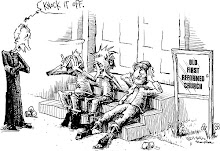
*This line is from N T Wright.

Sunday, March 23, 2008

Easter 2008: Resurrection Fact, Metaphor, and Mystery

Acts 10:34-43, Psalm 118:1-2, 14-24, Colossians 3:1-4, John 20:1-18

Colossians 3:3, For you have died, and your life is hidden with Christ in God.

Welcome to Easter. I’m glad that you are here. Church members, visitors, walk-ins, whether you are Christian or not or something else, with your questions and doubts and beliefs, whatever, we are glad that you are here.

Easter is for everyone, Easter is not church property, we don’t own this story, it’s been given to humanity. It’s a great gift, it’s a story beyond our full comprehension. Old First is an open church. Our people have different responses to this story, different understandings, but we agree that this is the story that deserves our celebration and our contemplation.

This morning I want to contemplate the resurrection as fact. and as metaphor, and as mystery.

I believe the resurrection is a fact. I mean that I believe it really happened in real time. If you find that you doubt it, I don’t blame you, and I suspect it’s the hardest thing of all to believe. It’s not the kind of fact that you can prove, and I don’t intend to try. I want only to propose what kind of fact it is, what kind of fact the writers of scripture regarded it to be.

It is not a scientific fact. It cannot be verified according to the scientific method of controlled repetition. Of course not, by definition, because the resurrection was a singularity. It’s sort of like the Big Bang, which strictly speaking is not scientifically verifiable. It can only be inferred.

The Nobel Prize in physics was awarded to Arno Penzias who first detected what we call "cosmic microwave background radiation," the constant extra hum of the universe, which he proposed to be the leftover noise of the Big Bang. We cannot prove the Big Bang, but inferring it helps us make sense of many other phenomena. Christians regard the resurrection of Jesus to be like that.

The resurrection is not an historical fact, not in the way that the crucifixion is. The crucifixion was not a singularity and it fits with ordinary Roman practices. It has literary witnesses which are relatively objective and even unsympathetic, the sort of witnesses that we require for the standards of history.

With the resurrection, the gospel writers report only what the apostles said they saw, and it only helps a little to note that at first the apostles were not sympathetic witnesses. They didn’t expect the resurrection, they hadn’t wanted it, and at first they did not believe it. They had to come around to it. But then afterwards they didn’t try to prove it objectively, because they couldn’t.

Consider the resurrection as something like a newspaper kind of fact. That fits with how the apostles presented it, they always called it "news," like the daily news, or when you tell someone you have good news.
Consider that news is most newsworthy when it’s least expected and most exceptional and singular.
Consider that news is the kind of story that we want to know because it makes a difference in what we do from then on and how we see the world.
Consider it the kind of fact that depends on the credibility of the reporter. You believe it not because you see the evidence but because you trust the judgment of the network that you listen to.

My second church was among Dutch immigrants in rural Ontario, and one summer evening a group of us were standing on the shore of Lake Erie and gazing at the full moon. I remarked, "Just think, human beings have walked on it." An elderly woman named Cornelia Vander Knyff said she didn’t think they really had. Now I respected her, and she had been in the middle of Nazi gunfire in World War II. So I said, "Well, we watched it on TV!" And she looked at me with some pity, and asked me if I really believed in what I saw on TV.

How much can you trust the writers of the gospel? If we judge them as reporters by their subsequent behavior, by what they did with what they said, by their judgments on other matters, I think we may find them very credible. And so we have reporters who are credible telling a story quite incredible. And that’s the best we can do with the resurrection as a fact.

That the resurrection is a metaphor there is no question. It has become fashionable to call it a metaphor as a dodge around its being true, especially among many popular scholars. With the way they use "metaphor" I don’t know how they got through English Composition 101. A metaphor is when you apply something concrete to something other either abstract or unfamiliar.

If you say metaphorically that "your love is like the ocean," then your love is the abstract and the ocean is the concrete, and so the ocean is a metaphor for love. If we say the resurrection is a metaphor then we must also say for what.

Our reading from the Epistle to the Colossians says for what. The resurrection of Jesus is a metaphor for the new life of the rest of us. The new life is bound to be unfamiliar and abstract, but St. Paul regards the resurrection of Jesus as concrete. And so he writes, "If you have been raised with Jesus, seek the things which are above." He makes the resurrection of Jesus the generating metaphor for the whole new life of the world. I can recommend this metaphor to all of you today, even if you find it difficult to believe the resurrection as concretely as the apostles did.

The resurrection’s power as a metaphor confirmed the followers of Jesus in their belief that it was concrete. It empowered ordinary people to do extraordinary things. They were very ordinary people except for one thing which distinguished them—that the fear of death had no power over them.

Not like the heroes of the sagas and the epics, because they were not heroes, they wore no helmets and they carried no swords; they were only private soldiers in the ranks, they were slaves, they were mothers and seamstresses. But they were a new kind of human being, because they considered themselves to have already died, and risen again, the sting of death was behind them.

They could be beaten, but they could not be broken. When they were bound in chains they acted as if they were free. When they were condemned they acted as if they were justified. They didn’t keep score, because they had already won. They refused to regard their enemies as enemies. They began to experience a whole new way of living as human beings in the world, they began to live a whole new kind of life.

When you speak of love, do you say that your love is like a precious jewel or like an ocean? The metaphor makes a difference. The resurrection is the generating metaphor that opens up so much. It means your body is meant to be the spouse of your soul for eternity, and that your body has a spiritual potential beyond that which you now experience. It means the physical world itself is good, it means God cares about our daily lives, and it must mean that God takes suffering seriously. It means that the gospel addresses poverty and ecology and slavery and femininity and sexuality. The implications of this generating metaphor require the whole New Testament to work out, indeed, it’s taken two thousand years of history, and there is more to come.

But when I watch the driver of the B69 bus lower the ramp for a person in a wheel chair, and when the driver patiently and cheerfully does all he has to do to strap that wheelchair in, and when we other passengers remind ourselves how good it is for him to take our time to do this, I’m telling you that this is the long term effect of the resurrection as God’s great metaphor for our lives on this planet. And we may consider such effects as something like "cosmic microwave background radiation," from which we can infer a singularity, which if it’s true can help us make sense of many other phenomena.

And the resurrection is a mystery. Not a narrow and finite mystery, but a mystery inexhaustible and infinite, like the mysteries of astrophysics and the universe.
It’s a mystery because it opens new uncertainties even while it makes sense of many phenomena, and these uncertainties require us to live by faith, not sight.
It’s a mystery because it is an act of God that is so full of the nature and character of God that it requires the mind of God fully to understand it. And yet this is a mystery which is for us and for our benefit, a mystery like the mysteries of music and of love.

It helps us with the mysteries of grief and joy, with the mysteries of our own lives, and the difficulty of these two natures that are both inside us, the old nature that is dying away and the new nature that is coming to life. We live in the framework of a daily mystery, that our old and dying nature is not the summary of us, but the earth in which the Holy Spirit plants a new nature, which we can detect in ourselves, which we have seen in Jesus Christ, which has a power beyond the force of death, a power that only comes from God.

We can be relieved to learn from St. Paul that our lives are hidden with Christ in God, and that means even hidden safe from our own selves and from the predations of our self-awareness and our guilt. Our lives extend beyond the boundaries of our present references and comprehension. The greater part of our own lives do not belong to us, but to God, and even in this present darkness we are in God’s light and sight and care and love.

This mystery compels the metaphors and comprehends the facts. This mystery we must always hear again as news, and rise again to greet as true. This great mystery we can prove only with the conduct of our daily lives in the world, this great and wonderful mystery we can only solve in the prayer and praise of worship. You were right to come here today, whoever you are, whatever you call yourself, whatever you think about these things, you were right to come here today for glory, and to celebrate this great story of God in Jesus Christ.

Copyright © 2008 by Daniel Meeter, all rights reserved.

Friday, March 21, 2008

Good Friday, 2008

John 18:15-40
For the Ecumenical Service at Greenwood Baptist,
with Park Slope Presbyterian.

Ninety-eight score and fifteen years ago our spiritual forefathers played out in Jerusalem an old story, conceived in bondage, and dedicated to the presumption that all men must protect their interests. Today we are met in a sanctuary which is dedicated to that story. We have come to remember that story, and to see what meaning it has for us.

The world will little note nor long remember what we do here, just as, if not for the resurrection three days later, it would not have noted nor remembered what happened that Friday in Jerusalem. It was all too common and unremarkable. That a governor sacrifices justice for political expediency. That the leadership sacrifices the life of the innocent for the sake of national security. That a man denies the one he loves.

Jesus is the only one in bondage here, but he’s the only one who’s free. Do you notice how the others are all compelled by fear? Pontius Pilate by fear for his imperial career should there be trouble in his province. Annas and Caiaphas by fear of Roman reprisals if they cannot keep control. Peter by fear for his own skin. He is in such bondage, he cannot do what he wants to do.

It is Jesus who is free. He is impervious to intimidation and will not be baited by the questions they ask him. Every time he speaks he keeps to his own agenda. He is like the rock against which all the other characters break like waves, and expose themselves.

I tried to figure out how many hours he was in chains. It depends on how long they sat for dinner and how long he prayed in the Garden. Let’s they arrested him at 2 AM. Even with the interrogations, a good part of that night he must have been standing around waiting. That’s as usual with the government.

Waiting. Waiting silently, being watched, being measured by their eyes, being scrutinized in wonder and in fear. Waiting on God, his suddenly silent Father, beginning to turn his face away. Abandoning him to injustice, letting the unfair wrath of sinful humanity begin to have its way with him, these high priests who had their office on God’s authority, this Roman governor whose power had been given from above. God lets him go.

Jesus is keeping vigil here. I’m sure that already here he is meditating on his scripture verses to keep him strong, and singing his favorite Psalms for comfort and encouragement.

It struck me that there are very few stories in the Bible that take place over night. The original Passover, of course, ever after to be commemorated with an all night vigil. Daniel in the Lion’s Den. Both of these stories are recapitulated in our story tonight. But also Jacob wrestling with the angel, or was it God that he was wrestling with? Here Jesus himself is grappling with his Father and his God, who does not speak, who injures him, but who does not show his face.

Jesus himself is radically the face of God. He shows us here what God is like for us. When the suffering of the world and the success of rebellion and the power of evil make us raise our voices to heaven and say, "Where are you God, why don’t you do something, why don’t you act, why don’t you defend the cause of right and righteousness?" then God keeps to God’s own agenda. God has a sovereign plan, and on the way to it, God suffers along with us.

And we may also see something new in his humanity. His humanity is not as unique as you think. He is showing us what can be true for us as well. He is able to be so free, so purposeful, and so righteous because he is already living in the power of the resurrection. He is not yet immortal here, he still must die, but he is living in the power of his resurrection.

As will his followers after him, when they too are put in chains, and flogged, and mocked, and unfairly accused, and condemned to death, and who under pressure speak their own agenda, and sing, and love their enemies and refuse the power of fear and look to the interests of others.

This is what we want tonight. Philippians 3:10-11. We want to know Christ, and the power of his resurrection, and may share his sufferings, becoming like him in his death, that if possible we may attain the resurrection from the dead.

Copyright © 2008 by Daniel Meeter, all rights reserved.

Thursday, March 20, 2008

Homily for Maundy Thursday


Note: Maundy Thursday is named for "The Maundy," which is what medieval English monks called the Footwashing they did on Thursday of Holy Week. The word "maundy" derives from the Latin word mandatum, for "commandment," as they repeated in Latin the text from John's Gospel, "a new commandment (mandatum novum) give I unto you, that ye love one another."
This week’s edition of the New Yorker has a column by Hendrik Herzberg on sex and politics and Eliot Spitzer, which disappointed me. Herzberg repeats the charge that America, compared to Europe, is overly concerned with the private sex lives of our politicians. He describes Bill Clinton’s dalliance with Monica Lewinski as "trivial." He quotes the distinguished Professor Martha Nussbaum, that to accuse Spitzer of betraying the public trust is "laughable."

Well, I agree that Clinton should not have been impeached, but I do wish he had resigned. We would expect the same of any preacher who did that with an intern. And it was right for Spitzer to resign. The underlying issue in both cases, I think, is not the sex, or the sex and the money, in Spitzer’s case. Sex and money are both expressions of the real issue, which is power.
We gave those people power. We put them in power when we elect them. We entrust them with more power than the rest of us, we want them to have power for our common good. We do the same thing with our generals and admirals, with our police chiefs and our building inspectors, we give them power over us. Power is not evil in itself, it’s only partly true that power corrupts, to leave it that power corrupts is to excuse the human heart, it is the human heart in its sinfulness that makes power corrupt. Jesus had power, he had lots of power, and he is not corrupt.
Classical literature tell us that power is drawn to hubris and to arrogance. In Latin terms, the terms of virtue, we can point to Spitzer’s arrogance. In Greek terms, the terms of drama, we can point to his hubris. For Spitzer it was a tragedy because it brought him down. For Clinton, the buffoonery of the congress made it not so much a comedy as a farce, and we the people got the worst of it. The whole nation has been besmirched. Can we turn to the literature of the gospels?
If we see virtue and comedy and tragedy more comprehensively in terms of love, the love of God for us and for the world, can we see a kind of power that is both holy and righteous?

Yes, on the cross, which we bring closer to ourselves in the Supper. There is also a secondary way, in the footwashing, which is why we are trying it tonight.
Not only because it’s in the Bible, and it’s a symbol that is rich and physical and not a little discomforting, not only because it’s regularly practiced by monastics and Mennonites and those Amish people who stunned us by how they responded to the death of their daughters in that school, but also because our vision of power needs to be refreshed. Jesus does that by framing power within servanthood and humility.
To wash the feet is servant’s work. Jesus shows us that he will give us power for our servanthood. But this America, we don’t have servants here. This is a democracy, with liberty and equality. This servanthood is not about status, it’s about self-giving. And you cannot voluntarily wash someone else’s feet unless you are quite free.
And to receive the footwashing is even more humbling than to do it. "Don’t look so closely at my feet. My nails, my crooked toes. And to have you touch my feet, that gets a little close." That vulnerability, that potential for humiliation, to go through with it means some freedom from your self-consciousness and fear, and that takes power. Tonight we celebrate the kind of power that Jesus demonstrates within the frame of servanthood and humility. In him we see that this is not powerlessness, but rather the power of selflessness, which overcomes the world.
Copyright © 2008 by Daniel Meeter, all rights reserved.

Saturday, March 15, 2008

Despise the Shame

Watching the all the video clips of Eliot Spitzer's public statements, we couldn't help but watch his wife, Silda Wall Spitzer. (Jim Lehrer's Newshour had a piece on her last night.)

First you think, "What was he thinking?"

Then you remember why you're a Calvinist. Total depravity, etc. And why that's good news. And why we pray, "And there is no health in us. But thou O Lord, have mercy upon us, miserable offenders." If we can't get down to saying that, we can't live free.

And then, you think about the obvious courage, class, and dignity of Silda Wall Spitzer. She reminded me of that phrase in the old translation of Hebrews 2:12, "despising the shame and enduring the cross." What power and strength that takes.

How classy Jesus must have been. "Looking to Jesus, the pioneer and perfecter of our faith, who for the sake of the joy that was set before him, endured the cross, and despised the shame."

Wednesday, March 12, 2008

"I Want A Sober Mind"

Last Sunday we sang two relatively unfamiliar hymns. We sang The Royal Banners Forward Go and I'll Praise My Maker While I've Breath. The first is a grand Anglican processional hymn based on a late Latin poem. The second is a Watts / Wesley metrical version of Psalm 146.

I had lunch with some regular worshippers and I asked them which of the two they liked better. They both preferred the latter. I was intrigued, because the lyrics of the second are stiffer and more, well, Protestant. At the same they are more direct, more personal, and more intense. The whole hymn is an "I" statement, after all.

I think that's the appeal of lot of the best gospel songs, and of those older hymns of Wesley, Watts, Doddridge, and all. How they speak for the "I" of the singer and of our close experience. Their poetry is often less exalted then some other more lofty hymns, but as Erik Routley used to say, the poetry of hymns should not be overdone, and is often best understated. That doesn't mean the poetry shouldn't be excellent. It's very difficult to make poetry that's both good and understated.

I heard a really good example this the other week when the Dessoff Choirs were singing at Old First. They sang one of my favorite Sacred Harp numbers. The music is great to begin with. With it's fuguing chorus it's slow -fast, like a Hungarian csardas. But the lyrics are what really struck me. Note how forceful and direct they are:

I want a sober mind,
An all sustaining eye,
To see my God above,
And to the heavens fly.

Chorus:
I'd soar away above the sky,
I'd fly, and fly,
To see my God above,
I'd fly to see my God above.

I want a Godly fear,
A quick discerning eye,
That looks to Thee, my God
And sees the tempter fly.

Chorus