Wednesday, February 01, 2012
January 29, Epiphany 4; Passionate Spirituality 4: Unclean Spirituality
Deuteronomy 18:15-20, Psalm 111, 1 Corinthians 8:1-13, Mark 1:21-28
This casting out the unclean spirit is the very first miracle of Jesus in the Gospel of Mark. And it’s easy to get it exactly wrong. The main point of the story is not the miracle but rather the authority of Jesus’ teaching. The miracle is an illustration of the power of the teaching, it illustrates that what Jesus teaches has the power to cleanse what is unclean and to liberate those who are in bondage. The story is a liberation story, and it’s the teaching that liberates.
It’s easy to get this story wrong. It’s a mistake to assume the man in the unclean spirit was rabid or looked abnormal. I suspect the unclean spirit was not apparent to his compatriots. I mean the guy might have been unlikable, or maybe known for being contentious, or even one of those guys who might give you the creeps, but it was not with some demonic voice that he challenged Jesus. He regarded himself as reasonable. “Jesus, I see who you are, and I see where you’re going here, and you’re going to mess everything up and get the Romans mad and put us all in danger. You cannot win. It isn’t worth it. So leave us alone.” He thinks he’s making sense.
The man has an “unclean” spirit. The choice of words is important. Mark does not call it an “evil” spirit. If the spirit is evil effectively it is not so essentially. It is not a demon from hell. The Gospel of Mark is not a medieval document. We mistake the event to classify it as supernatural. Yes, it is beyond our rational analysis, but that only speaks to the limits of our mental capacity. The gospel regards the ordinary world as naturally spiritual. This unclean spirit belongs to the natural spirituality of the world. But the world has been disordered by human sin, and so the natural spirituality of the world has been corrupted, confused, out of place, and it infected him. Where it came from we are not told, nor where it went when Jesus cast it out. All we know is that it was no longer making the man unclean.
When the spaghetti sauce is in my plate it’s clean. But it’s unclean when it’s on my nice white shirt. The Brussel sprouts are lovely in their butter on the plate. But then you look away, and your little son who hates to eat them puts them in the pocket of his Sunday pants. Next Sunday morning when he puts them on again he will discover that his pants smell bad. And there’s not much he can do about it. He’ll have to surrender his pants to you to clean them. But he will feel guilty, and he may resist you helping him. He is resisting your authority, the very authority you need to use to help him out of his predicament. How often do we not resist our liberation.
Jesus is teaching with great authority. Who does he think he is to teach this way. He cites no standard reference books, he appeals to no other authority but his own. It’s as if he thinks he’s allowed to speak for God. This is both appealing and threatening, and the unclean spirit has the sensitivity to sense the threat of liberation and the threat of the authority of God. He calls him “the holy one of God.” He does not mean by this that he senses that Jesus is divine, though Christians are quick to jump to that interpretation. At this point in the gospel it’s no more than that the recognizes him as God’s anointed, as both a liberator and a threat, like King David.
[Note: I dropped out the following paragraph from my spoken version:]
Or like Joshua, the Old Testament general from whom Jesus gets his name. Joshua led the armies of Israel into the Galilee to liberate the land from bondage to the hideous idolatry of the Canaanites. That was unclean spirituality, and unhealthy too. I’m sure most of the Canaanites were decent people, just trying to live their lives, but they were in bondage. They had made gods and goddesses of the natural forces of the world, the forces of weather and fertility and sex. They feared those forces and they worshiped them and made themselves subservient to them, even to the sacrifice of their own children. Joshua cleared this all out and purged the corruption and cleansed the unclean spirituality. What Joshua accomplished must have looked like a reduction in spirituality, but now there was freedom for simple obedience to the life-giving laws of God. And so too the man in the synagogue was now liberated from the unclean spirit in order to be free to learn and live the teaching of Jesus. Joshua used the sword, and Jesus uses his teaching.
The teaching of Jesus appeals to your mind, to your understanding, to your proper use of reason, to learning and the love of learning. Don’t regard this story as anti-intellectual. The story implies the cultivation of a Christian intellect. You are called to learn the teaching of Jesus in all its richness and complexity. Your Christian intellectual pursuit is for you to receive God’s mission in the world and for you also to share in God’ mission in the world, for the saving of the world and the healing of the world.
Because the gospel story deals in spirituality, we tend to read it in terms of the supernatural. The bias of the modern mind is that the spiritual is somehow supernatural and therefore other than rational and intellectual and therefore contrary to it. The modern bias is that spirituality is anti-rational and often anti-intellectual. Many people are being drawn back to spirituality because of their frustration with the emptiness of modern rationality and the narrowness of the secular intellect. But the teaching of Jesus can answer this frustration and heal this fragmentation, because it offers a spirituality which is not an escape from reason, and a mysticism which is not anti-intellectual. The liberation in the teaching of Jesus is not an escape but a setting us free by setting things to right and bringing things back together and bringing rightful order to the world. The spirituality of Jesus is very much for your understanding and your reason and your mind. So the way to get at this wholesome and healing spirituality is by the open-hearted learning of his teaching.
His teaching attracts us and yet we resist it. We would rather help ourselves and liberate ourselves, but there are some powers and forces in the lives of each of us which no amount of learning or education or self-improvement or self-help can free us from. We are in their grip, and they are spiritual. We modern people don’t like to hear this, especially with our secular and scientific loyalties, but that’s part of what Jesus is teaching us. These spiritual powers can be economic or political, they can have the public form of ideology, or they can be collectively psychological, like the depression of an urban ghetto. Like certain neighborhoods of Brooklyn. Like that part of Baltimore in the TV show The Wire. In the fourth season one of those schoolboys says, “I know there is another world out there, but I don’t know how to get there.” Or the power can be like the power of addiction, which AA knows is spiritual. And we are powerless to get ourselves free.
But you don’t have to look for special miracles. The teaching of Jesus has that power. We can trust the power of his teaching. So if we let this story direct us in our Christian action in the world, it means that we can count on God using the teaching of Jesus to liberate and cleanse and put right those things in our lives which are disordered and disabling. The story directs us to rely on Jesus’ teaching for God to do the necessary miracles.
Everyone of us here is more or less unclean. For some of you it’s bad enough to be disabling. For some of you its from your early suffering. For some of you it’s from compromises that you feel you’ve made to get through life or to get something of seeming value in return. For some of you it’s your appetites, or your fears, or vows that you have made, commitments in your mind, conclusions you have drawn, or substitute freedoms that you treasure and you want to protect. And often we don’t know that we’re in the power of spirits more powerful than us until we are made uncomfortable by the very teaching of Jesus which we first welcomed. But still you want to welcome it, and that’s why you are here.
The teaching of Jesus is enough to give you get you clean and make you free. Not that it’s a magic pill. It’s teaching. It takes learning and reflection and it is best done by learning it in a group. This story takes place within the community of a synagogue. Nobody likes to be challenged in a group or healed in a group, but the teaching of Jesus is always in the context of community. Because the goal of the teaching is love. You want to be clean for your neighbor. And you want to be clean for God. Which is a little threatening, but also compelling, because even when you are unclean, God loves you.
Copyright © 2012 by Daniel Meeter, all rights reserved.
January 22, Epiphany 3; Passionate Spirituality 3: Sharing Your Faith
by Jakob Steinhardt
Jonah3:1-5, 10, Psalm 62:6-14, 1 Corinthians 7:29-31, Mark 1:14-20
Some of you remember (we’ll call him:) “Harold”. He started coming to Old First about eight years ago. He had just moved to Brooklyn from Atlanta. He had come to New York to work for an activist organization called “Freedom to Marry,” which advocated full marriage equality for everyone, no matter what their sexual orientation. After a couple years he took a job with the Human Rights Campaign, and he moved to Washington DC, so he left our congregation, but I stayed in touch with him.
For the few years Harold was with us, he was a leader among us. He was like an extra pastor. He led us in Bible study, he preached for us, and he taught us to understand marriage equality and embrace it. Harold is prophetic and challenging, but he’s also a born encourager, and we loved having him around. In his youth he was called to the ministry. He had gone to seminary and fulfilled the requirements, but then he was denied by his denomination because he was open about being gay. He was disappointed and discouraged, but he never held it against God.
Why did Harold come to Old First? Why not an activist congregation more outspoken on the issues of sexual orientation? Well, several reasons, but he said that the first thing that brought him through our door was a sign we had out front. The sign we were running that month was very simple. All it said was, “The Bible is on your side.”
I remember having some internal hesitation when I put up that sign. Am I making it all too easy? Am I too much appealing to the Park-Slope feel-good self-indulgent consumer spirituality? What about repentance, what about God’s judgments? Well, anything can be misinterpreted, but what are we doing here, after all, if we don’t believe the Bible is on our side? The gospel is “good news.” That’s what it literally means. Yes, there’s bad news too, but the news that is bad is bad for what is bad, and it’s good for what is good. It’s even good for what is bad, whether really bad or only thought to be bad. The news is good for what we don’t expect it to be good for, and that’s what makes it “news”. It’s “news to us!” we had not expected it, it was not in our estimation of the world.
“Now after John was arrested, Jesus came to Galilee, proclaiming the good news of God.” In that simple statement there are two strange things. The first is that the arrest of John the Baptist would seem to be bad news. A bit unfeeling on Jesus’ part — and wouldn’t a Messiah try to get his cousin out of jail? Or maybe this is like our epistle, “Let those who have [cousins] be as though they had none, and those who mourn, be as though they were not mourning.” Like soldiers in the army. When a lieutenant goes down in battle, the captain does not stop to grieve but only fights the harder, because they are both committed to their common cause of victory.
The second strange thing is that Jesus was announcing “the good news of God.” That’s rare in the Bible and unique in the gospels. Usually it’s “the good news of the kingdom” or “the good news of Jesus the Messiah.” Here it is just “news of God.” Jesus had new facts to tell about this God, he was announcing that God was starting to operate in ways they did not expect.
The people of Galilee believed in God, and they knew they were supposed to love their God, but they’d had no news of God for centuries. They had begun to doubt that God was even on their side. The Sadducees taught that there was nothing more for them; just do the rituals and support the temple hierarchy and make the best of it until you die. The Pharisees taught that God was angry with them for their lack of holiness, and that a holy God would not forgive their sins until they earned it by keeping scrupulously clean. Another opinion was written up by Josephus, that God had rejected Israel and gone over to side with the Romans. Just check the military news.
Jesus comes with other news. But in the Gospel of Mark, he does not explain the news, as he does in the Gospel of Matthew. What Mark shows is how he acts it out. He demonstrates the news of God — he models it. We will watch him do this in the coming weeks, as we read the lessons from Mark. By watching what Jesus does we learn what God will do. By watching what Jesus is like we learn what God is like. And by extension what God wants.
We know that among the things God wants are chiefly two: that we love our neighbors as ourselves and that we love God most of all. Last week I said that to love God is the ultimate purpose of your spirituality. I said that your spirituality is the distinctive gift of our species of Homo sapiens, and I said that it simultaneously is given to us and has evolved in us in order to connect us to God and the things of God. Two weeks ago, in a sermon which I opened with a list of fifteen issues facing us, I said that our spirituality is also for engaging with the world, and for bringing healing and justice to the world. That kind of healing and justice depends on what God is like, no less than our loving God depends on what God is like. Spirituality goes both ways, to God and to the world, and if the goal of spirituality is love, then it I guess it should be passionate.
Let me remind you one more time why I keep on talking about this phrase, “passionate spirituality.” For the last few years the consistory of Old First has been using a tool for long-range planning called Natural Church Development. NCD is based on the eight characteristics of a vital, growing congregation. By means of surveys of the congregation, we determine which of those eight characteristics is the weakest at our church, and then we address that characteristic to strengthen it. We have done three surveys now, and every time our weakest characteristic is “passionate spirituality.” We are supposed to address it, but we have found it hard to get a handle on. Myself included.
This last time around a couple of our elders have suggested that the survey itself may be part of the problem, because the survey assumes some things that might not fit Old First. The survey questions suggest that passionate spirituality takes the form of energetically sharing our faith with other people. If not preaching to sinners like Jonah, then at least being “fishers of men” by witnessing to our neighbors and recruiting our friends. Well, how shall we do this when we put such a premium on our hospitality to everyone without conditions?
As of today I do not have a nice solution to this dilemma for Old First. I can feel that it has to with that combination in our Psalm today, that “power belongs to God, and steadfast love is yours, O Lord.” That could be a headline for the good news of God that Jesus demonstrates. I can feel that we in this congregation will share it with others by our actions and attitudes as much as by our words. I think of the example of “Harold”. But I also think it has everything to do with our view of God, the God who is the ultimate object of our spirituality.
What is God like, I want to know what God is like. And that will be my focus for the coming weeks. What is this God like whom Jesus demonstrates? I’m inviting you to stay with this, and contemplate what God is like.
Three weeks ago, on January 1, I preached a sermon on the circumcision of Jesus. I said that Jesus was circumcised to be a Jew, which means that one of the three persons of the Trinity is a Jew, and that in Jesus God was circumcised. I had almost scrapped it beforehand because it felt so impractical and irrelevant, but Melody read it through and told me to go ahead with it. I gave it up to God and preached it and I let it go. Two days later I got a call from California, from the president of a university. He had read the sermon on my blog and he wanted me to come out and preach it at a meeting of his board. What? He said he had never heard these things before, and he thought people need to hear them. He is a Jew, and he lost his family in the holocaust, and he had been called a Christ-killer in his youth. He told me that when he read my sermon he wept. He told me that most sermons tell us to be good, but what he wanted to hear is what God is like.
I am not going out there to convert him. I am going to share my faith, but not to convert him. That’s not the point. I am going out there to share the “news of God” as we read it in the gospel, and to celebrate that “the Bible is on his side,” and experience some healing and the love of God. That’s what I am passionate about, the love of God.
Copyright © 2012 by Daniel Meeter, all rights reserved.
Jonah3:1-5, 10, Psalm 62:6-14, 1 Corinthians 7:29-31, Mark 1:14-20
For the few years Harold was with us, he was a leader among us. He was like an extra pastor. He led us in Bible study, he preached for us, and he taught us to understand marriage equality and embrace it. Harold is prophetic and challenging, but he’s also a born encourager, and we loved having him around. In his youth he was called to the ministry. He had gone to seminary and fulfilled the requirements, but then he was denied by his denomination because he was open about being gay. He was disappointed and discouraged, but he never held it against God.
Why did Harold come to Old First? Why not an activist congregation more outspoken on the issues of sexual orientation? Well, several reasons, but he said that the first thing that brought him through our door was a sign we had out front. The sign we were running that month was very simple. All it said was, “The Bible is on your side.”
I remember having some internal hesitation when I put up that sign. Am I making it all too easy? Am I too much appealing to the Park-Slope feel-good self-indulgent consumer spirituality? What about repentance, what about God’s judgments? Well, anything can be misinterpreted, but what are we doing here, after all, if we don’t believe the Bible is on our side? The gospel is “good news.” That’s what it literally means. Yes, there’s bad news too, but the news that is bad is bad for what is bad, and it’s good for what is good. It’s even good for what is bad, whether really bad or only thought to be bad. The news is good for what we don’t expect it to be good for, and that’s what makes it “news”. It’s “news to us!” we had not expected it, it was not in our estimation of the world.
“Now after John was arrested, Jesus came to Galilee, proclaiming the good news of God.” In that simple statement there are two strange things. The first is that the arrest of John the Baptist would seem to be bad news. A bit unfeeling on Jesus’ part — and wouldn’t a Messiah try to get his cousin out of jail? Or maybe this is like our epistle, “Let those who have [cousins] be as though they had none, and those who mourn, be as though they were not mourning.” Like soldiers in the army. When a lieutenant goes down in battle, the captain does not stop to grieve but only fights the harder, because they are both committed to their common cause of victory.
The second strange thing is that Jesus was announcing “the good news of God.” That’s rare in the Bible and unique in the gospels. Usually it’s “the good news of the kingdom” or “the good news of Jesus the Messiah.” Here it is just “news of God.” Jesus had new facts to tell about this God, he was announcing that God was starting to operate in ways they did not expect.
The people of Galilee believed in God, and they knew they were supposed to love their God, but they’d had no news of God for centuries. They had begun to doubt that God was even on their side. The Sadducees taught that there was nothing more for them; just do the rituals and support the temple hierarchy and make the best of it until you die. The Pharisees taught that God was angry with them for their lack of holiness, and that a holy God would not forgive their sins until they earned it by keeping scrupulously clean. Another opinion was written up by Josephus, that God had rejected Israel and gone over to side with the Romans. Just check the military news.
Jesus comes with other news. But in the Gospel of Mark, he does not explain the news, as he does in the Gospel of Matthew. What Mark shows is how he acts it out. He demonstrates the news of God — he models it. We will watch him do this in the coming weeks, as we read the lessons from Mark. By watching what Jesus does we learn what God will do. By watching what Jesus is like we learn what God is like. And by extension what God wants.
We know that among the things God wants are chiefly two: that we love our neighbors as ourselves and that we love God most of all. Last week I said that to love God is the ultimate purpose of your spirituality. I said that your spirituality is the distinctive gift of our species of Homo sapiens, and I said that it simultaneously is given to us and has evolved in us in order to connect us to God and the things of God. Two weeks ago, in a sermon which I opened with a list of fifteen issues facing us, I said that our spirituality is also for engaging with the world, and for bringing healing and justice to the world. That kind of healing and justice depends on what God is like, no less than our loving God depends on what God is like. Spirituality goes both ways, to God and to the world, and if the goal of spirituality is love, then it I guess it should be passionate.
Let me remind you one more time why I keep on talking about this phrase, “passionate spirituality.” For the last few years the consistory of Old First has been using a tool for long-range planning called Natural Church Development. NCD is based on the eight characteristics of a vital, growing congregation. By means of surveys of the congregation, we determine which of those eight characteristics is the weakest at our church, and then we address that characteristic to strengthen it. We have done three surveys now, and every time our weakest characteristic is “passionate spirituality.” We are supposed to address it, but we have found it hard to get a handle on. Myself included.
This last time around a couple of our elders have suggested that the survey itself may be part of the problem, because the survey assumes some things that might not fit Old First. The survey questions suggest that passionate spirituality takes the form of energetically sharing our faith with other people. If not preaching to sinners like Jonah, then at least being “fishers of men” by witnessing to our neighbors and recruiting our friends. Well, how shall we do this when we put such a premium on our hospitality to everyone without conditions?
As of today I do not have a nice solution to this dilemma for Old First. I can feel that it has to with that combination in our Psalm today, that “power belongs to God, and steadfast love is yours, O Lord.” That could be a headline for the good news of God that Jesus demonstrates. I can feel that we in this congregation will share it with others by our actions and attitudes as much as by our words. I think of the example of “Harold”. But I also think it has everything to do with our view of God, the God who is the ultimate object of our spirituality.
What is God like, I want to know what God is like. And that will be my focus for the coming weeks. What is this God like whom Jesus demonstrates? I’m inviting you to stay with this, and contemplate what God is like.
Three weeks ago, on January 1, I preached a sermon on the circumcision of Jesus. I said that Jesus was circumcised to be a Jew, which means that one of the three persons of the Trinity is a Jew, and that in Jesus God was circumcised. I had almost scrapped it beforehand because it felt so impractical and irrelevant, but Melody read it through and told me to go ahead with it. I gave it up to God and preached it and I let it go. Two days later I got a call from California, from the president of a university. He had read the sermon on my blog and he wanted me to come out and preach it at a meeting of his board. What? He said he had never heard these things before, and he thought people need to hear them. He is a Jew, and he lost his family in the holocaust, and he had been called a Christ-killer in his youth. He told me that when he read my sermon he wept. He told me that most sermons tell us to be good, but what he wanted to hear is what God is like.
I am not going out there to convert him. I am going to share my faith, but not to convert him. That’s not the point. I am going out there to share the “news of God” as we read it in the gospel, and to celebrate that “the Bible is on his side,” and experience some healing and the love of God. That’s what I am passionate about, the love of God.
Copyright © 2012 by Daniel Meeter, all rights reserved.
Saturday, January 14, 2012
January 15, Epiphany 2, Passionate Spirituality: Up and Down the Staircase
1 Samuel 3:1-20, Psalm 139, 1 Corinthians 6:12-20, John 1:43-51
“Truly, truly I tell you, you will see the heaven opened and the angels of God ascending and descending upon the Son of Man.”
If this were a megachurch I'd be cueing the praise band to start playing Stairway to Heaven by Led Zeppelin. A rock and roll version of We Are Climbing Jacob’s Ladder. In Jacob’s dream it was not really a ladder but a staircase, like on this picture of a Chaldean ziggurat from the world of Jacob. The top of the ziggurat was the house of a god, and the priests of the god would ascend and descend on the staircase. In Jacob’s dream the priests were angels, and then God came down the staircase and actually stood next to him. So Jesus is telling Nathaniel that he himself is the staircase between God and humanity, and that God comes down in him.
Let me tell you about two interviews I heard on the radio, two weeks ago, on the Brian Lehrer show on WNYC. They were reruns from 2011. The first interview was with the Nobel Peace Prize winner from Liberia, a woman named Leymah Gbowee. She is featured in a documentary called Pray the Devil Back to Hell, which our deacons screened here two years ago. Ms. Gbowee is a Christian peace activist who helped to end the Liberian civil war by gathering both Christian women and Muslim women in vigils of prayer. She said that their spirituality was critical to their campaign. Not just their non-violence and their interfaith approach, but the action of their prayer.
The second interview was with the British biologist Richard Dawkins, who is a campaigning atheist. He argued that belief in God is not just irrational but bad for the world. He said that religion is nonsense because it is not confirmed by science. And then he made an incidental remark which I found telling. He was reviewing how species diverge within the evolutionary process, on islands, for example. And then he said, “Or in lakes, which are just islands of water.” What? “Just islands of water”? No they’re not. Not if you think about it. (Lakes are not "isolated": they have streams in and streams out. The rare exception of crater lakes just proves the rule.) But Dawkins tends to argue by reduction. He reduces his definitions to fit his preconceptions and then he rules out whatever does not fit his definitions. That enables him to rule out spirituality as supernatural and therefore nonsensical, because what is natural is only that which can be verified by science.
Some people are impressed by his arguments and others are dismayed. You need not be either. His arguments are circular and they “beg the question”. He doesn’t speak for science proper but for the ideology of scientism. Now it is true that spirituality cannot be proven scientifically, but that does not make it nonsensical. Spirituality helps to make sense of certain natural phenomena which science cannot measure, like the power of the women of Liberia. Those women are wiser than Dawkins in not dismissing spirituality as supernatural, and their knowledge of nature is richer and more complex. By them you can be impressed, and encouraged in your faith. They show you the richness of spirituality, and the power of its engagement with the world, with the real world, the natural world, including politics.
The combination of politics and spirituality is implicit in the gospel lesson for today. We are at the Jordan River, where John the Baptist has been holding a long-term revival, a camp meeting, awaiting the Messiah, the descendent of the dynasty of David, who has the royal title of the Son of God, a priestly king, both spiritual and political, a Gandhi, a Martin Luther King. The Messiah was identified by John the Baptist, to the crowd, just the day before our lesson. And now the partisans of John the Baptist must consider moving their allegiance on to Jesus.
Jesus has been observing the crowd in order to recruit some followers. He calls out Philip, and then Philip goes to get his brother Nathaniel, who is skeptical. He knows about Nazareth, which he thinks is a dump, and which is never mentioned in the prophecies. But he comes along. When Jesus sees him he compliments him. Nathaniel wants to know how Jesus knows him, and Jesus says that he’s been watching him. Then Nathaniel blurts out, “I recognize you as the Son of God – that is – the king of Israel.” He does not mean by those words that Jesus is God — that recognition will come much later. But he does recognize that, in this Jesus, God has returned to Israel.
Jesus answers Nathaniel by calling himself not the Son of God but the Son of Man. That sounds like less, but to Nathaniel it will mean more. It’s from the prophecy of Daniel, from the vision of a human being getting elevated up to a place in heaven before the throne of God, in order to share in God’s government of all the world. Not just Israel, but all the kingdoms of the world.
That raises the stakes. It also lessens the relative importance of the politics of Israel. Jesus is saying that he’ll be beyond all that. That will present problem to test the interest of Nathaniel.
Are you passionate about politics? Is your passion for a particular candidate, or more for the issues, like justice, or freedom, or the economy and ecology? What are you passionate about? To what do you give your time and your energy, for what are you willing to sacrifice and for what do you freely pay the cost? What do you want to tell your friends about?
This series of sermons is on “passionate spirituality”. Passionate spirituality is a vital sign in which our congregation is relatively weak. Well, no wonder, we’re easy-going, we want to be non-judgmental and welcoming to everyone. With such a bias we risk passivity instead of passion. So what shall our congregation be passionate about?
The purpose of human spirituality is not just for the well-being of ourselves but for beyond ourselves. Its purpose is to connect us to God and to the things of God. Our species is distinct among other animals in this natural capacity. Call it a gift of God, call it a result of evolution, call it both. We call our bodies temples because we believe that our bodies are naturally spiritual as well as physical, and that the spirituality of our bodies is the medium by which we connect to God. Not just to connect to God, but to love God. That’s a core belief we share with Judaism — that the purpose of our spirituality is to love God, to love God more than anything else. That’s the passion in passionate spirituality.
How do we access this God? Jesus call himself the stairway, for going up and down. His person, his story, his gospel, his teaching, his healing, his suffering, his sacrifice, his resurrection, his spirit poured out on us. He is telling his followers that it’s on him that we can lift up to God the world and the things of the world. And also that God comes down to us, to be with us and among us and to love us. It’s not a stairway of escape from the real world, but a stairway of God with us for the salvation of this world.
In a few moments we will have our congregational meeting, and it might not feel very spiritual. We will talk about business and money, how much we spend and how much we need. We will talk about our programs and our challenges. We will talk about the down-to-earth matters of our mission and how we address the real resources that we have. Like our sanctuary ceiling. How much is this really spiritual? Good question. And the answer is in the spirituality of Jesus, and in the connection that he has made between our love of God and the real life of the world.
So my take home today is for the congregation as a whole. We shall find our way into the future if we always start with Jesus Christ, the son of God and son of man. Classic Christianity. Focused, but not narrow. Faithful, but not fundamentalist. Confident but not judgmental. Humble and embracing, centered and inclusive, passionate and rational, spiritual and natural, loving and realistic, ancient and modern, Christ-centered and progressive. We may face with confidence our challenges and uncertainties by remembering to be a community of Jesus who welcomes persons of every ethnicity, race, and orientation to worship, serve, and love God, and to love our neighbors as ourselves.
Copyright © 2012 by Daniel Meeter, all rights reserved.
Thursday, January 05, 2012
January 8, A Passionate Spirituality of Engagement
Baptism of Jesus, Genesis 1:1-5, Psalm 29, Acts 19:1-7, Mark 1:4-11
Let me open this sermon with a checklist which I took and adapted from a lecture I heard recently by Bishop N. T. Wright.
1. We’re in a global cultural shift from Modernism to Post-modernism. Modernism believes in progress and humanistic ideals, and it produced the great institutions of government and education that we value. Post-modernism doubts how great those institutions really are, and to progress it says, “Yeah, right,” and to humanistic ideals it says, “All I know is what works for me.” Humanity is just individuals with individual needs and individual truths. And so we are watching the general fragmentation of global society. Do Christians have anything to offer here?
2. We’re in a global struggle between secularism and fundamentalism. They fear each other and feed on each other. Most of us Christians are stuck in the middle. The fundamentalists say we’re secularist, and the secularists say we’re fundamentalists, and everything is polarized. We are so afraid of being labeled as the one or the other that we are silent on the issues of the day.
3. We’re watching the unsated idolatry of Mars, the god of war. After the outrage of 9/11, the leaders said, “We have seen evil out there,” and then they said, “We will deal with evil by dropping bombs on it.” What were we thinking? Must Christians be content with this?
4. We’re in a global crisis of credit and debt and we’re struggling with banking and the purpose of banking. When we hit the credit crunch, and the great banks asked for relief, we were quick to bail them out. But what about the nations of the global south which have been groaning for decades under the load of debt to those same banks which kept enabling the foolish spending of their former dictators? Do not the prophets and the gospel have something to say on this?
5. We are watching the global polarization of the rich and the poor, and the wealth of America is less and less a commonwealth. Do Christians have any prophecy to offer here?
6. We’re watching the increasing unhealth of our global ecology. The cause of global warming is disputed, but the fact of it is not. We are taking increasingly great risks with our landscape and our groundwater in order to extract every last bit of natural gas and oil. We are making deserts of our oceans. If the earth is the Lord’s and the fullness thereof, have we got anything to offer here?
7. We’re watching the fragmentation and polarization of our American democracy. We no longer can agree on what “truths we hold to be self-evident,” we are unable to have a civil debate, and our government is unable to address our problems. Can we not offer some new wisdom here?
8. We’re developing the awesome power of biotechnology at the same time we are less and less able to agree on ethics to use this technology. Can we not offer some new creativity here?
9. We’re watching the fragmentation of ethics and aesthetics. We are not able to agree on what is good and what is beautiful. We are developing a brutalist culture with pretty surfaces, and works of art are valued only for their market price. Can Christians not offer some healing here?
10. The polarization of medical care.
11. The fragmentation of the global community into new kinds of nationalisms.
12. The fragmentation of sexual identity.
13. The problem of political Islam.
14. The power of electronic communication both to connect us and to dehumanize our daily interactions.
15. The prurient preoccupation of our media on the sex lives of celebrities at the same time as its silence on the real life conditions of most of the people on this planet.
Have we Christians got anything helpful and healing on these problems that we’re facing?
Let me be clear that I am not saying the church as an institution should be making statements or forging policies on these issues. Not that the church should never ever take a stand on an issue of the day, but it should be rare and only when the gospel is at stake. This is not so much from a lack of capacity or expertise as a matter of the church’s proper mission. But to engage these issues is the calling of the church in the organic sense as the community of God’s people.
I am saying that Christians should be addressing these problems and issues from out of our discipleship and in service to salvation. Not as the institutional church, but as Christian persons in our places of work and play and as Christian organizations which target particular issues. And I am also saying that a function of the institutional church is to nurture the spirituality that you need to address these problems in the world. You need to be spiritual to engage these issues with a view toward healing and justice and peace, and just to stay involved and fight the fatigue you need to be passionately spiritual, which belongs to the mission of a congregation like Old First.
I’m returning to my sermon series on passionate spirituality. Our congregational surveys keep telling us that of the eight vital signs of a healthy, growing congregation, our weakest vital sign is passionate spirituality. This may partly be a function of the survey’s bias in the meaning of this vital sign, and I will address this bias two weeks from today, on January 22. But it’s still a vital sign. This sermon is an introduction, and I hope you can stay with me over the coming weeks.
We are naturally spiritual, just because we’re human beings. The universe itself is naturally spiritual. Spirituality is not something supernatural. We only call it that because it is beyond our ordinary senses and we cannot measure or predict it or control it. But we are estranged from our native spirituality and from the spirituality of the world, which only aggravates the problems in my checklist. And yet it’s not enough to just revive our natural spirituality. Indeed, just doing that can lead us back to ancient pagan bondages. You can be spiritual and still be enslaved.
We need the spirituality of the Holy Spirit, which is the gift of God’s self, who enters into you, as certainly as you are baptized. God’s Spirit enters into your own spirit, into your soul, and your mind and your emotions, within you to inspire you and strengthen you and heal you and to make you whole. The Spirit enable you to hear God’s word and understand it, and then to live it out prophetically and creatively in the world. Prophecy and creativity are gifts of the Holy Spirit.
From Genesis 1. “A wind from God swept over the face of the waters.” That can be translated several ways, intentionally I think. “The spirit of God brooded over the face of the deep.” Like a mother hen broods on her eggs to warm them into life. Like you breathe on your hands, or you breathe into your trumpet to warm it up, or you breathe into your woodstove to bring the fire to life. God breathed God’s Spirit into the ancient deep to waken it and make it ready to listen to the Word of God and then respond to it. “‘Let there be light,’ and there was light.” The Spirit of God goes out into the world, into all the world, ahead of the Word of God, ahead of us, ahead of the church, and we follow it. We follow the Spirit, bringing the life-giving Word of God to all the world God loves, creatively and prophetically, for healing and justice and for peace.
Who are we to do this mission in the world? What resources do we have, what strength do we have, or wisdom or knowledge or expertise? Exactly, we are right to doubt ourselves. But then we hear God say, “With you I am well-pleased.” God finds us quite acceptable to share this mission, because it is God’s mission, after all, not ours, we are only partnering with God in it. It does not depend on us. We are told that the final future of the world already has begun, and the new creation cannot be undone. We are not told what it looks like or how we’ll get there, but we know who holds it and who pledges it.
How do you know that you’ve been given this Holy Spirit? You cannot know it scientifically, you have know it by means of belief. So I’m inviting you to believe that you’ve been given the Spirit of God, and I’m challenging you to be responsible to learn what that means. And yet you can feel the hints and suggestions of the presence of the Spirit within you, and those take the form of your desire for God, and your desire for the love of God. God does not put within you any desire that God does not satisfy. Your desire for the love of God already is a sign that God does love you. With you God is well-pleased.
Copyright © 2012 by Daniel Meeter, all rights reserved.
Friday, December 30, 2011
January 1, The Holy Name, and the Circumcision of Jesus
Numbers 6:22-27, Psalm 8, Galatians 4:4-7, Luke 2:15-21
Did you know that New Year’s Day was not always January 1? It used to be March 25. The first day of the year has varied in different times and places, but in the British colony of New York, as late as 1751, the new year was reckoned to start on March 25. But our congregation held worship on January 1 anyway, and it was not for New Years. It was the Feast of the Circumcision of Jesus.
Now this may strike you as an awkward thing to celebrate. The awkwardness of it is partly why the ecumenical church prefers to call it the Feast of the Holy Name, which is the title in our lectionary. And after all, the gospel lesson does report the announcement of his name. But in Biblical terms, the circumcision is more important than the naming. Just ask any Jew.
You know that Jewish boys are required to be circumcised eight days after they’re born. The ritual is called a bris. After the bris the family has a party, which traditionally had been a feast for the whole community. Circumcision was a cause for joy. But Christians find the whole idea a bit embarrassing and even controversial, especially because of its medical implications and how it pains a little child. The circumcision of girls is a matter of human rights and sexual oppression. At least the Bible never allows for female circumcision. It’s only for males, and that means that it’s another of God’s judgments on masculinity.
Circumcision is the mark which means a Jew belongs to God. It is the sign that he is not his own. He is branded as God’s property, and so are all his offspring, as you can interpret by the location of the sign upon his body. The sign is both a judgment and a promise.
In Genesis 17, God required Abraham to circumcise himself and all the males of his household as the sign of the covenant God made with him. Four hundred years later, in Exodus 12, at the first Passover, when God renewed the covenant with the whole people of Israel, circumcision was confirmed as the mark of Jewish identity. It has often been a costly mark. In 168 BC, the Seleucid emperor who was ruling over Palestine wanted to force the Jews to live like Greeks, and he made circumcision illegal at the pain of death. That led to the revolt of the Maccabees, and the affirmation of circumcision as a badge worth dying for. It has always cost a lot to be a Jew. To be an heir to the covenant with God is both a blessing and a burden, though the burden is worth it.
And so our Lord was circumcised — to be fully a Jew, to be one with his people, to bear the costs they have to bear, and to be an heir to the covenant and its obligations. So were his twelve disciples, and all the first Christians. But what about the Gentiles who started to convert? Should they be circumcised? The early church debated this, as you can read about in the Book of Acts and in Galatians, from which our second lesson comes. Some voices argued that the inclusiveness of the gospel should not change the obligations of the covenant. They felt that to be a Christian you also had to be more or less a Jew. The debate was settled when the council of the apostles unanimously agreed that Christians can be equally Jewish or Gentile and remain that way, and that circumcision is indifferent, neither required nor prohibited, and simply a personal choice.
The Circumcision of Jesus was not celebrated as a Christian feast until the Sixth Century. It took a two-step process to establish it. First, in the Fourth Century, the church was officially established in the Roman Empire. Soon the 25th of December was quite arbitrarily chosen as the legal holiday to celebrate the nativity. Eight days later is January 1, which began to be observed, and then that was also made a legal holiday. But the establishment of the church also resulted in in evolving anti-Semitism, and over the succeeding centuries the Jewishness of Jesus began to be devalued. The Roman Church began to emphasize the naming of Jesus over his circumcision, and the title got changed to the Feast of the Holy Name.
Ultimately, in 1442, the practice of circumcision was officially prohibited by the Roman Catholic Church and made a mortal sin. This automatically condemned every Jew in Europe to hell, and the Biblical badge was made a cause of fear and shame and a mark of discrimination and anti-Semitic cruelty.
The Reformation made a change in this. The Reformed Church reaffirmed the Jewishness of Jesus and the Jewishness of the Bible, and it reaffirmed the celebration of the Circumcision of our Lord. And the Dutch Reformed Church celebrated it here in America for many years. When our congregation stopped it, I don’t know, we don’t have the records. Did we get embarrassed? Were we getting too refined? When did we start using our religion to avoid the things of fear and shame instead of using it to face them? Jesus did not avoid the suffering of his people or their oppression by the Romans. He was crucified because he was a Jew. He was mocked by the Roman soldiers because he was a Jew. He would have been discriminated against by many Christians throughout history, and in America as well. He would have been murdered in the Holocaust.
What we mark today is that for our salvation, God became a Jew. On Christmas, the Feast of the Incarnation, we mark that God became a human being, and today we mark that God became a Jew. As Galatians puts it, “born of a woman, born under the law.” The Jewishness of Jesus is not incidental. But his Jewishness is not just a matter of ethnicity. He already had that at his birth, just by having a Jewish mother. His Jewishness was a matter of Jewish faith and observance, and that is what began for him at his circumcision.
So what does this all mean for us today? Well, I'm not sure. It’s an open question for me, and I’m not sure what it all means. But it must affect the way that we imagine God. Look, if we say that Our Lord Jesus was bodily resurrected from the dead, in the flesh, and then that he ascended into heaven at the right hand of his Father, whatever that means, it does mean that there is a Jew at the right hand of his Father. I believe that that requires us Christians to have a special honor for Jews and for Judaism.
Not that we should avoid our differences and disagreements. For example, ironically, Jews do not believe that one of them is a member of the Holy Trinity and we do. To worship the Triune God paradoxically requires us to embrace the Judaism of Jesus. Not that we become Jewish ourselves. He was circumcised for us, not us for him. But to honor God, we need to honor God’s real history in the world, God’s commitments and God’s covenants and God’s associations. We Christians are adopted into a way of life with God which Jews are born into. We are in this not from birthright but from grace. And that must affect our view of ourselves as much as it affects our view of God.
Second, we have to embrace the suffering of Jesus for the sake of our salvation. He began to pay the cost for us already on the eighth day of his life. We embrace more than his teaching and example. To learn the Christian faith we need to learn the costs he had to bear and why had to bear them. And because Jesus is God incarnate, that means that God was circumcised, and that God’s own self was bearing that cost. Can you imagine God this way. Not just the child, not just Jesus, but God in heaven, God accepting the mark of commitment and the badge of discrimination upon God’s self. God taking our bleeding and our shame and fear into God’s own self. This is the God we can love, a God who can feel how much it costs to love, and a God who knows how much it costs us to love God back. It is a cost worth paying, it is blood worth giving, it is a name worth wearing, an adoption worth accepting, and a blessing worth receiving.
Copyright © 2012 by Daniel Meeter, all rights reserved.
Did you know that New Year’s Day was not always January 1? It used to be March 25. The first day of the year has varied in different times and places, but in the British colony of New York, as late as 1751, the new year was reckoned to start on March 25. But our congregation held worship on January 1 anyway, and it was not for New Years. It was the Feast of the Circumcision of Jesus.
Now this may strike you as an awkward thing to celebrate. The awkwardness of it is partly why the ecumenical church prefers to call it the Feast of the Holy Name, which is the title in our lectionary. And after all, the gospel lesson does report the announcement of his name. But in Biblical terms, the circumcision is more important than the naming. Just ask any Jew.
You know that Jewish boys are required to be circumcised eight days after they’re born. The ritual is called a bris. After the bris the family has a party, which traditionally had been a feast for the whole community. Circumcision was a cause for joy. But Christians find the whole idea a bit embarrassing and even controversial, especially because of its medical implications and how it pains a little child. The circumcision of girls is a matter of human rights and sexual oppression. At least the Bible never allows for female circumcision. It’s only for males, and that means that it’s another of God’s judgments on masculinity.
Circumcision is the mark which means a Jew belongs to God. It is the sign that he is not his own. He is branded as God’s property, and so are all his offspring, as you can interpret by the location of the sign upon his body. The sign is both a judgment and a promise.
In Genesis 17, God required Abraham to circumcise himself and all the males of his household as the sign of the covenant God made with him. Four hundred years later, in Exodus 12, at the first Passover, when God renewed the covenant with the whole people of Israel, circumcision was confirmed as the mark of Jewish identity. It has often been a costly mark. In 168 BC, the Seleucid emperor who was ruling over Palestine wanted to force the Jews to live like Greeks, and he made circumcision illegal at the pain of death. That led to the revolt of the Maccabees, and the affirmation of circumcision as a badge worth dying for. It has always cost a lot to be a Jew. To be an heir to the covenant with God is both a blessing and a burden, though the burden is worth it.
And so our Lord was circumcised — to be fully a Jew, to be one with his people, to bear the costs they have to bear, and to be an heir to the covenant and its obligations. So were his twelve disciples, and all the first Christians. But what about the Gentiles who started to convert? Should they be circumcised? The early church debated this, as you can read about in the Book of Acts and in Galatians, from which our second lesson comes. Some voices argued that the inclusiveness of the gospel should not change the obligations of the covenant. They felt that to be a Christian you also had to be more or less a Jew. The debate was settled when the council of the apostles unanimously agreed that Christians can be equally Jewish or Gentile and remain that way, and that circumcision is indifferent, neither required nor prohibited, and simply a personal choice.
The Circumcision of Jesus was not celebrated as a Christian feast until the Sixth Century. It took a two-step process to establish it. First, in the Fourth Century, the church was officially established in the Roman Empire. Soon the 25th of December was quite arbitrarily chosen as the legal holiday to celebrate the nativity. Eight days later is January 1, which began to be observed, and then that was also made a legal holiday. But the establishment of the church also resulted in in evolving anti-Semitism, and over the succeeding centuries the Jewishness of Jesus began to be devalued. The Roman Church began to emphasize the naming of Jesus over his circumcision, and the title got changed to the Feast of the Holy Name.
Ultimately, in 1442, the practice of circumcision was officially prohibited by the Roman Catholic Church and made a mortal sin. This automatically condemned every Jew in Europe to hell, and the Biblical badge was made a cause of fear and shame and a mark of discrimination and anti-Semitic cruelty.
The Reformation made a change in this. The Reformed Church reaffirmed the Jewishness of Jesus and the Jewishness of the Bible, and it reaffirmed the celebration of the Circumcision of our Lord. And the Dutch Reformed Church celebrated it here in America for many years. When our congregation stopped it, I don’t know, we don’t have the records. Did we get embarrassed? Were we getting too refined? When did we start using our religion to avoid the things of fear and shame instead of using it to face them? Jesus did not avoid the suffering of his people or their oppression by the Romans. He was crucified because he was a Jew. He was mocked by the Roman soldiers because he was a Jew. He would have been discriminated against by many Christians throughout history, and in America as well. He would have been murdered in the Holocaust.
What we mark today is that for our salvation, God became a Jew. On Christmas, the Feast of the Incarnation, we mark that God became a human being, and today we mark that God became a Jew. As Galatians puts it, “born of a woman, born under the law.” The Jewishness of Jesus is not incidental. But his Jewishness is not just a matter of ethnicity. He already had that at his birth, just by having a Jewish mother. His Jewishness was a matter of Jewish faith and observance, and that is what began for him at his circumcision.
So what does this all mean for us today? Well, I'm not sure. It’s an open question for me, and I’m not sure what it all means. But it must affect the way that we imagine God. Look, if we say that Our Lord Jesus was bodily resurrected from the dead, in the flesh, and then that he ascended into heaven at the right hand of his Father, whatever that means, it does mean that there is a Jew at the right hand of his Father. I believe that that requires us Christians to have a special honor for Jews and for Judaism.
Not that we should avoid our differences and disagreements. For example, ironically, Jews do not believe that one of them is a member of the Holy Trinity and we do. To worship the Triune God paradoxically requires us to embrace the Judaism of Jesus. Not that we become Jewish ourselves. He was circumcised for us, not us for him. But to honor God, we need to honor God’s real history in the world, God’s commitments and God’s covenants and God’s associations. We Christians are adopted into a way of life with God which Jews are born into. We are in this not from birthright but from grace. And that must affect our view of ourselves as much as it affects our view of God.
Second, we have to embrace the suffering of Jesus for the sake of our salvation. He began to pay the cost for us already on the eighth day of his life. We embrace more than his teaching and example. To learn the Christian faith we need to learn the costs he had to bear and why had to bear them. And because Jesus is God incarnate, that means that God was circumcised, and that God’s own self was bearing that cost. Can you imagine God this way. Not just the child, not just Jesus, but God in heaven, God accepting the mark of commitment and the badge of discrimination upon God’s self. God taking our bleeding and our shame and fear into God’s own self. This is the God we can love, a God who can feel how much it costs to love, and a God who knows how much it costs us to love God back. It is a cost worth paying, it is blood worth giving, it is a name worth wearing, an adoption worth accepting, and a blessing worth receiving.
Copyright © 2012 by Daniel Meeter, all rights reserved.
Wednesday, December 28, 2011
Christmas Eve 2011: God's Latest Masterpiece
Hans Memling's Nativity
The following homily is not based on any one scripture text. The Christmas Eve homily at Old First comes very early in the service, and is always a general welcome and introduction to the Service of Nine Lessons and Carols which follows it.
Good evening, and welcome, I’m happy to welcome you here tonight. Whoever you are, wherever you come from, whatever your belief or unbelief, we’re glad you came to celebrate with us the Incarnation of Our Lord.
This is the first time, I think, that we at Old First have celebrated Christmas Eve with the use of a harpsichord. There it is, up there in the balcony, and Aleeza will be using it to accompany our singing as well as to accompany all her musicians and soloists which she has gathered for tonight. This not the first time, however, that we have celebrated Christmas here in this Upper Hall. We did it back in 1890 and 1891 when we were using this space as our church because the main sanctuary was still under construction.
We are sorry that we cannot offer you this service in our glorious sanctuary. We cannot offer you the majesty of the organ or the magic of the chandelier. You cannot enjoy the glimmer of the candlelight in the lofty vaulting of the ceiling. Because that ceiling is not safe. The engineers tell us that all the plaster ribs in the ceiling are loosening and compromised. It isn’t from water damage — it’s a structural problem of the original design, which has recently begun to fail.
So thank you for climbing those stairs. We are meeting up here because there is no room for you all in the Lower Hall. Yesterday a group of volunteers had to go up and down those stairs for hours in order to bring in everything and make this humble place a worthy church, and I thank them. And last night, I was the last one here, doing final odds and ends, and in the quiet I looked around at what they had done, and I saw that it was good, that it was very good.
Soon you will listen to the nine lessons which trace the tale of our salvation, from Adam and Eve to faithful Abraham to the prophets of Israel to the angels and shepherds to the climax of the Incarnation. The great mystery of the Incarnation is that the Lord God, the creator of the universe, took on human life and human flesh, without thereby becoming any less God or any less human.
Why would God do such a thing, why did God become incarnate? “For us and for our salvation,” says the Creed. It was for salvation that they named Jesus, which means “savior”, for he is born to save us from our sin. The Incarnation is not because God is so impressed with us and wants to be one of us; it’s because we’re sinners who need salvation. And so the wood of the manger foreshadows the wood of the cross, and the swaddling clothes his funeral shroud, and his virgin birth his resurrection. For us and for our salvation.
But I do think God also did it for God’s own joy — this creative God, this artistic God, this musical God. The Incarnation is God’s Mona Lisa, it is God’s Magic Flute. which God delights in. I will not claim this is God’s single masterpiece, considering the vast expanse of inter-stellar space and the glory of the galaxies and the infinite bounty of the stars.
Who knows what other planets there may be with life, with creatures like us who are spiritual and moral. Who knows what miracles the angels sang upon those planets. Maybe those creatures did not sin, and all of them are Unitarians. Maybe on one planet absolutely everyone is Jewish. (Maybe there’s a planet which is a total swamp and everyone is Dutch Reformed.) But on this one planet God allowed for creatures to rebel and sin in order to require the Incarnation. Which God was waiting for. And after ten billion years, suddenly, like out of nowhere, God said to the angels, “Watch this.”
Like an artist God allowed this planet to evolve, and our history to develop, and this tale to unfold, until the stage was set, and the Romans took their census, and the inn was full, and the stable open, and the shepherds ready on the hillside. The girl gave birth. God pointed to that one angel, and the angel walked in among the shepherds. God cued the chorus of the heavenly host, and they sang, and God’s new opera rang out. The music of glory within humility, the universe into poverty, holiness into squalor, divinity into flesh, and justice kissing peace. Dichotomies are reconciled, colors are conjoined, and sounds are conceived that till now even the angels regarded as impossible. But they loved it and maybe they enjoyed their bucolic audience.
My spirit tells me that God rejoiced in this, that God rejoiced in this new work, and all the stars of heaven sang for joy before the Lord. The Lord God looked on this new masterpiece, and God saw that it was very, very good.
The Incarnation, the Incarnation for God’s pleasure and delight, and God takes special pleasure in sharing it with you as a gift for you and your salvation. So it was good of you to climb those stairs tonight. You were right to come up here to share the joy of God, and to sing for the delight of God, and to know God’s pleasure and God’s love.
Copyright © 2011 by Daniel Meeter, All Rights Reserved.
The following homily is not based on any one scripture text. The Christmas Eve homily at Old First comes very early in the service, and is always a general welcome and introduction to the Service of Nine Lessons and Carols which follows it.
Good evening, and welcome, I’m happy to welcome you here tonight. Whoever you are, wherever you come from, whatever your belief or unbelief, we’re glad you came to celebrate with us the Incarnation of Our Lord.
This is the first time, I think, that we at Old First have celebrated Christmas Eve with the use of a harpsichord. There it is, up there in the balcony, and Aleeza will be using it to accompany our singing as well as to accompany all her musicians and soloists which she has gathered for tonight. This not the first time, however, that we have celebrated Christmas here in this Upper Hall. We did it back in 1890 and 1891 when we were using this space as our church because the main sanctuary was still under construction.
We are sorry that we cannot offer you this service in our glorious sanctuary. We cannot offer you the majesty of the organ or the magic of the chandelier. You cannot enjoy the glimmer of the candlelight in the lofty vaulting of the ceiling. Because that ceiling is not safe. The engineers tell us that all the plaster ribs in the ceiling are loosening and compromised. It isn’t from water damage — it’s a structural problem of the original design, which has recently begun to fail.
So thank you for climbing those stairs. We are meeting up here because there is no room for you all in the Lower Hall. Yesterday a group of volunteers had to go up and down those stairs for hours in order to bring in everything and make this humble place a worthy church, and I thank them. And last night, I was the last one here, doing final odds and ends, and in the quiet I looked around at what they had done, and I saw that it was good, that it was very good.
Soon you will listen to the nine lessons which trace the tale of our salvation, from Adam and Eve to faithful Abraham to the prophets of Israel to the angels and shepherds to the climax of the Incarnation. The great mystery of the Incarnation is that the Lord God, the creator of the universe, took on human life and human flesh, without thereby becoming any less God or any less human.
Why would God do such a thing, why did God become incarnate? “For us and for our salvation,” says the Creed. It was for salvation that they named Jesus, which means “savior”, for he is born to save us from our sin. The Incarnation is not because God is so impressed with us and wants to be one of us; it’s because we’re sinners who need salvation. And so the wood of the manger foreshadows the wood of the cross, and the swaddling clothes his funeral shroud, and his virgin birth his resurrection. For us and for our salvation.
But I do think God also did it for God’s own joy — this creative God, this artistic God, this musical God. The Incarnation is God’s Mona Lisa, it is God’s Magic Flute. which God delights in. I will not claim this is God’s single masterpiece, considering the vast expanse of inter-stellar space and the glory of the galaxies and the infinite bounty of the stars.
Who knows what other planets there may be with life, with creatures like us who are spiritual and moral. Who knows what miracles the angels sang upon those planets. Maybe those creatures did not sin, and all of them are Unitarians. Maybe on one planet absolutely everyone is Jewish. (Maybe there’s a planet which is a total swamp and everyone is Dutch Reformed.) But on this one planet God allowed for creatures to rebel and sin in order to require the Incarnation. Which God was waiting for. And after ten billion years, suddenly, like out of nowhere, God said to the angels, “Watch this.”
Like an artist God allowed this planet to evolve, and our history to develop, and this tale to unfold, until the stage was set, and the Romans took their census, and the inn was full, and the stable open, and the shepherds ready on the hillside. The girl gave birth. God pointed to that one angel, and the angel walked in among the shepherds. God cued the chorus of the heavenly host, and they sang, and God’s new opera rang out. The music of glory within humility, the universe into poverty, holiness into squalor, divinity into flesh, and justice kissing peace. Dichotomies are reconciled, colors are conjoined, and sounds are conceived that till now even the angels regarded as impossible. But they loved it and maybe they enjoyed their bucolic audience.
My spirit tells me that God rejoiced in this, that God rejoiced in this new work, and all the stars of heaven sang for joy before the Lord. The Lord God looked on this new masterpiece, and God saw that it was very, very good.
The Incarnation, the Incarnation for God’s pleasure and delight, and God takes special pleasure in sharing it with you as a gift for you and your salvation. So it was good of you to climb those stairs tonight. You were right to come up here to share the joy of God, and to sing for the delight of God, and to know God’s pleasure and God’s love.
Copyright © 2011 by Daniel Meeter, All Rights Reserved.
Monday, November 28, 2011
With Apologies
Dear Friends: I have not posted a sermon for several weeks, and it will be a while before I do again, I imagine. I have been preaching my sermons differently---not from a written manuscript, but from an outline. Sorry!
Daniel
Daniel
Wednesday, November 02, 2011
October 30, Proper 26, True-Type Characters (#5 in the Character series)
Joshua 3:7-17, Psalm 107:1-7, 33-37, 1 Thessalonians 2:9-13, Matthew 23:1-12
I’ve been a pastor for thirty-one years, and I still hesitate to call myself Reverend Meeter. It’s not the formality of the title that bothers me, or that I doubt that I deserve it (any less than anyone else), but I do feel ambiguous about it, and this gospel lesson is partly why.
I have always found it easier when the title was not in English. In my first parish in central Jersey I was Tiszteletes, which is Hungarian. In Ontario, I was Dominee, which is Dutch. In Hoboken I was called Padre sahib, which is Gujarati. When the youth group there wanted to call me something else, I asked them how they addressed their teachers, so they decided to call me Doc. In Grand Rapids it was often Dominee again. These titles all mean the same as “master” or “rabbi” or “father,” so they violate what Jesus says. But they’re foreign, and thus a little counter-cultural, and I feel them as less about status and more about affection and aspiration. I feel those especially in “Dominee.”
When I came here ten years ago, I said it didn’t matter much what people called me, except, again, the children should do as they did with their teachers. It had not occurred to me that the kids would address their teachers by their first names. That was unthinkable to those Gujarati kids in Hoboken, and it’s still uncomfortable to me, but it does not violate what Jesus says. We call him by his first name when we pray to him, and he’s the Son of God for heaven’s sake. Though he did let people call him “rabbi” and accepted Thomas calling him “Lord”.
I have never felt ambiguous about wearing a collar in public or vestments here in church. I have a special role in church, I have been appointed to an office, and as an officer I wear a uniform. Like a cop. My uniform makes me publically available. If I’m wearing my collar on the subway, very often someone asks to talk to me and I end up praying with them on the train.
Jewish men wear these phylacteries when they say their morning prayers. Inside the leather cases are fragments of the Torah, because when they put these on, they enter into their role as brides of the Torah. I can imagine the affection and the aspiration these things develop. It’s like dressing for your wedding or putting on jewelry for your lover. You’re entering a special activity, you’re going to play a role, you dress the part, like wearing the proper robe at a wedding feast, as we saw in Jesus’ parable just three weeks ago. You have been graciously welcomes into God’s sovereignty, so play the part.
There’s a little boy who lives in the apartment beneath us who has been shy of me till now, but this morning he held the front door open and he said to me, “I’m strong,” and he showed me the green plastic ring on his hand and he opened his coat and I saw his costume and he proudly announced, “I’m Green Lantern.” That's the power of aspiration.
In this series of sermons I’ve been using a theatrical metaphor for character development. You can think of your character as the role that you are writing for yourself in the unfolding drama of your life. There’s theatrical language in our gospel for today. In verse 5, Jesus says, “they do all their deeds to be seen by others,” and his term for “being seen”, θεαομαι, from which we get “theater,” suggests they’re putting on a show. But they would say, “That’s right, we are, we are being symbolic, in order to remind the people.” Doesn’t Jesus say himself, “Let your light so shine before men, that they might see your good works, and give praise to your Father in heaven.”
In the following chapter Jesus calls them “hypocrites”, and that too is theatrical, and not originally a negative. A υποκριτης was an actor or a player on a stage. You played a character, and your character was someone different than yourself, of course. In certain theaters you would even wear a mask. So when Jesus calls them hypocrites, he’s saying that they hide behind their pious masks, they’re putting on a show, they’re just acting. Sort of like Willem Dafoe playing Jesus in a movie — listen to what he says on-screen, don’t do what he does off-screen.
The point of course is your integrity of character. Your integrity. Your public face and your private soul. What you present and what you protect. Your “purity”, in the sense of being a single substance through and through. Can I be true to myself no matter what role I’m playing at the moment, or do I show different faces in different situations? Does it help to have a special costume underneath your clothes, and a secret ring upon your hand?
So, for example, if I wear collar, that suggests I am a man of prayer. But do I look like a man of prayer no matter what I wear? In social situations or at meetings, does my body language display that special mix of both energy and rest that comes with spending time in prayer? When I talk to people, does my manner display that special mix of courage and humility that comes with talking to God? How about you? Does your body language express your citizenship in the sovereignty of God?
We all aspire to be persons of such integrity. You are here because you want to have integrity through and through. You are hear because you want the way you act to be the way you are. You don’t want to wear a mask. And yet you sometimes feel like you have to, that if people really knew some things about you, then what would they think, and you might lose your position, or their esteem. You feel like you’re always having to compromise yourself to get through life. You don’t think of yourself as a hypocrite, but you feel like they make you wear a mask sometimes, and you have to be careful not to let too much out. Maybe your situation keeps you from being too much out, maybe you have to hide yourself, and this can take a toll on you. When I was a pastor in Ontario, we saw frequently that men who had been in the Dutch underground in World War II had major family problems afterward. They had learned too well to dissemble. Your own situation is probably not that bad, but the human condition is that we all need mercy when it comes to integrity of character.
Is the challenge a burden? Yes, a heavy burden, when you look at it. But when you accept it, and start to carry it, you discover this burden is light. This is that special burden that when you carry it, it holds you up. It’s not a dead burden, it has lift to it, it’s full of the Holy Spirit’s life and energy. It’s the special burden of the gospel, the burden of the Word of God, which both challenges you and comforts you, the Word of God. As St. Paul says in our epistle, these words that we read out and repeat and echo here each week, they are human words, but they carry the Word of God which is at work in you. You can trust that the Word of God is at work in you to carry you from your private to your public, to help you get into your role, to put your soul into your face, and to teach your body language to express your deep convictions.
This is why you learn the Bible stories. Not so much to study them, but to get them into your head, for God to use them to help you make those choices by which you develop your character, and also for God to use to comfort you when your frustrated in your choices and integrity. Yes, you should study the Bible too, but let me suggest you do that in a small group, where it’s less of a burden, like we offer here at Old First. But don’t ever read it too hard or too heavy — read it lightly, trust the repetition and enjoyment, simply to get familiar with the Word of God so that God can use it in your head, and God will.
Here’s what I can promise you: coming to know the character of Jesus will help you with the gradual integrity of your own character. And more, to learn the character of Jesus is to learn the character of God. And as the face of Jesus is inside your imagination, so much more the Spirit of God in alive inside you to develop you. The burden of your integrity is not on you. The burden of your integrity is on the love of God for you. So you may feel ambiguous about yourself, just as I feel ambiguous about being called “reverend,” but you can find your comfort and your certainly in the love of God for you. I can tell you that the way to have integrity of character, in and out, through and through, is to let yourself believe the loving Word of God.
Copyright © 2011, by Daniel James Meeter, all rights reserved.
Friday, October 21, 2011
October 23, Proper 25, Satisfied Characters
Deuteronomy 34, Psalm 90:1-6, 13-17, 1 Thessalonians 2:9-13, Matthew 22:34-46
Moses had to end his life with one great disappointment. He never got to enter the Promised Land, he never got to enjoy the great goal of his life. He had to be satisfied with God. The rest of the people got to have their dwelling place in the Promised Land, while his dwelling place had to be the Lord. Was his the greater satisfaction, despite his disappointment and his sacrifice?
We’ve been saying for the last few weeks that your losses and your failures serve better than your successes for developing your character. Not that success itself is bad — you need to have some success in life. You can even pray for it, as with the last line of Psalm 90: “Prosper for us the work of our hands, O prosper the work of our hands.” Prosperity is permissible, but prosperity does not build character.
Why is this so? What’s so great about failure and loss and suffering? Is it not because these things force you to learn your limits? You have to learn where you end. You have to learn that you are dust, you have to learn that your life is like the grass — in the morning you are new and fresh, and in the evening you fade and wither. Such negativity is positive for character. “The years of our life are three-score and ten, or by reason of strength fourscore, and we are soon gone, and we fly away, so teach us to number our days, that we may get us a heart of wisdom.” Teach us to learn our limits, and we will be better, and happier, and generous.
Not necessarily. We all know people whose loss and suffering make them bitter, unsavory and mean, angry and defensive, or overly competitive or overly acquisitive. They have their reasons to believe that the state of nature for human life is “solitary, poor, nasty, brutish, and short,” and we have no choice but to live accordingly. We all know people like this.
Perhaps the difference is that to make good from your losses you need to have something outside yourself to hope for, something beyond your limits to believe in. This is why military service builds character when the soldier is fighting for what he can really believe in, but not when the whole point of the battle is uncertain, as we have discovered with our veterans of recent wars. That something beyond your limits to believe in has taken various forms in human history. In ancient Egypt it was immortality — as a compensation for human pain and suffering, to share the immortality of the gods. As pervasive as this was in Egypt, the Children of Israel left it behind them when they left Egypt. The aspiration to immortality is totally absent from the Torah and the faith of the Hebrews. There was no monument to Moses, no pyramid, no obelisk, no sarcophagus, no mummy. They grieved for him for forty days, and then they let him go. They had to be satisfied with God.
On the other side of them was Mesopotamia, and the empires of Babylon and then Assyria, which were dedicated to the accumulation and centralization of political and economic power. Power was their compensation for the pain and suffering of life. In other civilizations the aspiration has been greatness, or glory, or honor, or prestige, or fame. This was the Hellenistic aspiration, and then the Renaissance ideal, and then the Humanist ideal, and in the secular world it’s still held up. It’s what’s behind the Olympics, and it’s the assumption of our schools, especially our private ones, and it is not without its value.
But functionally this classical ideal has been replaced, in America and worldwide, by the aspirations of nationalism, on one hand, and on the other of materialistic consumerism, a double aspiration in a dangerous combination. And so people have come to believe that the primary task of our governments is to grow our economies, our own national economies in competition with those of other nations. The further problem is that because our current economic system requires our economies grow by means of consumption, we end up becoming competitive consumers. I have spoken of this before, but it bears repeating because it’s so pervasive.
Some consumption is necessary (you need to consume food to stay alive), but we’re in a fix because our system requires us to ignore that there are limits on our wealth, and to keep our economy growing at such and such a rate requires us to keep on buying more consumer goods, and to believe that we need them, and thus keep ourselves from being satisfied. And in this whole mix, the cultivation of the qualities of good character is disincentive to success, as is revealed by the raft of recent books on all the characters of Wall Street. According to Michael Lewis’ latest book, the government of Greece started digging itself into a hole when in order to enter the Eurozone it decided to be deceptive about its national debt, and so they enlisted Goldman Sachs to help them with financial structures which were deliberately deceptive and eventually destructive, but which made a lot of money for Goldman Sachs. It’s not the economy, stupid, it’s the characters. It’s not at all simplistic to say that the political and economic problem of the world today are really ethical and spiritual.
God made the world to have enough for all, but not if we’re all competitive consumers. So for the sake of the world and for the sake of those around you and even for the sake of yourself, one of your jobs as a Christian is to learn how to be satisfied, to cultivate the gift of satisfaction. Let me say it again, it’s a take home: One of your jobs as a Christian is to cultivate your satisfaction. To do this job requires you to learn to discipline your desires. What is that you want? What is that you think you need? These are good questions to ask yourself. If you’re having any trouble in your life, or if you’re facing some big decision, you might sit down and ask yourself all this. What do you desire? What do you require? What do you require to be happy, and what are your standards for success? Ask yourself, What are the limits in your life that you accept?
You might feel in this some resignation. Maybe some disappointment. Let me suggest you rather regard it as reconciliation. Not just with the facts of life, but reconciliation with the God who gave you life. It’s the teaching of the scriptures that you won’t be satisfied with anything unless you’re satisfied with God, and it’s the witness of believers through the ages that when you are satisfied with God, then you will become satisfied with everything else. You can believe it, and I have seen it, and I feel it in myself that even I am coming around to it.
Moses is for all of you. You can see places you can’t get to, you can see things you can’t have, you can even see promises that go to other people than yourself. But those things do not satisfy unless your soul is satisfied with God, and it’s only God that can satisfy your soul.
So here is my resolution of the problem I posed earlier, how pain and loss and suffering can enhance good character when you have something beyond your limits to hope for and believe in. For Christians that is not immortality but a living God who is faithful without limits; it is not power but a God who is righteous and seeks justice; it is not greatness or glory or honor or prestige or fame, but a God who is loving to the point of sacrifice and calls us to be servants of this love. Desiring this God is the aspiration past your limits which helps you develop a character which is fitting for the Sovereignty of God, a character characterized by satisfaction. Isn’t it lovely that when Jesus commands you to love God and to love your neighbor, he’s commanding you to do what satisfies you most. Yes, you do need to learn your limits, but you also need to recognize your gifts, and a very great gift that you have been given is the capacity to know the love of God. In order to be satisfied, let yourself be loved by God.
Copyright © 2011, by Daniel James Meeter, all rights reserved.
Friday, October 07, 2011
October 9, Proper 23, Kingdom Characters #3, Lovely Aspirations
image copyright © Mount Carmel Ministries, all rights reserved.
Exodus 32:1-14, Psalm 106:1-6, 19-23, Philippians 4:1-9, Matthew 22:1-14
This parable is the Monty Python parable, the Marx Brothers parable, the Three Stooges parable. Whatever is comic, whatever is confusing, whatever is vengeful, whatever is violent, whatever is impulsive, whatever is short-sighted, if there is any unfairness, if there is any impatience, that is this parable. Is this really what the Kingdom of Heaven is like?
For today I will say two things: first, the finish of this parable is not within the parable, but in your response to it, and second, the Kingdom of Heaven is offered as free for all and open to everyone and absolutely welcoming, but once you find yourself in it, the Kingdom has its expectations. Of course the poor guy had just been pulled into the party and had no chance to get a clean robe on, but what about you who hear this parable: the kingdom is near, so dress for it. Act the part, if you've been made a part of it.
It’s analogous to Exodus 32. The Children of Israel had not asked God to lead them out into the desert. They had only asked for relief from the misery of their slavery. God gave them more than they asked for, God gave them freedom from the realm of Pharaoh and then all the blessings of the realm of God. But they do not act the part. They use their freedom to indulge their fears and appetites. “Make us gods that we’re familiar with. Make us gods who will serve us and who will not challenge us. Make us gods who have no expectations.”
The Realm of God is welcoming and gracious. You find yourself within it. Maybe you started coming to church, and then you began to see the Realm of God behind you and before you. Or maybe you were baptized into it, and you grew up knowing you were in it; you grew up knowing that “The Lord is near.” However you find yourself within it, you face its challenge and its expectation that you act the part, and that you have a certain kind of character. Which might daunt you, except that its expectation is most natural. Not the kind of “natural” the flesh regards as natural, with our distractions and idolatries, with our typical indulgence of our fears and appetites, but the “natural” of God’s original intention and design, the truly human nature which we can aspire to.
This is the third sermon in a series of sermons on “character”, the kind of character that goes with being a citizen within the Realm and Sovereignty of God. Your character is the rôle that you are writing for yourself in the long-term drama of your life. Your character is not static but dynamic, and you develop your character through your choices that you make through time, each choice affecting your further choices. Your choices have momentum and a trajectory, which affect your posture and your attitude, your uprightness and your soundness as you address your life. Your choices leave a residue—your look and your smell, whether you are savory or unsavory. The combination of that residue and your attitude is the character you show the world.
My method in this series is to ask the Sunday lessons what they might tell us about character. This week is easy. “Finally beloved, whatever is true, whatever is honorable, whatever is just, whatever is pure, whatever is pleasing, whatever is commendable, if there is any excellence, if there is anything praiseworthy, think about these things.” A list of virtues to aspire to. Actually not so much a list as a field, because these virtues are not discrete, they overlap, they weave into each other, they blend into the fabric of the robe to wear within the Realm of God.
What’s remarkable about this list is that these words are not narrowly Biblical. St. Paul does not take them from the Torah and the Prophets. That may be because the Christians in Philippi, as indicated by their names, were not Jews but Greeks, and in Hellenistic culture, these virtues were already familiar. And so any new convert could recognize these virtues and immediately aspire to them. But I think there’s something else. These virtues are not peculiar to God’s people. They are the truly human virtues, which many cultures have aspired to. And so to live within the Realm of God is not to live apart in some utopia, it is to live within the restoration of humanity and the reclamation of human culture. The Realm of God is what the world desires even when it does not know its own desiring. You don’t have to be a believer to see the virtue of these virtues.
Whatever is true: αληθη, that is, genuine, honest, sincere, and true;
whatever is honorable: σεμνα, pious, noble, stately, and honorable;
whatever is just: δικαια, right, righteous, trustworthy, and just;
whatever is pure, ἁγνα, chaste, holy, unsullied, and pure;
whatever is pleasing, προσφιλη, lovely, winsome, and pleasing;
whatever is commendable, ευφημα, well-spoken of, reputable, commendable;
if there is any excellence, αρετη, any virtue, any excellence;
if there is anything praiseworthy, επαινος, worthy of admiration and esteem, anything praiseworthy — think about these things.
Get your mind off yourself, and get it on these aspirations. That means, paradoxically, not to focus on making yourself better, or whether you’re improving, like Mayor Koch, always asking, “How’m I doing?” Don’t worry about your own success at these or your performance. It’s not like learning the piano or the violin, where you have to think about your fingering, it’s like singing: you hear the notes, and from within you rise to them, your body is designed quite naturally to sing. And God designed your mind to think about these things and your soul to aspire to them, you were made for these virtues to be natural, you were not made to aspire to your appetites and self-indulgences or to be governed by your fears and your idolatries. Keep your eyes on the virtues and not upon yourself, and you will be joyful; when your attention is not on yourself you will rejoice and again rejoice. Choose for them. Be guided by them in your choices. Set them up as targets and keep aiming at them when you make your choices and decisions. Yes, put them up as slogans on the mirror in your bathroom. Get tee-shirts printed up with the words on them in some nice pattern, maybe shorts would be more telling. Wear these virtues like clothing, if they’re still outside you, and you can live into them.
Now these virtues are not only idealistic, only for the good times. They’re especially for the bad times, the critical times. The Epistle to the Philippian Christians is lovely and pleasing but it’s not House Beautiful magazine. Their situation was more like the Diary of Anne Frank. They were regarded by the Romans as seditious in their loyalty to Jesus as their Lord, their worship of the God of Israel was illegal in the city, so you can imagine the pressure they felt when they crowded in their little homes to break the bread. No wonder Euodia and Syntyche gave each other friction. St. Paul advises them to have a common mind: not sharing their own minds, but the mind of Christ. The mind of Christ who stood firm against the pressure of his opposition, but yet whose gentleness was known to all. The same should be the character of the congregation; that should be their reputation in the city of Philippi. These virtues are for witness and community.
Today we baptize Claire. We commit to a community in which she can learn these virtues by watching us aspire to them, by watching us make our choices and decisions in the direction of our aspirations. We commit to develop our own characters this way, and we want to populate this community of Jesus with a cast of characters in which she can take her place and add her voice and act her part. Today she is our joy and today she is our crown. Her future is what we love and long for, and as much we love her, she is even more beloved of God.
Copyright © 2011, by Daniel James Meeter, all rights reserved.
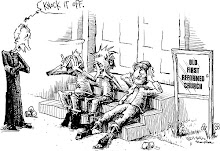
Saturday, October 01, 2011
October 2, Proper 22, Knowing the Law, Knowing Christ, #2 in the series, Kingdom Characters
Photo copyright © 2010, by Jane Barber, http://www.janebarberdesign.com/, all rights reserved.
Exodus 20:1-20, Psalm 19, Philippians 3:4b-14, Matthew 21:33-46
Last Sunday I began a series of sermons on “character”, the kind of character that goes with being a citizen of the Kingdom of God. Last week I said that your character is the rôle that you are writing for yourself in the long-term drama of your life. I said that your character is not static but dynamic, you develop your character by the choices that you make through time, each choice affecting your further choices. I said your choices have momentum and trajectory, which affect your posture and your attitude. I said your choices have a residue, and the combination of residue and attitude is your character.
My method in this series is to ask each new set of Sunday lessons what they might say about character. This week is easy. The Ten Commandments. The Ten Commandments are the handy guide to character development for Jews and Christians. That’s why they’re up on the reredos in our sanctuary, because they were read out every week in the old Dutch Reformed liturgy. That’s how I learned them by heart as a child, by hearing my father read them out every Sunday morning.
Only two of the ten are stated in the positive. For special emphasis, because of how distinct they make the culture of the Israelites. The distinction of the Sabbath Day is obvious, and it has many social and economic implications, especially that laborers get a day off every week, which was unheard of and unwelcome, and had specially to be ordered by God.
But what’s distinct about honoring your parents? Well, in Egypt and all the other nations it was the nobility that you had to honor. The ordinary life of most people was regulated by social class and economic class, and you had to show honor to people of privilege: “Your majesty, my lord, your highness, your honor,” no matter how they treated you.
But God’s people are a society of radical equality and a single social class, without nobility, except— you are never the equals of your parents, and they are your nobility whom you must honor. This too has many implications, but not for today.
Eight of the ten commandments are in the negative, and that’s because they presume our freedom and initiative. You tell a slave what he must do, because he has no freedom, but your daughter has freedom and initiative, so you instruct her differently: you set limits for her, and tell her where she may not go and what she may not do. These negative commandments are like the fences of your yard. The rabbis described them as a fence, which metaphor Jesus uses in his parable, in the first verse. The fence around the vineyard is the Torah, the Law of God.
One of the most important gifts we give our children is a sense of boundaries. It’s as necessary to tell them what they may not do as what they may do. Many parents seem afraid of this, and maybe they fear the reputation of the negative. We see them give their children too much choice, too much freedom, more than they can handle, and children don’t know where to stop, and they end up with characters combining selfishness with insecurity. Maybe many parents don’t have good boundaries for themselves, and they transfer onto their kids the unchecked combination of their own fears and their own desires driving them. Adults need boundaries too, and God gives you boundaries precisely because God has also given you the gift of freedom.
Boundaries provide resistance to your freedom, and it’s resistance that helps you build your character. As with physical exercise, you only build your muscle strength with resistant exercises, so the boundaries of God’s law give resistance to your freedom for the building of your character. The judgments of God are the opposition to your ego for the cultivation of your character. But according to St. Paul, the law of God is not enough. There has to be a further energy and motivation. For him it is a passion and desire which he identifies in Philippians 3:10-11: “I want to know Christ, and the power of his resurrection and the sharing of his sufferings by becoming like him in his death, if somehow I may attain the resurrection from the dead.” That’s my own personal verse, by the way, my core directive, the verse I want the preacher to preach on at my funeral.
What does it mean to “know Christ”, especially in terms of cultivating character? Well, of course, there’s emulation: he’s an example and a model for you in your choices. And there’s devotion: he is your Lord, as you repeat in the Apostles Creed: “And in Jesus Christ, his only Son, our Lord.” Devotion to a Lord means service and obedience, which also guide your choices.
But St. Paul means more than that, something spiritual and transcendent. “I want to know Christ and the power of his resurrection.” We know him on this side of his resurrection, between his resurrection and his return again, we know him not as a close friend here with us, but as the ascended Lord, into whose person is packed the new creation of the world, the new world that is coming, which he embodies in himself. The new world is ahead of us, it’s already established and waiting for us to get there, when we ourselves will somehow attain the resurrection from the dead.
That new world is not just a dream for the future, it’s a reality already in the future, on the other side of the boundary of death, a reality made by God, with a life and a power invested backwards, sort of, from the future into the presence of Christ. You share in that power which he exercises in the world by your knowing him. By knowing him, especially in worship and in prayer, you open your life to the power of his Spirit which gives the energy and motivation to the choices which you keep making in your life.
St. Paul also says a negative. “I want to know the sharing of his sufferings by becoming like him in his death.” Why the negative? Well, remember that I referred last week to an article from the New York Times magazine, and the title of that article is this: “What If The Secret to Success Is Failure?” Just as failing and then getting through your failure is essential for cultivating your character, so sharing the suffering of Christ and then conforming to his death gives you the resistance and the boundary you need. This sharing and conforming provide the inner opposition of which I spoke last week, the repentance and humility, the ordeal that you work through each week freely, the often painful self-awareness which leads to greater empathy and love. It’s a kind of training.
St. Paul ends with an athletic metaphor. So let’s say the commandments are the fences and foul lines and the strike zone and the bases, and let’s say that knowing Christ is the actual playing of the game. It’s only by playing that you develop your skills, the skills of character, and you can improve your skills even when you lose a game. You can risk, you can try, you can gamble and experiment, because it has already been won for us by Christ, the victory is not just a dream, it’s a reality that has power for us now, and you can make free choices with courage. You know, courage does not mean no fear, courage means going through your fear to do the right thing anyway, even if the right thing means sharing his suffering. And the point of being configured to his death is not that you be crucified, but that your natural fear of death and your natural fear of loss do not control your choices, not even the loss of honor or reputation or esteem, all of which he lost on the cross.
The implication is that the greatest freedom of all comes when you are free from yourself, you are free from your credentials and your gains, free from your achievements and success, free from everything you think you know, free from what you’re trying to prove to other people, free from what you think you know about yourself, and that’s because what you want to know is Christ. It is so liberating to not belong to yourself, and paradoxically empowering. You are free to choose the only thing you are not free of, the only thing really demanded of you, which is to love, to love your neighbor as yourself, and to love God with all your heart, soul, strength and mind. You make your choices in order to cultivate a character of love, because you want to know God.
Copyright © 2011, by Daniel James Meeter, all rights reserved.
Exodus 20:1-20, Psalm 19, Philippians 3:4b-14, Matthew 21:33-46
Last Sunday I began a series of sermons on “character”, the kind of character that goes with being a citizen of the Kingdom of God. Last week I said that your character is the rôle that you are writing for yourself in the long-term drama of your life. I said that your character is not static but dynamic, you develop your character by the choices that you make through time, each choice affecting your further choices. I said your choices have momentum and trajectory, which affect your posture and your attitude. I said your choices have a residue, and the combination of residue and attitude is your character.
My method in this series is to ask each new set of Sunday lessons what they might say about character. This week is easy. The Ten Commandments. The Ten Commandments are the handy guide to character development for Jews and Christians. That’s why they’re up on the reredos in our sanctuary, because they were read out every week in the old Dutch Reformed liturgy. That’s how I learned them by heart as a child, by hearing my father read them out every Sunday morning.
Only two of the ten are stated in the positive. For special emphasis, because of how distinct they make the culture of the Israelites. The distinction of the Sabbath Day is obvious, and it has many social and economic implications, especially that laborers get a day off every week, which was unheard of and unwelcome, and had specially to be ordered by God.
But what’s distinct about honoring your parents? Well, in Egypt and all the other nations it was the nobility that you had to honor. The ordinary life of most people was regulated by social class and economic class, and you had to show honor to people of privilege: “Your majesty, my lord, your highness, your honor,” no matter how they treated you.
But God’s people are a society of radical equality and a single social class, without nobility, except— you are never the equals of your parents, and they are your nobility whom you must honor. This too has many implications, but not for today.
Eight of the ten commandments are in the negative, and that’s because they presume our freedom and initiative. You tell a slave what he must do, because he has no freedom, but your daughter has freedom and initiative, so you instruct her differently: you set limits for her, and tell her where she may not go and what she may not do. These negative commandments are like the fences of your yard. The rabbis described them as a fence, which metaphor Jesus uses in his parable, in the first verse. The fence around the vineyard is the Torah, the Law of God.
One of the most important gifts we give our children is a sense of boundaries. It’s as necessary to tell them what they may not do as what they may do. Many parents seem afraid of this, and maybe they fear the reputation of the negative. We see them give their children too much choice, too much freedom, more than they can handle, and children don’t know where to stop, and they end up with characters combining selfishness with insecurity. Maybe many parents don’t have good boundaries for themselves, and they transfer onto their kids the unchecked combination of their own fears and their own desires driving them. Adults need boundaries too, and God gives you boundaries precisely because God has also given you the gift of freedom.
Boundaries provide resistance to your freedom, and it’s resistance that helps you build your character. As with physical exercise, you only build your muscle strength with resistant exercises, so the boundaries of God’s law give resistance to your freedom for the building of your character. The judgments of God are the opposition to your ego for the cultivation of your character. But according to St. Paul, the law of God is not enough. There has to be a further energy and motivation. For him it is a passion and desire which he identifies in Philippians 3:10-11: “I want to know Christ, and the power of his resurrection and the sharing of his sufferings by becoming like him in his death, if somehow I may attain the resurrection from the dead.” That’s my own personal verse, by the way, my core directive, the verse I want the preacher to preach on at my funeral.
What does it mean to “know Christ”, especially in terms of cultivating character? Well, of course, there’s emulation: he’s an example and a model for you in your choices. And there’s devotion: he is your Lord, as you repeat in the Apostles Creed: “And in Jesus Christ, his only Son, our Lord.” Devotion to a Lord means service and obedience, which also guide your choices.
But St. Paul means more than that, something spiritual and transcendent. “I want to know Christ and the power of his resurrection.” We know him on this side of his resurrection, between his resurrection and his return again, we know him not as a close friend here with us, but as the ascended Lord, into whose person is packed the new creation of the world, the new world that is coming, which he embodies in himself. The new world is ahead of us, it’s already established and waiting for us to get there, when we ourselves will somehow attain the resurrection from the dead.
That new world is not just a dream for the future, it’s a reality already in the future, on the other side of the boundary of death, a reality made by God, with a life and a power invested backwards, sort of, from the future into the presence of Christ. You share in that power which he exercises in the world by your knowing him. By knowing him, especially in worship and in prayer, you open your life to the power of his Spirit which gives the energy and motivation to the choices which you keep making in your life.
St. Paul also says a negative. “I want to know the sharing of his sufferings by becoming like him in his death.” Why the negative? Well, remember that I referred last week to an article from the New York Times magazine, and the title of that article is this: “What If The Secret to Success Is Failure?” Just as failing and then getting through your failure is essential for cultivating your character, so sharing the suffering of Christ and then conforming to his death gives you the resistance and the boundary you need. This sharing and conforming provide the inner opposition of which I spoke last week, the repentance and humility, the ordeal that you work through each week freely, the often painful self-awareness which leads to greater empathy and love. It’s a kind of training.
St. Paul ends with an athletic metaphor. So let’s say the commandments are the fences and foul lines and the strike zone and the bases, and let’s say that knowing Christ is the actual playing of the game. It’s only by playing that you develop your skills, the skills of character, and you can improve your skills even when you lose a game. You can risk, you can try, you can gamble and experiment, because it has already been won for us by Christ, the victory is not just a dream, it’s a reality that has power for us now, and you can make free choices with courage. You know, courage does not mean no fear, courage means going through your fear to do the right thing anyway, even if the right thing means sharing his suffering. And the point of being configured to his death is not that you be crucified, but that your natural fear of death and your natural fear of loss do not control your choices, not even the loss of honor or reputation or esteem, all of which he lost on the cross.
The implication is that the greatest freedom of all comes when you are free from yourself, you are free from your credentials and your gains, free from your achievements and success, free from everything you think you know, free from what you’re trying to prove to other people, free from what you think you know about yourself, and that’s because what you want to know is Christ. It is so liberating to not belong to yourself, and paradoxically empowering. You are free to choose the only thing you are not free of, the only thing really demanded of you, which is to love, to love your neighbor as yourself, and to love God with all your heart, soul, strength and mind. You make your choices in order to cultivate a character of love, because you want to know God.
Saturday, September 24, 2011
September 25, Proper 21: When Bad Things Happen to a Good Messiah; # 1 in a series, Kingdom Characters
Exodus 17:1-17, Psalm 78:1-4, 12-16, Philippians 2:1-13, Matthew 21:23-32
Last winter and spring I preached a series of sermons on the Kingdom of God, because the Kingdom of God is the great theme of the Gospel of Matthew. What is the Kingdom, what does it include, what life is like within it, how do we see it, how do we seek it, how do we receive it. Today I’m starting another series, more about us, the citizens of that Kingdom, and what the Kingdom offers us, who seek it, and what it expects of us, who receive it. I will focus this series on the word “character”: Christian character, godly character, Kingdom character.
This focus was given to me by one of you, this past week, when you wrote me in response to my sermon last Sunday. You felt a connection with an article in the Sunday New York Times magazine, describing how two schools in New York City are trying to teach good character. An educator friend of mine sent me a copy of that article the next day. The issue of “character” is in the air. So my plan for the coming Sundays is to ask one question of every set of our scripture lessons: “What do these lessons have to tell us about Christian character?” I don’t know yet what the answers will be. The title for this series is “Kingdom Characters,” in the plural, because we’re not expected to be all the same.
But in our epistle lesson St. Paul challenges us to have the same mind and to be of one mind. Of course he does not mean that we conform our minds to each other, that you conform your mind to my mind or I to yours, but that we all aspire to the mind of Christ—which is a challenge to us all. Character needs challenges. You develop character by working out your challenges, especially suffering, pain, and loss. It was true for Jesus too. He was not an angel, he was a human being, he had to develop his character, especially through the challenge of his loss and suffering, and the shame of the crucifixion.
We can observe the mind of Christ, the mind that we aspire to, when he humbled himself and became obedient to the point of death, yes, who for the sake of his mission did not defend his honor as the rightful prince of Judea, nor did he hang on to his position as the legitimate Son of David, or grasp the rights of his position as the lawful Messiah of Israel.
To not hold onto your position is something rulers just don’t do. I heard Jimmy Carter tell Charlie Rose that he considered his presidency a failure, simply because he did not get reelected. How much of what Barack Obama does is driven by his natural desire to get reelected; it is what rulers do, they want to hold on to their positions. Not Jesus, though. What he held to was his mission, even at the cost of his position, trusting that the God who had commissioned him would see him through the fear and trembling to work it through. This was so unusual his opponents didn’t know what to make of him and so they were afraid of him. And that too was part of his suffering, that he was feared and opposed by those he came to save.
Look at the gospel lesson. It takes place the day after Palm Sunday, when Jesus entered the city like a prince, and cleansed the temple like he owned it, throwing out the money-changers who no doubt had to give a cut to the temple authorities. Of course the authorities want to know what right Jesus has to do such things, and what are his credentials. His question back to their question is right on point, because the answer to his question is the same as the answer to their question. And they do have an answer, but they will not say it, because they fear the people and they want to protect their position. They can’t be certain that the people will rise against them, but to people in power every potential threat is a real threat, as Dick Cheney has written.
They weren’t bad people, the chief priests and the elders. Jesus was pushing all their buttons. They were in a tough position, between the Romans and an unruly populace, and so to keep things under control they hang on tight to their position, and they back off from the right choice, the risky choice, the courageous choice.
Stanley Hauerwas has written that your choices and the succession of your choices are what determine your character. Your character is not static but dynamic, you work it out by the choices that you make. And the choices you make today both open up and close off the further choices of tomorrow. Your choices have momentum and a trajectory, they position your inclinations and your leanings and your posture and your attitudes as you address your life. Your choices also leave with you a residue, with things like compassion and sympathy and with what that magazine article called “grit”, and with other things like shame and guilt. The composite of these attitudes and aptitudes you can call your character, the role that you have written for yourself in the ongoing drama of your life.
In the ancient Greek dramas of Aeschylus and Sophocles, the characters are always in bondage to the choices of their past. This bondage is compounded by the grip of Fortune, with a capital F, and by the selfish ambition of the gods and goddesses. You get the same thing in the Iliad and Odyssey, which is what the Philippians will have been educated in.
So they must have found it liberating, and maybe a little scary, to learn from the Gospel that neither Fortune nor the gods have any such power, and that the Lord Jesus offers freedom from the bondage of your past. You are always free to choose what’s right, even when it’s difficult. Jesus offers that freedom to the chief priests and elders, they still have the choice to heed the parable and let go of their position and be welcomed into the Kingdom. With the Lord Jesus, every judgment is an invitation and every challenge is a welcome. But for you to receive his freedom he requires of you a transformation instead of just an adjustment in your trajectory, and that transformation risks the loss of your position, and so you regard his challenge as an obstacle.
How you handle obstacles and opposition is the real test of your character. If you aspire to the mind of Christ, you will face opposition from the outside, certainly, but the more critical opposition is from inside yourself, when you oppose yourself by means of repentance, or with that long term character trait of “humility”. That’s a challenge if you want to get ahead. The only way to get to be Caesar, for example, was by selfish ambition. But by humility I don’t mean softness, and by repentance I don’t mean groveling. I mean resting from your momentum, not pushing your trajectory, risking your position. Emptying of everything but yourself. That is the mind of Christ.
Which has its benefits. It means you do not have to defend yourself or prove yourself. Jesus did not defend himself to the priests and elders, he knew who he was. He did not have to assert his authority or fight for his position, because both his authority and his position were grounded in his character. You can have that freedom too by being grounded in your character when your character is a Kingdom character, sharing the mind of Christ.
He emptied himself. He did not grasp at the rights of either his earthly royalty or his heavenly divinity. He emptied himself because that is God’s character anyway, this is the God who bends towards us—who yields to us, who yielded, for example, to the complaining of the Israelites. That is the character of God, and Jesus kept choosing for that kind of character his whole life, even to the loss of everything he had. And so his Father gave it all back to him as a gift, a greater position, and the name above every name, the name of “the Lord”, Adonai. We Christians believe that Jesus is rightly called the Lord God because he had in him the fullness of God’s character. When you aspire to the mind of Christ you are aspiring to the mind of God.
I close with a paraphrase of that final verse in our epistle: “Work out your Kingdom character in fear and trembling, for it is God who is at work in you, enabling you both to desire and to choose for God’s good pleasure.” And God’s good pleasure is nothing other than Love. God’s love is built into God’s character, so that I can even say that God can’t help it, loving you. And that certainty of God’s love is the position in which you stand.
Copyright © 2011, by Daniel James Meeter, all rights reserved.
Subscribe to:
Posts (Atom)


